
Confronting Complicated Complexities

Like most of the world, I was stunned by the news of the death of former Los Angeles Laker and NBA All-Star, Kobe Bryant. I think any time a young, healthy person dies suddenly, it is shocking. But that is the reality of most injury deaths.
As is the case with shocking news, my social media accounts were flooded with comments about Bryant’s death. The comments ran the gamut from despair over the loss of a “hero,” to others calling him a “rapist,” to Evangelicals warning about the unpredictability of life and a call to “get right with God.”
I’m not a Lakers fan, and consequently, I wasn’t a Kobe fan. Unlike many sports fanatics who “hate” rival teams and players, I don’t hate the Lakers, nor did I hate Kobe. I love sports, and I love it when my teams win, but I just think it is silly to harbor hatred for opposing teams and players. If you think I don’t understand the passion of sports, you’re wrong. I was a bundle of nerves on February 7, 2016 and spent the entire Super Bowl 50 standing in front of my television (didn’t sit down even during halftime) watching my favorite player, Peyton Manning, lead my favorite team, the Denver Broncos to victory over Cam Newton and the Carolina Panthers. Trust me, I can get excited when my teams are playing!
While I appreciated Kobe’s talent, his work ethic, and his athletic accomplishments, I’m drawn to sports figures who display a quiet, humble leadership more than those who are brash and flashy. I like Peyton Manning more than I do Lebron James. I appreciate Jalen Hurts style more than that of Baker Mayfield, even though Mayfield won another Heisman for the Oklahoma Sooners. I prefer the on-the-field performances and off-the-field personalities of the Selmon brothers (stalwart defensive legends at OU) over that of Brian “the Boz” Bozworth.
I admire many sports figures for their contributions to their respective sports, but I don’t idolize them. Therefore, I struggle with the adoration hoisted upon athletes.
Bryant’s death also garnered comments from sexual assault service providers and advocacy groups. In 2003, Bryant was accused of sexual assault by a 19-year-old woman, who was an employee of a hotel where Bryant was staying in Colorado. The woman accompanied the basketball star on a tour of the resort and later went to his hotel room, where she said he raped her.
At the time, Bryant was 24 years-old. He was charged with one count of felony assault, but the prosecutors dropped the case when the woman decided not to testify. The accuser brought a civil suit against Bryant, which was settled out of court in 2005.
I know nothing about the case other than what was reported in the media. Admittedly, I have certain biases, namely that I’m a woman who has read enough credible studies regarding sexual assault to know that rape is the most under-reported crime (63% of sexual assaults are not reported to police), and the prevalence of false reporting is between 2% and 10%.
Bryant apologized for the incident and said he believed it was “consensual.” This seems to be a recurring theme with men who have been accused of sexual assault. Just listen to the excuses from Harvey Weinstein, Matt Lauer, and Les Moonves. Do these men and so many others really believe their sexual assaults were consensual? If so, is this an individual failure or a societal failure?
Ironically just hours before the news about the helicopter crash that killed Bryant broke, I picked up a copy of the January/February 2020 issue of The Atlantic when I was at the airport because the cover story “The Miseducation of the American Boy” by Peggy Orenstein caught my eye. In the article, Orenstein describes how she spent two years talking to more than 100 boys across America between the ages of 16 and 21 of all races and ethnicities about masculinity, sex, and love and the forces, seen and unseen, that shape them as men. Orenstein reported that nearly every boy she interviewed believed that girls were just as smart, competent, and deserving of leadership roles. Yet when asked to describe the attributes of the “ideal guy,” Orenstein said those same boys “appeared to be harking back to 1955.” The terms they used to describe the “ideal guy” were dominance, aggression, rugged good looks, sexual prowess, stoicism, athleticism, and wealth. The article also referenced a survey that compared young men from the U.S., United Kingdom, and Mexico. The survey revealed that men from the U.S. reported more social pressure to be “ever-ready” for sex, to “get with as many women as possible,” and to “control their female partners.”
By all accounts, Kobe Bryant was excelling in life after he retired in 2016. He was the ambassador for After-School All-Stars, which organizes after-school programs for children. He founded the Kobe Bryant China Fund, which raised money for education and health programs. He wrote children's books and produced animated stories. In 2018, he won an Academy Award for his animated short film "Dear Basketball." Perhaps because he was the father of four girls, he was also a champion for women’s athletics.
I think it is important that we understand that Kobe Bryant was a gifted athlete who made many positive contributions to society, but it is just as likely that the allegations of sexual assault by the young woman in 2003 are true. And, that young woman may have lasting trauma, as a result. We need to hold space for both.
I was thinking about the complexity of these issues when I saw the report that Bryant’s 13-year-old daughter, Gianna, who wanted to follow in her father’s footsteps and play in the WBNA, also died in the helicopter crash along with seven others. And in an instant, I was a mother who went from being stunned about the death of basketball superstar to heartbroken for the families who lost children, mothers, wives, fathers, and husbands.
As I was processing the news and conflicting diatribe on social media surrounding Bryant’s death, there were two posts by Jen and Brandon Hatmaker, Christian pastors and philanthropists, that summed up my thoughts. They didn’t include warnings or assurances about life after death. They were simply honest and compassionate.
Jen Hatmaker: My mind keeps trying to imagine losing Brandon and one of our kids in the same day. I cannot do it. I wish I could wrap Vanessa Bryant and her family in a blanket and love them around the clock. What a terrible, horrible, unfair loss. The sadness is unthinkable. People of faith, pray for comfort for all the families who lost their beloveds today when they were just going to a basketball game. Life. It is so short and fleeting and nothing is guaranteed. Hold tight your dear ones. Love those who are suffering. Wrap one another up.
Brandon Hatmaker: I grew up a Lakers fan. Magic. Kareem. Worthy. Scott. AJ. Cooper. Rambis. The list goes on. But I’ll never forget the excitement around Kobe. Straight out of high school. So much excitement. Such a career. He was a world class athlete. Invincible. Untouchable. Maybe that’s why this is so shocking. A father. His daughter. With a lifetime ahead of them. So tragic. I wish I had answers. Honestly... right now I can’t even find questions. So much mystery. And the sure reality that we better grab on to whatever moment we have today. Rest In Peace Kobe. May we never take a day for granted.
Amen, Jen and Brandon. There are no absolutes. Life can be complicated and complex. It’s not black and white or either or. Here’s hoping (and praying) that someday soon, we can learn to critically appraise opposing viewpoints and see both sides with empathy and compassion.
It's Time

There have been a lot of thoughts coalescing in my mind this past week as we approached the Martin Luther King, Jr. holiday. These thoughts were brought on by a variety of things, including the drama unfolding in the United Kingdom over the decision by the Duke and Duchess of Sussex to step back from their roles as “senior royals,” seeing the movie “Just Mercy,” which is based on the work of Bryan Stevenson, the founder and Executive Director of the Equal Justice Initiative, and an ongoing discussion about “standards” and the seemingly differing opinions on the definition of that word.
Normally, I don’t pay much attention to the British Royal Family, but I have watched with interest at how the British media have covered Prince Harry and his wife, former actress Meghan Markle. It seemed to me that white Brits spent the week following the announcement by the Duke and Duchess blaming Markle, who is biracial, for turning Harry away from his family. First, the idea that a woman is to blame for any decision that a couple makes on behalf of the best interest for the family continues to rankle me. If they assume that Prince Harry or any man is that weak and ill-informed, then women should be running every country, corporation, business, church, etc. Think about it. If a man is that easily manipulated by a woman, then why do we continue to hold men up as the smarter, more competent gender?
Second, when presented with objective evidence that the media covered the Duchess of Sussex differently than it did the Duchess of Cambridge, Prince William’s wife (including side-by-side headlines), the white journalists continued to deny that structural racism was a factor.
Frankly, I am so sick of the excuses. I can’t even imagine how my African American friends must feel.
Why can’t we just own our mistakes without trying to justify them? Clearly, this isn’t just a problem in Great Britain, but in the U.S., as well. There have certainly been documented horrific, deplorable (yes, I used that word) actions by whites throughout the history of our country. I was once again reminded of this when I saw the film “Just Mercy.” While the movie, which is based on Stevenson’s bestselling book of the same name, deals with racial injustice within the legal system, there are just as many documented cases of continued racial inequality in healthcare, banking and lending practices, and public safety, among others.
In a commentary in the January 17, 2020 issue of the Chicago Tribune penned by my friend Dr. Brian Williams, an associate professor of trauma and acute care surgery at the University of Chicago Medical Center, and the Rev. Dr. Michael W. Waters, lead pastor of the Abundant Life African Methodist Episcopal Church in Dallas, the current inequity is outlined in vivid detail. To deny that structural racism is a thing of the past is just false.
On an episode of the show “Last Week Tonight” with John Oliver that aired in August 2019, the host and comedian Wanda Sykes joked about the bias in medicine. They discussed outdated textbooks and how physicians’ unconscious beliefs about women and black patients can lead them to receive substandard care. In reality, this isn’t funny. It’s serious and people are dying because of it.
As someone who works in the healthcare setting, I wasn’t offended by the commentaries of Dr. Williams and Dr. Waters, nor those of Oliver and Sykes. I didn’t make excuses for my industry. I didn’t try to deny or justify it. There is truth there, and it makes me angry. It makes me just as angry when I hear a police officer, a banker or loan officer, a teacher, or journalist jump to the defense of one of their own in the face of objective evidence of racial bias. That doesn’t mean that every doctor, lawyer, judge, teacher, banker, police officer, journalist, etc. is bad. But it does no good to deny, excuse, or justify racial bias and inequity, and it weakens credibility when we do.
Recently, I finished reading White Fragility: Why It’s So Hard for White People to Talk About Racism by Robin DiAngelo, a white woman who has conducted diversity training and cultural competency workshops for 20+ years. By her own admission, DiAngelo is a white American raised in the U.S. with a white frame of reference, white worldview and white experiences. That same description is true of me, my family and most of my white friends. We were never taught to see ourselves in racial terms. It has never occurred to me that my life didn’t matter. I have never felt the discomfort of being seen racially, nor do I believe any of my white friends have either. When I try to explain the concept behind “Black Lives Matter,” they become defensive and argumentative. Talking about racism makes them uncomfortable, yet they seem to have no understanding or empathy that our history is splattered with white people making black people feel uncomfortable. DiAngelo points out that it’s way past time for whites to have the self-awareness, humility and vigilance to own our inner voices of racial prejudice and to begin the hard work of combatting those voices instead of remaining silent.
Which brings me to the discussion about “standards.” For far too long, I have allowed that word and the people who use it to make me feel “judged.” In my opinion, the way I dress, whether I use fine china and crystal, or if I know which fork to use during a formal dinner is not the standard bearer to which I aspire. My standards are about kindness, humility, and inclusiveness. It’s not about making fun of another person because the diamond in her engagement ring is not as large as mine. It’s time that we dropped the cultural context that aristocracy, breeding, class, etc. makes you a better person.
As Maya Angelou said, "Do the best you can until you know better. Then when you know better, do better." I acknowledge the mistakes of my past, my uniformed opinions, and my silent complicity in the face of injustice. Now, I know better. And, it’s time for me and my white friends to have the courage to do better.
The Genesis of My Journalistic Integrity

Often something will happen to cause me to pause and reflect. One of those incidents occurred this week for me. I was sitting at my desk when my cell phone buzzed with an incoming text from my friend Mickey Thompson. The text read that the family of George Gurley had requested hospice for him. His time left on this Earth was coming to an end.
Let me set the stage and provide some background on the people in this blog post.
George Gurley was the editor and co-owner of my hometown newspaper, the Ada Evening News for almost 30 years. To say that he was a larger-than-life figure in our small town was an understatement. Even as a junior high school student, I knew who Mr. Gurley was.
I knew Mickey because he had been the sports editor of the newspaper when I was in high school and assumed the position of managing editor the year I got married.
Honestly, I knew who Mr. Gurley and Mickey were because of a third person – J. Don Cook. Cook was the photographer at the Ada Evening News until 1977 when he left to become the Director of Photography at the Daily Oklahoman. His award-winning photographs were legendary in Pontotoc County (probably beyond, but my world was pretty limited in those days). When I was in junior high, I participated in a 2-hour workshop that Cook conducted, and my interest in photography was solidified. Every day after school, I would search the Ada Evening News for Cook’s photos of the day. It was then that I started reading the sports and editorial pages.
Fast forward to 1980. I was a newly married 22-year-old living in my hometown. I was 12 hours short of a degree in Journalism from the University of Oklahoma. My husband had convinced me to drop out of school for a brief time to avoid driving the 63 miles back and forth from Ada to Norman on a daily basis, and I had agreed (much to the disappointment of my parents).
That summer, my husband and Mickey played on a local softball team. I don’t remember the details, but I suspect that Mickey mentioned that the photographer position at the newspaper was open, and I told him I was interested in the position. He must have set up an interview for me with Mr. Gurley.
In retrospect, I now marvel at what must have been Mickey’s power of persuasion. I was a 22-year-old blonde female whose only experience in photography was that workshop in junior high and one college photography class. I did own a 35mm camera, which my parents had given me for my high school graduation. Thinking back on it now, I realize that the portfolio that I brought to that interview was in a word – pathetic. What’s even more shocking is that I got the job.
Two weeks into the job, it was clear that I was way over my head. My interest and passion in photography were woefully inadequate to make me competent. I barely knew the difference between an f-stop and shutter speed. My composition was boring. My lighting was abysmal. Not only did my photos fall short of Cook’s award-winning talent, but I was even a poor substitute for my most recent predecessor.
Stories of Mr. Gurley’s temper and unwavering quest for excellence are legendary. But two weeks into my dismal stint as the photographer of the Ada Evening News, he didn’t yell at me or even fire me. He walked by my desk one day and asked me to follow him into the darkroom (remember this was four decades ago, pre-digital cameras, and we were still developing our black and white photos in a darkroom). In today’s current reality of the ”me too” movement, I can only imagine what readers are thinking. While I’ve had many “me too” moments in my life (including in Ada, Oklahoma), those moments did not come in the darkroom that day or ever at the Ada Evening News.
On that day 40 years ago, Mr. Gurley never raised his voice, but quietly gave me a 3-hour lesson on photography and developing techniques. That’s right, the publisher and editor of the newspaper spent 3 hours teaching a young, incompetent photographer how to do her job.
My photography skills improved immensely that day, but I also learned an important lesson about leadership that would serve me more than the photography skills ever would.
I only spent 18 months at the Ada Evening News. Ultimately, the lure of adventures beyond the borders of Pontotoc County, an overriding fear of being financially dependent on my husband, and a desire to have my own career led me back to the University of Oklahoma to finish my degree. This is by no means a judgment on others who made different choices, but my choice was to do what was best for me.
By the time I graduated, my husband and I were relocating to Oklahoma City, and months later I was hired at the Oklahoma State Department of Health, where I would spend the next 25 years in a career I love.
Honestly during the past 40 years, I haven’t thought much about my time at the Ada Evening News.. But I’ve thought a lot about those days since receiving the text from Mickey last week. What I remember is that while other similar regional newspaper pages were filled with stories about family reunions, the Ada Evening News reported on state, national, and international events, as well as local ones. I recall being in an editorial meeting where we were discussing the status of an article that one of the reporters was writing about the lasting effects of the meltdown of a reactor at Three Mile Island near Middletown, Pennsylvania a year earlier. I remember thinking, “Does anyone in Ada, Oklahoma care about Three Mile Island? Does anyone even know what a nuclear power plant does?”
But here’s what I learned when I was in those editorial meetings – we should care about what’s happening beyond our community, state and nation. We should have all of the facts presented to us in a non-biased, yet truthful manner, so that we can make informed decisions based on those facts. I learned that it’s alright to have opinions, even differing ones, but those opinions belong on the editorial page – not in a sensational headline or body of an article. I learned that correct punctuation and sentence structure are critical.
I was only a blip in the life of Mr. Gurley and those reporters. But my brief time many years ago working in a newsroom with interesting people who wanted to tell interesting stories with a leader who required excellence forged my idealistic viewpoint of journalistic integrity, heightened my sense of curiosity, and amplified my thirst for continued learning.
To be honest, that last sentence is likely to have been much too wordy for Mr. Gurley. So, here’s one that may have generated fewer edits with his red pen.
Thanks for the life lessons, Mr. Gurley. They have served me well. Godspeed.
New Day, New Year, New Decade

When I re-read the blog that I posted on January 6, 2019 entitled Hello 2019, I remembered that I was feeling optimistic. While it may not have reeked of the buoyant optimism of previous years, I was still optimistic six days into the last year of another decade. I was feeling hopeful that the dark days that had plagued my friends and I were shifting. I was determined to start whittling away on my “bucket list” and to finally take a vacation. I was intent on recapturing time with friends. All good intentions.
But as December 2019 approached, I wasn’t skipping exuberantly into 2020 – I was limping – no, barely crawling through each day. While it’s true that 2019 did bring our family much joy with the birth of my great niece on April 7, other circumstances beyond my control had left me physically and emotionally exhausted.
I was desperate. So, I took desperate action.
I talked to my boss and requested some time off with no access to email. I politely told my family that I would be taking a solo trip after the Christmas holiday. When my husband questioned why I would want to do that, I answered honestly – I needed time away from work and family to decompress, think, contemplate and just plain relax with no pressures. When my mother suggested that I check in with a cousin I hadn’t seen in a while, I gently reminded her that the purpose of the trip was to be alone.
I am, by nature, a pleaser. Most of the time, I put others’ needs ahead of my own. Telling my family that I was going away for a few days and didn’t want to be disturbed felt selfish and way out of my comfort zone. But, as I said earlier, I was desperate.
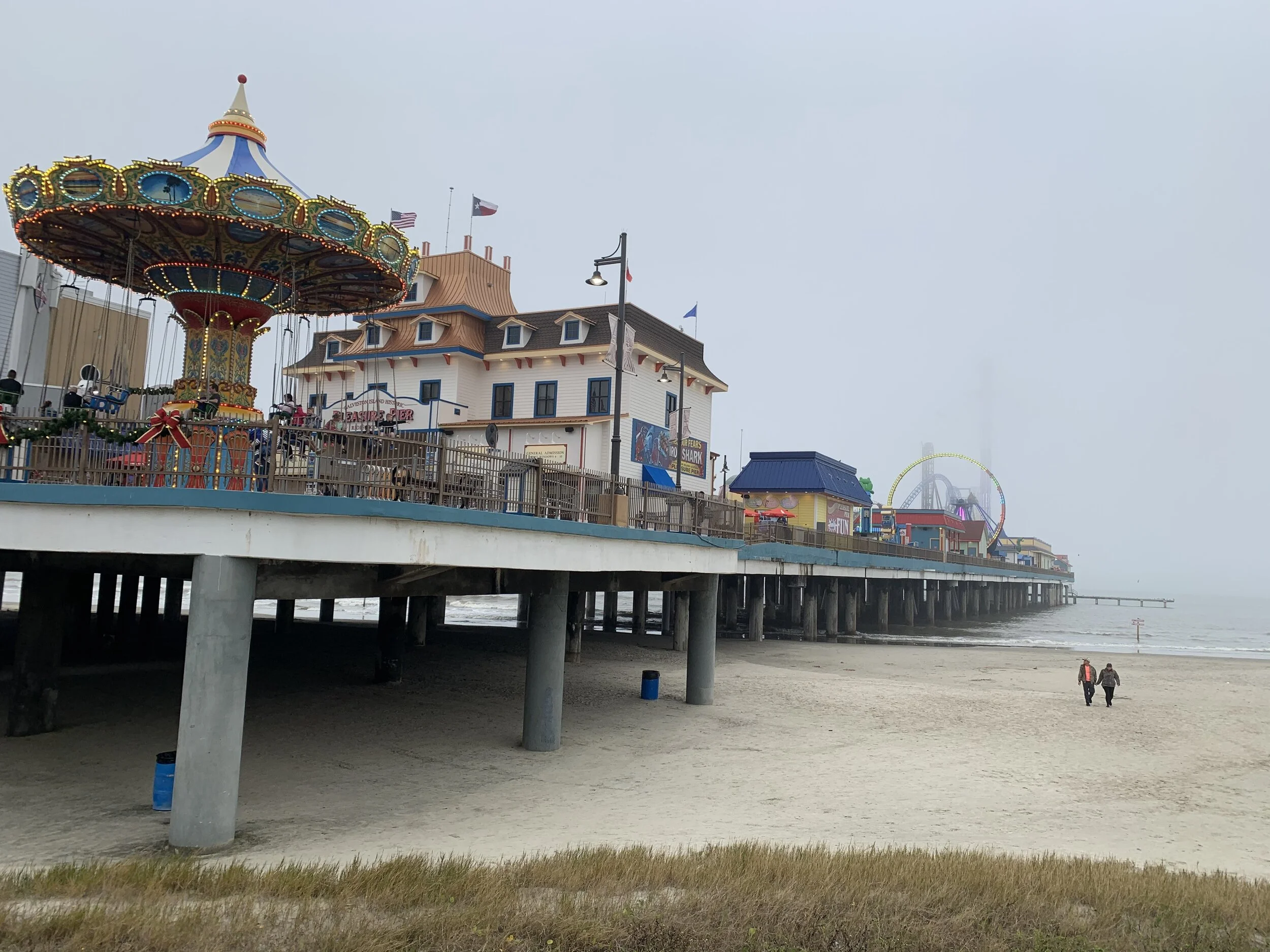
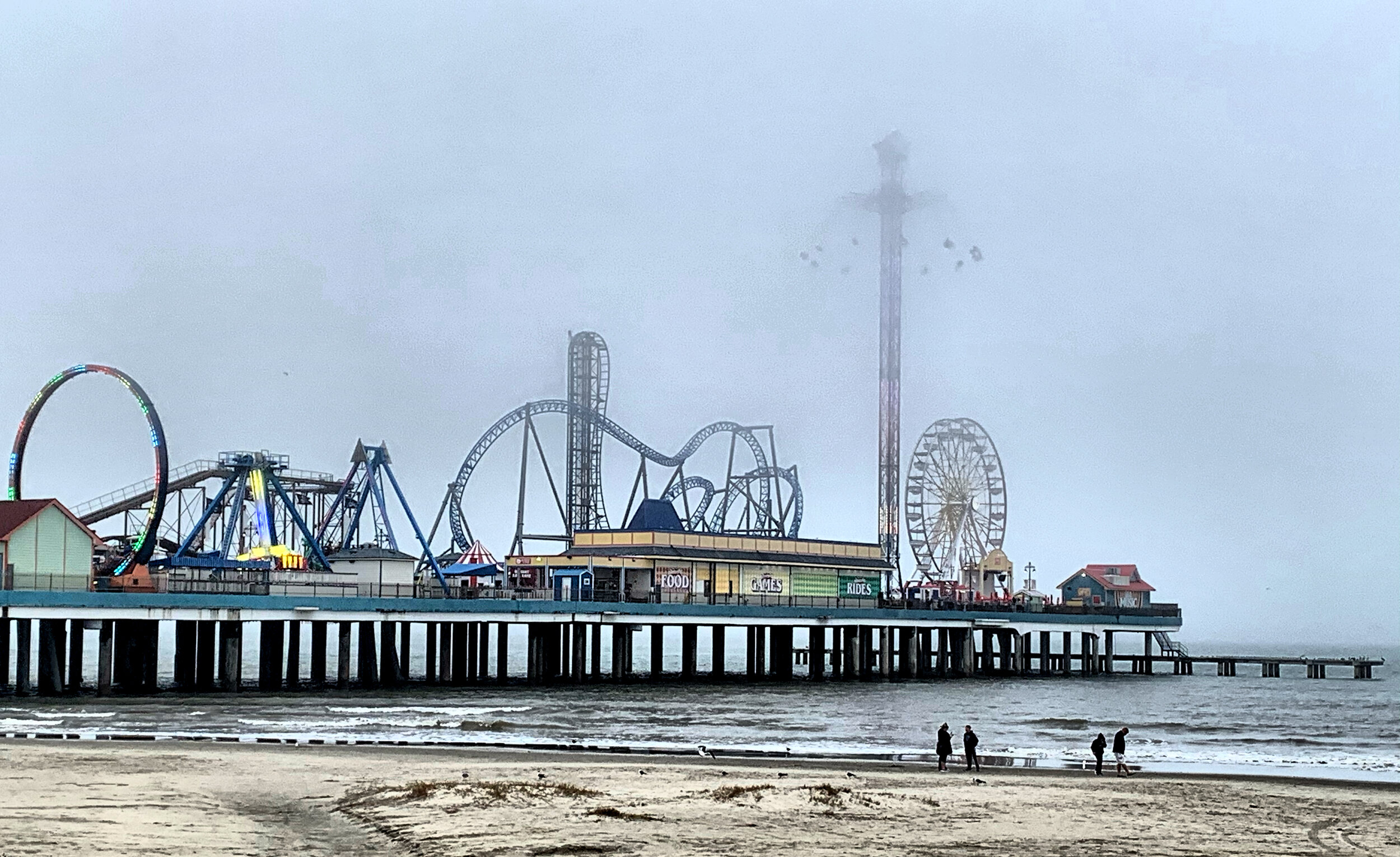
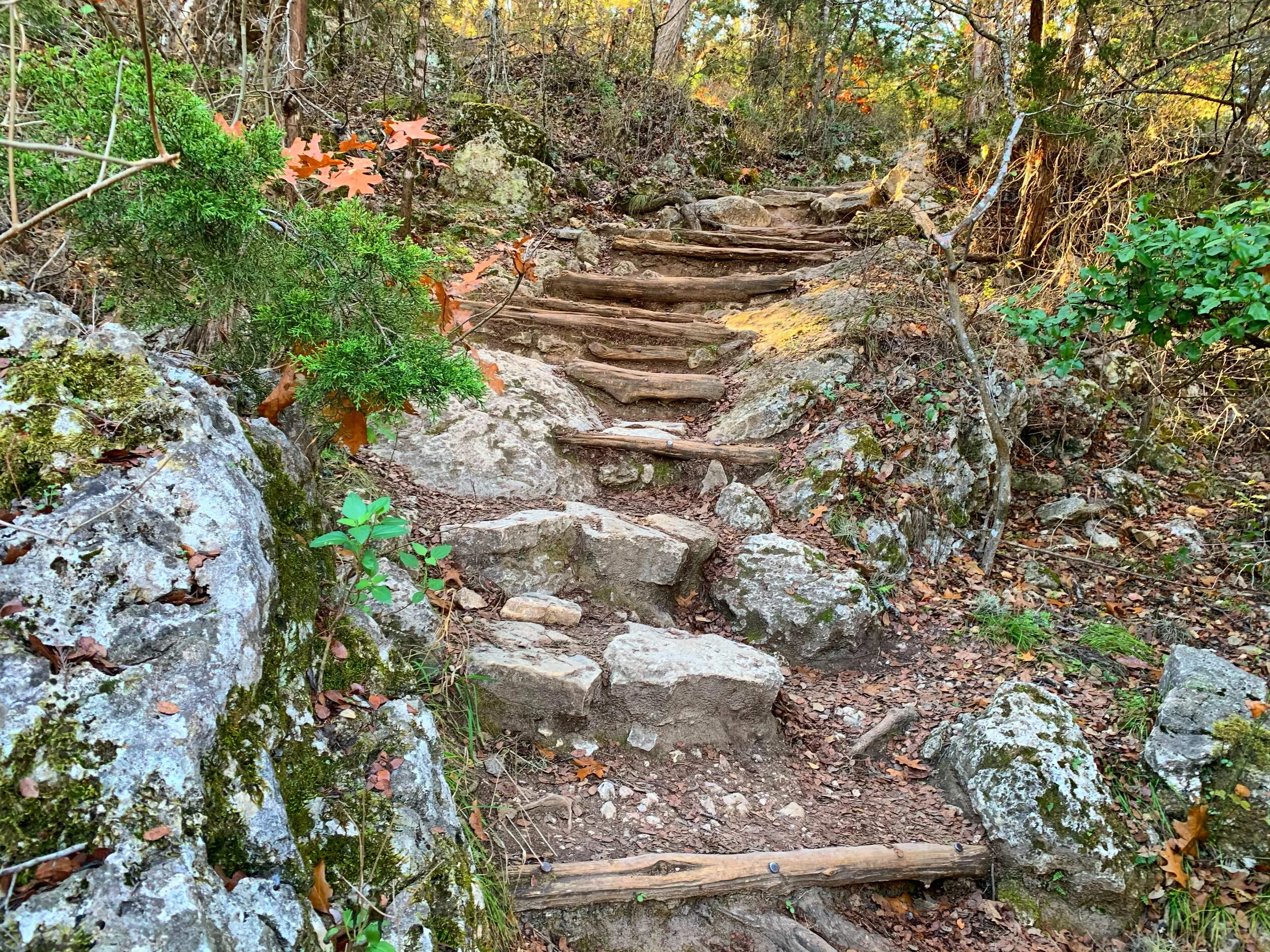
On December 27, I left Dallas at 7 a.m. with my camera and an Instagram list of most photographed Texas locations. For four days, I drove, listened to audible books, walked on the beach, and hiked. I heard the sounds of nature – the waves lapping against the beach, the squeal of the gulls flying overhead, a babbling stream. And, I listened to the sounds of silence, as I had “hard conversations” with myself.
I had my laptop with me thinking I might write, but I never removed it from my backpack.
It was only four days, but by the time I headed back to Oklahoma on December 31, I felt better – much better. The time away (as well as a phone call with my best friend) was exactly what I needed to summon my resolve – to keep going, keep trying.
I’ve had varying levels of success with New Year’s resolutions, but this is a new day, new year, and new decade. Perhaps 2020 is worthy of me setting a few goals for myself. So here goes. . .
I WILL TRY to protect my physical, mental and emotional health by eating better, exercising more, and meditating. Maybe this is finally the year that I really add yoga to my repertoire.
I WILL TRY to restrict the instinct to turn away from difficult conversations to protect the feelings of others at the detriment of my own health. I WILL TRY to be better at setting boundaries with people that harm me recognizing that I’m not doing them or me any favors.
I WILL TRY to nurture my capacity for resilience while confronting the snail’s pace of society to address injustice. I WILL NOT care “less” about injustice because it may not affect me. I WILL use my voice to stand in the trenches with those whose voices have been silenced or disregarded. And when I’m too fatigued to productively help, I’ll take a break.
I WILL TRY to be a better wife, mother, daughter, sister, aunt, friend. But I WILL NOT capitulate out of a misguided sense of obligation if it comes at the expense of my own values.
I WILL TRY to listen to those with different perspectives. But I WILL NOT be complicit in the face of prejudice, bias or inequality because of willing ignorance. I WILL NOT tolerate the rage of the privileged. I’ve given too much energy to that already.
I WILL TRY to do my part to protect the environment. I WILL purchase less unnecessary stuff and get rid of more unnecessary stuff that I have and don’t need.
When the actions of evil people cause me to question my faith, I WILL seek spirituality in the actions of those I admire and trust.
I WILL TRY to finally start to chip away at my bucket list and schedule a real vacation for 2020!
Happy New Year Y’all!

It's All About the View

There was a time during my childhood when my aunt and uncle lived in western Oklahoma. The rest of our family lived in or around Ada, Oklahoma, which is in the southeastern area of the state. The topography of eastern and western Oklahoma is vastly different. The landscape east of Interstate 35 is green and lush with lots of trees and hills. West of I-35, the landscape becomes flat with miles of wheat fields. The northeastern region of Oklahoma is called Green Country, while the southwestern region is known as Great Plains Country.
During the time my aunt and uncle lived in western Oklahoma, I recall hearing my uncle tell my parents how much he loved the view in western Oklahoma. “I like being able to see the sunrise and sunset without the clutter of trees,” he said.
“Trees aren’t clutter,” I thought.
Having known known nothing different, I loved the beauty of living among the pecan trees that peppered our family farm and the neighborhoods in our small town. That limited viewpoint was further solidified when my family drove west along Route 66 for a family vacation to California when I was 10 years old. Less than 2 hours into our trip, we had passed Oklahoma City, and my sister and I were already bored. As I gazed out the windows of our Ford station wagon with nothing but miles of highway in front of us, I began to question my uncle’s sanity. How could anyone like that view?
Fast forward 15 years, and I found myself living northwest of Oklahoma City after my husband accepted a basketball coaching position at Cashion Schools. With only slightly more maturity and a different perspective, I began to appreciate the beauty of the yellow wheat waving in the wind during harvest time as the sun set beyond the horizon.
I was reminded of these memories as I stood on the balcony on the last day at my previous apartment overlooking the construction of a new skyrise apartment building being built across the street. My husband will tell you that it’s all about the view with me. I’ve been fortunate to be able to travel to different cities, states, countries and continents since that trip to California more than 50 years ago. I’ve photographed beach views, lake views, mountain views, and skyline views, as well as views from winding country roads. Many of these photos are hanging on the walls in my new apartment. Each photo represents a different perspective and has contributed to my evolving viewpoints. Just like the people I have met along the way; these viewpoints have added a richness to my journeys.
But there have been times when my view has become obstructed – literally and figuratively. As I stood on the balcony that day, I thought of the photo I had taken on the first day I moved into that apartment, as well as the dozens I’ve taken since (check out my Instagram @shellindallas to see many of the photos taken from that balcony). That first panoramic photo depicted a clear view of American Airlines Center, the W Hotel, and downtown Dallas with the Bank of America building clearly visible. During the past 5 years, the view has changed dramatically with the addition of several new skyrises, a cinema, and numerous new retails shops and restaurants. I love all of the additions to the Victory Park neighborhood, but I could no longer see downtown or even the W Hotel.
As I waited for the movers to arrive that morning, I was already tired. I had been working long hours and weekends for months without a break. My mind was foggy. I know – this seems to be a recurring theme of my blog posts. The weather was unseasonably beautiful for early December even for Dallas, but I knew that I would have to spend all weekend moving and organizing. The next week and weekend would be more long hours at work. I didn’t even know when I would have time to do any holiday shopping – even finding time to shop online seemed improbable.
I glanced at my phone to view the series of text messages coming from a group of friends who are members of an Outing Club that my husband’s family has been members of for more than 70 years. Many of the friends were at their cabins and sending frame-worthy photos of the river and woods. I longed to be there. Honestly, I longed to be anywhere other than where I was on that day.
Then I remembered that while lots of things seemed beyond my control, there were things that I could still control – namely my attitude. I took a deep breath and paused for a quick meditation.
As the first light of the day poured into the windows of my new apartment the next morning, I rose and stepped outside to stand on the balcony and looked out at my new view. At that moment, my friend Mary Ann sent me a text “to check on you.” I replied by sending her a photo of my new view, as well as the photo I had taken the day prior.
“I’m glad your view is clearer now,” she replied.
Yes, Mary Ann, my literal view is clearer. Now to do some more work on my figurative view!

"Safe" Emotional Spaces

“Is it safe to talk about politics now?” I jokingly asked as I crossed the threshold of my cousin’s house on Thanksgiving night. This was the first Thanksgiving I had spent with my side of the family in years, and it was the second stop of the day for me. My joke about politics was a reference to the fact that my family members, like most, have divergent political views. While my cousin’s family and I share similar views, my joke was more a commentary on the fact that I was entering a safe space for discussion – any discussion, regardless of the topic.
I have spent my career focused on creating a safe physical environment – an environment that protects people from unintentional injuries (e.g., traffic crashes, fires and burns, drownings, falls, poisonings, etc.) and violence (e.g., suicide, child abuse, domestic abuse, etc.). But the past several years, I’ve also come to more fully understand the importance of creating “safe emotional spaces.”
I went to my cousin’s house on Thanksgiving not to talk about politics with like-minded family members, but to spend some time in the company of my aunt and uncle. I’m ashamed to admit that I have not seen my aunt and uncle or my cousin in more than a year. My uncle is the sole survivor of my father’s siblings; the last of my grandfather’s children to walk this planet.
There has always been a special bond between my uncle and me that I can’t explain or describe. Perhaps we share a need to question the status quo; a need to forge our own path instead of accepting society’s expectations. I don’t intend to romanticize my uncle’s life. He will be the first to tell you that he has made mistakes. But he is also first to own his mistakes. As he has aged, he has become gentle in his advice, generous in his love and praise, and reserved in his judgement of others.
Instead of complaining about unmet expectations, he has embraced the life he has. This past summer, he took his family to Hawaii and invited his daughter-in-law’s family to join them. They are planning a trip to Alaska next. He jokingly told me that he is spending my cousin’s inheritance. I feel safe in saying that the memories of those trips probably mean more to my cousin than any inheritance.
As we talked that evening, my uncle asked if it was “safe” to bring up an issue he knew that I had been struggling with over the past months. In the next few minutes, I poured out my heart to him. And he listened. He didn’t give me any advice. He didn’t say that he would pray for me. When I had finished, he just quietly said, “I’m sorry that this is the situation and that you are having to deal with it, but I trust you to make the best decision for you.”
I know that people mean well when they want to “fix” your problems, but the best course of action is just to be present and hold off on the worn-out platitudes and advice. My uncle gave me a gift on Thanksgiving for which I will always be grateful. He gave me confidence and his love. He gave me a safe space.

It's Your World Now

A few weeks ago, I was having a deep philosophical conversation about life and changes with my friends Nancy and Sue. During the conversation, Nancy recounted a similar discussion that she had had with her father when Nancy was a young woman and her father was near the age Nancy is today. Nancy recalled her father saying, “This is your world now.”
I’ve been thinking a lot about that comment.
The world looks vastly different than it did when I was in high school, or on my wedding day, or on the day my daughter was born, or the even on the days she graduated from high school and college. You get the picture. The world and society are in perpetual change mode. How we respond to change is critical to our ability to survive and thrive.
I have to admit that I’m one of those people who often embraces change. When I was young, my mother was constantly redecorating (she still does), so that may have something to do with my willingness or need to explore new opportunities. In a couple of weeks, I’m moving into my sixth apartment since I moved to Dallas almost 12 years ago. While moving six times may make many people shudder, it’s not that hard for me because I don’t accumulate “stuff.” Instead, I gravitate to experiences.
Any success that I may have achieved is due in large part to my ability to adapt to change. I’ve seen many successful people falter because they can’t let go of some idealized version of how things were done in the past. I was listening to my friend, Dr. Brian Williams’ podcast interview with Beverly Thompson, a diversity and inclusion specialist, who talked about working to narrow the gap between the “Rolodex Era” and the technology generation. She said we need to respect the fact that we are in a different zone today than we have been in the past. One of the things that is constant is that change is inevitable. Change is going to happen whether we like it or not.
That doesn’t mean I’m in favor of changing something just for the sake of change without a thorough analysis of potential unintended consequences. It also doesn’t mean that I have “commitment issues.” I spent the first 25 years of my professional career at one organization and the past 12 years at my current job. I’ve been married to the same person for 40 years. I’m pretty good at commitment!
But I do have a tendency to go into “judger” mode when I hear people complain about millennials and their work ethic. And nothing triggers my ire more than having someone say, “We have to do it this way because that’s the way we’ve always done it.” I have to work really hard to “listen in” and try to understand those viewpoints. Because my experience with younger generations is that they also have a strong work ethic, but it just looks different than mine.
I’ve been fortunate that the younger people in my life honor my life experience and expertise, but they also have very good ideas about how to make enhancements and improvements and are not shy about sharing ideas.
I, too, have reached the time when this world belongs to a different generation. But I remain hopeful that we can learn from each other and co-exist peacefully. Because, we all are inhabiting this world at the same time.

We Need Less Judgement

“What mental health needs is more sunlight, more candor, and more unashamed conversation.”
Glenn Close
One day In September 2005, I was at Camp Gruber in eastern Oklahoma with several Oklahoma State Department of Health colleagues when I received a message on my pager (for those who don’t recognize the term “pager” – Google it). The number on the pager was my office number.
Weeks earlier Hurricane Katrina had descended on New Orleans. After days of heavy rains, the levees and flood walls designed to protect the city failed, which caused massive flooding in 80% of New Orleans. More than 1,000 individuals died and more than 40,000 were evacuated from the city. Most of the evacuees left with little or no personal belongings and were sent to various locations in Texas, Oklahoma and other states. Camp Gruber was one of the locations that received evacuees. On that September afternoon in 2005 I was at Camp Gruber because the state health department was conducting a rapid needs assessment to determine the immediate health and social needs of individuals who had been evacuated. My staff knew where I was and what I was doing, so getting a message to call the office meant that something was seriously wrong.
When my distraught staff member answered the phone, she told me that a young man who had been working for us part-time on a grant-funded project had died by suicide. The news shocked and devasted our staff. Another staff member who was with me at Camp Gruber and I immediately drove back to Oklahoma City to be with our colleagues.
When we arrived at the office, we found pretty much what I expected – our grief-stricken staff being comforted and consoled by other colleagues in our building who had heard the news and had come to our office to offer assistance. My friend Leslea, who was the department’s Public Information Officer at the time, had already called the Employee Assistance Program.
As I was comforting one staff member after another, I recall one of my male colleagues saying, “Don’t let this get to you, Shelli. Suicide is a chicken-shit thing to do. He was a coward.”
I was speechless.
I’m not a behavioral health expert, but one of my first assignments early in my injury and violence prevention career was to prepare a white paper on suicide. Suicide is a serious public health problem that claims the lives of more than 40,000 individuals each year, near the same number of persons who were displaced by Hurricane Katrina. The project that the young man had been working on was the National Violent Death Reporting System (NVDRS) funded by the Centers for Disease Control and Prevention. The purpose of NVDRS is to collect data on violent deaths (including suicide) and their circumstances to better inform how to prevent these deaths and increase factors that promote resilience. What we know is that the causes of suicide are complex and often determined by multiple factors.
Individuals who die by suicide are NOT “chicken-shit” nor cowards. My colleague’s calloused comment that day was demoralizing and contributes to the continued stigma surrounding mental health.
I have several family members and friends who have suffered from clinical depression; but with the help of medication and access to good behavioral health services, they are all highly functional and successful. While I have been fortunate that I don’t have this condition, a few years ago, I too, was burdened by situational depression. For several months, I was barely functional and certainly not productive. During that time, my deteriorating emotional health also impacted my physical health. Because I also have access to good mental health services, and a cadre of knowledgeable and supportive friends, I was able to overcome my depression. As grateful as I am for the support of my close friends, I also experienced feelings of judgment and anger from other people in my life. The unwillingness to understand the importance of mental health continues to sadden me.
Early on a November morning in 2009, I received another call. The call was from sister-in-law telling me that my nephew (her 20-year-old son) had died by suicide. The news rocked me to my core. I was the injury and violence prevention professional in our family. I had studied suicide, yet I was not able to help my own nephew. I felt like I had failed him, my sister-in-law, and his brother.
It’s been 10 years since I received that call from my sister-in-law. I miss my nephew. I miss being able to have conversations with him as a 30-year-old young man and learning about his spirited philosophical views. I miss what could have been.
Life can be hard. Everyone struggles. Those who have resiliency resources – emotional, physical, and financial – are better able to cope with the complexities. We need less judgement. We need to invest in strategies to build resilience for everyone. Because of my nephew, I will spend the remainder of my life trying to do just that.
If you are struggling with suicide ideation or know someone who is, please call the National Suicide Prevention Lifeline at 1.800.273.TALK (8255) or text HELLO to 741741
“Just because you don’t understand it doesn’t mean it isn’t so.”
Lemony Snicket, The Blank Book

Safe Harbors

As I’ve written about pretty extensively (or complained about, depending on your perspective), it’s been five years since my last vacation. While I travel a lot to attend meetings, make presentations at conferences or conduct workshops, I seldom have a chance to see or do anything in the cities where my business travel takes me, unless that travel coincides with a weekend allowing me to travel a day early or extend the trip by a day.
Often that extended day on the front or back end of a business trip comes with its own set of concessions. It means trying to cram a lot of visiting or sightseeing into a small amount of time, which can leave me exhausted. It also means trying to stay responsive to work emails and requests while trying to balance being “present” for the friends and colleagues I’m with at the moment. Either way, I feel guilty. I feel guilty if I don’t’ try to make time for friends. If I do make plans to extend business trips, I feel guilty if I “unplug” and don’t respond immediately to work email.
While business travel can sound fun and glamorous to those who don’t travel on business often, let me assure you – it’s not. I’m typically working 12-14 hours every day of a business trip. Lately, I’ve had to work the same number of hours per day when I return home, which has caused me to wonder if it’s even worth it to try to cram in time to “unwind.” Maybe, I should forgo trying to have a life outside of work.
These were my thoughts recently as I flew from Austin (business) to Portland, Maine to meet some friends for the weekend. I dreaded what awaited me when I returned. I even dreaded having to respond to emails while I was with my friends, and more so, having to apologize and make excuses to my friends for not being fully present. I was worried because I knew I would be traveling to Philadelphia a week later and had planned a quick side trip to New York City before I arrived in Philly. By the time my plane landed, I was exhausted from stress and worry.
But, here’s the thing about spending time with friends like mine – it’s invigorating. The deep conversations with my long-time friends, who have celebrated my successes and held a safe space for me in times of turmoil, are worth every second. Likewise, spending time with new friends I’m meeting along this life journey is proving to be just as worthwhile.
I wish that I could say I really did unplug on my trips to Maine and New York City and give my friends my undivided attention, but I didn’t. I wish that I could say that my work time between the two trips was different, but it wasn’t. I was reminded that there are just some things beyond my control and worrying about it doesn’t change the outcome.
What did change was my resolve to take the time to do the things that give me joy and spend time with people who are good for my mental health. By the time I boarded the plane for New York City, I did so with a different mindset.
Thank you Nancy, Sue, Cindy, Pam, and Cary for indulging my adventures and for providing a safe harbor for me!


Confronting My Self-Righteousness

Lately, I’ve been struggling with self-righteousness – my own. There are a couple of recent events that have provoked these inner struggles.
A few weeks ago, I attended an event with my best friend at a church in Dallas that featured John Pavlovitz, a pastor from Wake Forest, North Carolina. Carolyn and I have followed Pavlovitz’s social media posts and blog, Stuff that Needs to Be Said, for several years, and we were excited to hear him speak. The event proved to be enlightening on many levels.
As expected, Pavlovitz’s words were inspirational and insightful. But some of the comments and questions from the audience proved to be just as thought-provoking. Two comments – one from an African American woman and another from a young woman from the LBGTQ community struck a chord with me. Both women spoke to how exhausting it is to try to “explain” to inquiring well-meaning, white heterosexuals who want to help what it is like to be black or LBGTQ. Their message was – start talking among yourselves and figure out how to change the societal structures that continue to discriminate against marginalized populations. Ouch. They were speaking to me.
In an attempt to be more understanding and have “difficult conversations,” I’ve been peppering my friends with questions – lots of questions. Not long ago (over several glasses of wine), I asked my friend Jodie about his life growing up as a black man, and he spent several hours answering my questions. I always enjoy my conversations with Jodie and appreciate his willingness to engage with me. I also believe it is important to have these conversations, but the exchange at the Pavolitz event made me wonder if I am “exhausting” my friends?
Just prior to the Pavolitz event, I finished reading Rising Strong by Brene Brown. I’m a latecomer to hopping on board the “Brene train.” I somehow missed when her first TED talk went viral in 2013 (or I just wasn’t paying attention). The first book of hers that I read was Braving the Wilderness after seeing her interviewed by Oprah Winfrey. As a result, I’ve now read most of her books out of order from how they were published, with Rising Strong being the last one I read.
Not long after I saw To Kill a Mockingbird on Broadway in July, I watched a clip of Jeff Daniels on The Late Show with Stephen Colbert, in which Daniels said the play is a “slap in the face to white liberals.” While I had a visceral reaction to watching Aaron Sorkin’s adaptation of one of my favorite books, reading Rising Strong was a “sucker punch” to my gut. It forced me to confront the uncomfortable truth about my own self-righteousness. And, I have perfected self-righteousness.
When I was in junior high and high school, I was an unwavering self-righteous Christian. While some of the false stories I had inherited made me uncomfortable, I wasn’t one to dispute them. Instead, I nauseatingly took up the spiritual judgment banner, a trait that I had learned from the church my family attended when I was in elementary school.
After I started my career, I had the good fortune to work for one of the premier national leaders in my field. That afforded me the incredible opportunity to be exposed to the latest research and science. Consequently, I became a self-righteous disciple of evidence-based injury and violence prevention strategies and often (I’m ashamed to say) “shamed” my colleagues who were not “as smart as me” or more correctly, had not had the privilege of the same opportunities that I had.
And of course, I have sharpened my self-righteous liberalism since 2016. I have become more removed (by my own choice) from people with political beliefs that contrast mine because of their hurtful comments directed at me. I have allowed their behavior to cause me to judge them as uncaring, racists. I have painted them with the same brush as the Trump supporters I see in the news at white supremacy rallies.
I’m not shifting blame for my own shameful thoughts away from me. My self-righteous judgmental trait was learned early and has lingered far too long. I’m finally embarking on the hard journey of “unlearning” that ingrained characteristic. Frankly, I’m tired of feeling pissed off and resentful. I want to be curious about those feelings as Brene Brown recommends in Rising Strong, and work on how I can be a better person when others aren’t. But just as I commit to doing better, I learn of new tweets or new comments from the current President of the United States that I find abhorrent. This week’s sickening, soul crushing moment came when my news feed was bombarded with a fake video of Trump killing journalists and political opponents. The video was shown at a conference hosted by his supporters at his Miami resort. It was disgusting.
Remaining positive is Just. So. Hard. If I’m looking for a silver lining, I guess it is that these days I have many, many, many opportunities to do my part to shift the negativity.
One of those opportunities presented itself tonight. As I drove home from work, I saw a group of people gathered around the perimeter of the American Airlines Center. Then, I noticed the red “Make America Great Again, Trump 2020” t-shirts. The next thing I caught sight of was a large sign that read “Fuck Your Feelings.” My immediate feeling was the all too familiar fear I’ve come to know when I’m confronted with people wearing MAGA attire. Yes, I have real fear because I’ve watched too many stories about innocent people being gunned down in the name of “making America great again. That fear triggers physical reactions. My pulse quickened. I felt my chest tighten and the bile roil in my stomach. When I pulled into my parking garage a few feet away, my legs and hands were shaking. I raced into my apartment. I wanted to close my blinds, turn the volume up on a playlist, and bury beneath the comfort of my bed.
But, I didn’t.
When my breathing returned to normal after a brief meditation exercise, I walked outside toward American Airlines Center. I walked past the “Fuck Your Feelings” sign, until I reached a couple of women sitting in lawn chairs – one was older; one was a teenager. Both were wearing MAGA hats and t-shirts with multiple Trump political buttons. I stopped in front of them and asked them if I could ask them a question. “Yes,” they replied in unison.
“What is it that you like about our current President?”
Then, I listened to them for one full hour. The only time I said anything during that hour was to ask clarifying questions. I just listened. They never asked for my thoughts or opinion. They talked and I listened. My best friend is always encouraging me to listen “to learn,” not to “refute or defend.” So, that’s what I did. As we talked, other Trump supporters gathered around us and began talking.
This is what I heard.
“Trump does what he says he’s going to do.”
“The media should report just the facts, not try to convince people to vote for Democrats.”
“We need someone who governs based on facts, not emotions. This isn’t about feelings.”
“Of course, Trump tried to ‘grab them by the pussy’ because that’s just the way men are.”
“There’s not right and left – there’s right and wrong.”
“God told me to vote for Trump.”
“It’s capitalism or communism. Socialism leads to communism. Just look at Venezuela.”
Democrats are behaving like Nazis.”
“Hillary Clinton said on video that she tried to get Russia to help her win the election. There’s no video of Trump saying that.”
“Trump is trying to protect us from the illegal aliens who are coming to our country to murder us.”
“We need to take care of and protect the people who are born here.”
“There’s nothing you can do about a crazy person that gets a gun and shoots people. Taking away our guns doesn’t solve that problem. Besides the data shows that more people die from knife wounds.” At this point I did ask for the source of the data and was told “just look at police reports, and they show that more people die from stabbing.” I didn’t tell them that I had looked at police reports, and that’s not what they show.
“Trump isn’t racist. How could he be? He dated a black woman.”
The older woman told me about being in prison three times, and that we need prison reform. She said that not everyone should receive the same level of healthcare. I told her that I work in healthcare and was interested in hearing more about her thoughts on that. She responded by saying that she was on Medicaid for many years and described numerous medical procedures that she had during that time. She said she currently has employee insurance because she now has a job with an oil company as a roustabout, but she never goes to the doctor. “People who can pay for healthcare should get better healthcare,” she said. Confused, I asked her if she had gotten good healthcare when she was on Medicaid and had the medical procedures? “Yes,” she replied.
After she said Trump is trying to protect us from the illegal aliens who are coming to our country to murder us, she mentioned that she had written letters to help a Mexican immigrant who had come to the U.S. “illegally” try to stay in our country “because he has a job and is trying to take care of his family.”
As we were talking, a driver in a car drove by us and yelled insults at the Trump supporters. “That’s so typical of socialists,” she said.
“Can I ask you a question?"” the teenager asked. “Do you support Trump?”
“No,” I replied.
“Are you a Hillary supporter?” she asked.
“I’m just here to try to learn and understand,” I replied.
The older woman looked at the teenager and said, “I knew she wasn’t a Trump supporter when she stopped to talk to us. But I appreciate her listening to us.”
Then she looked at me and said, “You’re the first person who has listened to us. You know, I’m in favor of building the wall to protect our border, but I think we need to spend more time tearing down the wall that divides us in this country.”
After an hour of listening to someone with whom I disagree with on so many levels, I found a nugget of agreement. As I walked away, I said, “Try to stay warm tonight.” I sincerely meant it.
When I related this story later to my husband, he asked, “So, what did you learn?”
This is what I learned.
Not one of the individuals that I talked to lived in Dallas. They had all driven hundred of miles to sleep on the concrete sidewalk outside the AAC for a chance to see Donald Trump. They were passionate in their beliefs and convictions. Did I feel intellectually superior to them? I wish I could report that I didn’t, but that’s not true. Self-righteous habits take time to unlearn, and I need more of it. But, I learned that shaming people and making them feel inferior is not the way to start or have a conversation.
I recently had a conversation with my daughter where I said I’m just trying to become a better version of myself. There was nothing I could say that was going to change the minds of the individuals outside the AAC. But perhaps they will remember our time together and be more willing to engage respectfully with someone with whom they have different viewpoints sometime in the future.
I can only hope. I can’t change the thoughts and behaviors of others, but I can control my own.
Do not be dismayed by the brokenness of the world.
All things break. And all things can be mended.
Not with time, as they say, but with intention.
So go. Love intentionally, extravagantly, unconditionally.
The broken world waits in darkness for the light that is you.
L.R. Knost

Reflections on a Life Well Lived

This week I received the sad news that a colleague had passed away unexpectedly. Roger Trent and I served together on the Safe States Alliance Executive Committee and were team members for Safe State’s Technical Assessment Team (STAT) visits to Iowa and Montana.
Even before I got to know him, I admired Roger. When he spoke, it was with a quiet, knowledgeable authority. When Roger spoke, I listened. So, did everyone else. In a room that was often filled with competing voices, Roger’s voice could quite the room. People leaned in when Roger spoke to grasp every morsel of every word. His voice was that powerful.
Roger was the first person of Buddhist faith that I ever met. (Have I mentioned that I lived a very non-diverse existence during my early years?) On some of the very rare downtimes during our STAT visits, I would ask Roger about his journey to Buddhism and listen as he explained it to me. It was these discussions with Roger that first got me interested in mindfulness and meditation. Watching Roger in meetings, how he handled himself and how he treated others, made me want to be a better person.
I recall one Executive Committee meeting that I facilitated where the entire meeting felt like it was quickly dissolving into chaos. I was trying (unsuccessfully) to maintain a modicum of composure while trying to lead the group to a consensus decision. At one point, I just held up my hand to silence the room and looked at Roger. “What do you think, Roger,” I asked? As was often the case, everyone else quieted to listen for Roger’s wisdom.
Later that day when he was waiting at the airport to fly back to California, Roger sent me an email that said, “Today was a tough meeting, but you did a good job.” When he got home, he mentioned the meeting to his colleague Barb, who immediately sent me an encouraging email, too.
For a few years, I was on Roger’s holiday list. Instead of sending the typical holiday letter, Roger emailed us a list of the books he had read during the previous year, along with a summary of each book and why the books were meaningful to him. If I hadn’t already read one of the books on Roger’s list, I put it on my list to read. I valued his opinion that much.
Roger was an epidemiologist who could clearly write and articulate the nuances of injury data. Once when Dr. Alex Kelter, who was Roger’s former boss, and I were reviewing a draft data document written by another epidemiologist, I turned to Alex and complained, “This document is terrible. Why can’t this person write like Roger?” Alex looked at me and replied, “Roger is not the rule, Shelli. He’s the exception.”
A few weeks ago, I had a discussion with my sister about obituaries. My sister suggested that it would be much easier on our family if we all just prepared our own obituaries. As I thought about Roger this week and my sister’s suggestion, the words that kept coming to me was that this world was a much better place with Roger Trent in it. And, I’m a much better person because of the profound impact he had on my life.
I can only hope that someone will say the same about me.
This is not the end for Roger. His energy, wisdom and spirit will continue.
May all beings have happiness and the causes of happiness;
May all be free from sorrow and the causes of sorrow;
May all never be separated from the sacred happiness which is sorrowless;
And may all live in equanimity, without too much attachment and too much aversion,
And live believing in the equality of all that lives.
Buddhist Prayer
Full Bucket
A few weeks ago, I ran into an emergency room physician for whom I have much respect and affection. As we were chatting, he started telling me about a book he wanted me to read. The book How Full Is Your Bucket? by Tom Rath and Donald O. Clifton, focuses on simple daily strategies to boost well-being by following the “bucket principle.” It is organized around a simple metaphor of an invisible dipper and bucket and explains how even brief interactions can fill or empty our bucket. Obviously, when our bucket is full, we feel good; when it’s empty, not so much.
In spite of having a very privileged life with a good fulfilling job, healthy family, and wonderful friends and colleagues, my bucket often feels empty. I know that most of it is due to juggling multiple demands on my time, which limits my ability to take care of my physical and emotional health. Intellectually, I get it. However, that doesn’t mean I’ve been very good at translating the knowledge into practice. But I’m getting better.
With a lot of help, I’ve been on a mission of self-discovery, learning and growth for the past 2 years. To that end, I’ve spent many hours in conversations with counselors, executive coaches and friends. I’ve read countless articles and books, and I’m slowly learning to challenge assumptions and set boundaries. I’m also trying to prioritize time with people who “fill my bucket.”
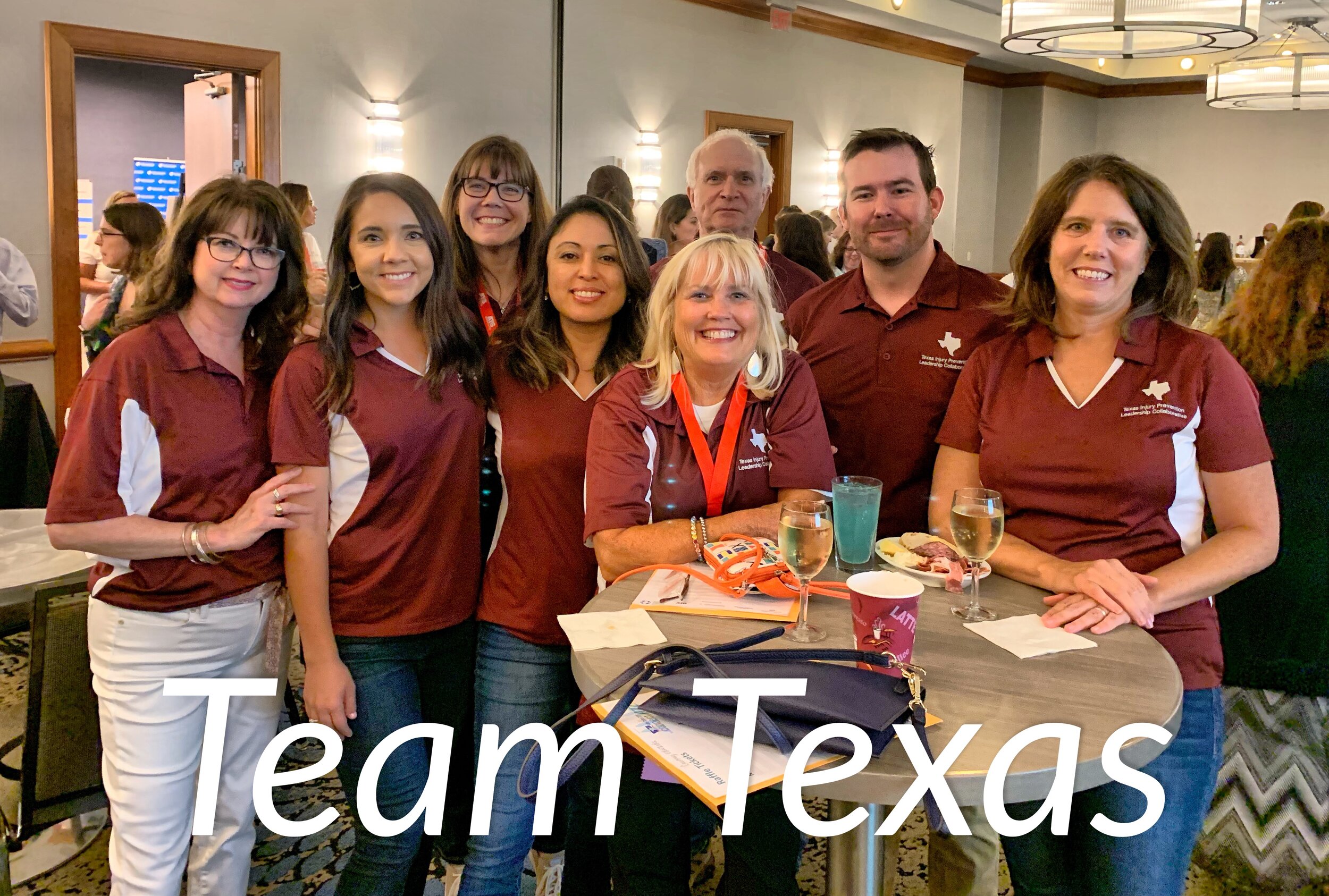
Last week, I attended the 2019 Annual Safe States Alliance Conference in Atlanta. For me, the Safe States Conference is an opportunity to be with some of my closest friends. More than once, I’ve heard my friends say it is like going to a family reunion – the good kind! But it is also busy for me – very busy. This year was no exception. Many of our Team Texas members gave presentations. Those presentations, along with my other Safe States responsibilities kept me running from room to room every day. When the daily sessions were finished, there were more meetings or social events to attend in the evenings. There always seemed to be one more person wanting to visit with me about a new idea. As is the case every year, the days run into nights, and it can be physically exhausting. Most years when I would finally lug my body to my hotel room late in the evening, I would realize that I hadn’t spent much time with my friends.
This year was different. My friend Lisa, who has retired, drove to Atlanta and stayed with our friend Peg. I only see Peg once a year, and I haven’t seen Lisa since she retired in 2015. Although we don’t see each other often, we occasionally send text messages. I had a social event the first evening I was in Atlanta, but I dragged Peg and Lisa with me so that I could spend some time with them. It was so nice to be in their presence. Another night after our meetings ended, I followed several Team Texas members to watch the third Democratic debate at a bar that was hosting a watch party.
Instead of heading to the airport as soon as the conference ended, I headed to my friend Susan’s where our friends Amber, Linda and their teenage daughters joined us for the weekend. What did we do? We took the teenagers to get manicures and to the mall to shop for homecoming dresses and jewelry. Susan and I don’t frequent malls much anymore; our daughters are older and living on their own, but we didn’t mind being at the mall because being with our friends was just fun. Later back at Susan’s, we just spent time talking, and eating and drinking Susan’s food and beverages. Sometimes, Linda and I would be in deep conversation while Amber and Susan were in conversation just inches away from us. We enjoyed our time together, but we also gave each other space to be alone. Sometimes the teenagers joined our conversations. We listened to them, and they observed us – four women with deep friendships navigating different stages in our lives. It was just an easy weekend because our friendships our so easy.
I’m fortunate to have a wide breadth of friends and even more fortunate to have a few who know and understand the depth of my heart and love me when I’m not perfect.
I’ll be the first to admit that I’m not the perfect friend. Too often I allow those multiple demands on my time to keep me from calling or texting to check in with my friends. Connection is very important to me, yet I sometimes fail at connecting. I read a blog post in July entitled “Here’s to the Friends Who Love Us Even When We Go Quiet.” The author talked about how much she cherished the friends who don’t complain, judge or resent her even when she is absent. She said, “I barely have time for the amazing people in my life; I certainly don’t have time for people with standards I can never live up to or high maintenance relationships that require a lot of obligatory work.” Amen, sister!
When I arrived back in Dallas on Sunday evening, my body was tired, but my heart and bucket were full.
Thank you Amber, Linda, Susan, Peg, Lisa, and as always, Team Texas and my Safe States family!


Are We Being Conditioned to Hate?

It’s September, which in my part of the country means – football season. As is often the case, I watched the Oklahoma Sooners opening game last weekend with my husband in a sports bar. We were decked out in crimson and crème and cheered and “high-fived” each time the Sooners scored. And, they scored a lot, which always makes us happy!
As I was glancing at the television during one of the commercial breaks of the OU/Houston game, I saw a clip of Mack Brown dancing following the University of North Carolina’s win over South Carolina. I smiled watching Coach Brown’s dancing figure. But that would not have been the case 11 years ago.
Even though I don’t have an ounce of athletic ability, I’m a sports fan. My favorite sport is basketball, mostly because my father and uncle were high school basketball coaches, then I married a basketball coach. But I also love college football, especially the team whose name appears on my college diplomas. I cheered for the Selmon brothers, Jimbo Elrod, Steve Davis, Jamel Holloway, Sam Bradford, Adrian Peterson, Joe Washington, Billy Sims and many, many more. Because I’m a sports fan (and still married to a now retired coach), our television was usually tuned in to ESPN or a local sportscast where we would watch pre- or post-game interviews with the coaches.
But when I moved to Dallas and turned on the local sportscast, it wasn’t Bob Stoops being interviewed – it was Mack Brown. At the time, Coach Brown was at the University of Texas. He had actually been the Offensive Coordinator at OU during the 1984 season but left to become the head coach at the University of North Carolina from 1985-1997. In 1998, he was named the head coach of the Texas Longhorns.
To say that there is no love lost between the Sooners and Longhorns is an understatement. I grew up despising the Longhorns. Every year in October, the Sooners and Longhorns converge in Dallas at the old Cotton Bowl stadium for what is known as the Red River Rivalry. In 1996, the two schools became conference rivals when the Big 12 Conference was established. To make matters worse, I married a graduate of the University of Arkansas, who had been in the old Southwest Conference with Texas before that conference was dissolved and many of the Texas universities joined the Big 12 Conference. Needless to say, I think my husband’s disdain for the Longhorns was even greater than mine.
I’m ashamed to admit this, but I used to cringe at the sound of Coach Brown’s voice. Years of listening to Oklahoma sports reporters and fans complain about Coach Brown being whiny about not being able to win against Bob Stoops and the Sooners really did a number on me, and I bought into the rhetoric “hook, line and sinker.” If I was watching or listening to a Dallas sportscaster interview Coach Brown, I changed the channel.
Then a funny thing happened. I started listening to my friends who are UT graduates and fans talk about what a cool human being Coach Brown is (obviously when you live in Dallas, you have friends who are UT grads)! I started reading articles about his philanthropic efforts. It seems that outside of Oklahoma, Coach Brown was revered and considered one of the genuinely nicest coaches in college football. His 30+ year coaching record certainly speaks for itself, which after last week’s game is now 239-117-1 and includes a national championship in 2009. Oh, and the Longhorns and Coach Brown beat my Sooners the first two years I lived in Dallas. By the time Coach Brown retired from the Texas sideline in 2013 and joined the ESPN broadcast booth, he had become one of my favorite college football coaches.
Coach Brown has returned to the University of North Carolina for his second stint there as head football coach. In the opening game of the season last week, the Coach Brown led the Tar Heels to a come from behind victory over Will Muschamp (his former assistant at UT) and South Carolina. When I saw the clip of Coach Brown dancing and later his emotional sideline interview, I was reminded about how wrong I was about Coach Brown when I arrived in Dallas in 2008.
I wonder – are we being conditioned to hate? To hate others who don’t support our teams or don’t agree with our religious beliefs or our politics?
My pre-Dallas opinion of Mack Brown (and that is exactly what it was – only an opinion that was not based on facts, but on opinions of others), is not the only time I’ve been wrong about someone or something. Last week’s revelation is just another reminder for me to put in the hard work of listening and seeking truth and facts before jumping to conclusions. I’m still unlikely to wear orange, but I’m trying to do better in all the other things that really matter.
Reflection from Z Tejas -- Part 2

Last week I was back in Austin for a couple of days of meetings. On that trip, I stayed at a hotel in the Arboretum, which gave me an opportunity to walk to one of my favorite restaurants – Z Tejas. For someone who doesn’t really cook, I’ve managed to accumulate quite a number of “foodie” friends who like to introduce me to new restaurants. I actually really enjoy trying these new places with my friends, but if I’m on my own in the Arboretum area of Austin – I’m headed to Z Tejas. It’s my place to eat chips and guacamole, drink a jalapeno margarita, and reflect.
So, here’s my reflections from Z Tejas in August 2019. There were a couple of things that gave me pause last week.
When I arrived in Austin, I quickly popped into one of the shops in the Arboretum looking for a gift. While I was there, I noticed a young mother and her toddler son. At one point, the mother wandered into another room of the shop unbeknownst to her son. When the child noticed that his mother was not within his eyesight, he panicked and started crying. The mother heard her child and quickly came to retrieve him.
As I witnessed this scene, I was suddenly struck by a memory that happened when I was 4 or 5 years old. At that time, my father was the high school boys’ basketball coach in Fletcher, Oklahoma. My mother was taking undergraduate classes at Oklahoma College for Women in Chickasha, Oklahoma, which is now known as the University of Science and Arts of Oklahoma (USAO). Some of the details are sketchy for me (as a reminder, I was 4 or 5 years old), but I think my mom must have stayed in a dorm in Chickasha for a short period of time to complete a class. My memory is of my dad, sister and I at the dorm to pick my mom up after her class had ended. I remember being on the elevator and my younger sister and I getting separated from our parents. I don’t remember what caused us to be separated, I just remember the sheer panic I felt as I held my 3-year-old sister’s hand and couldn’t find my parents. As I watched the scene with the crying toddler in that store in Austin, that memory came flooding back to me. I’m 61 years-old, at least 56 years removed from the incident, and I felt that panic viscerally. I don’t know how long we were separated from our parents – maybe minutes, yet 56 years later, I tasted the bile in my mouth of that fear. My heart was palpitating. It took several minutes before my breathing returned to normal.
Later when I was at Z Tejas and remembering my reaction to the scene earlier in the day, I thought about what is occurring in our country regarding immigration issues and child separation. Clearly, anyone who knows me knows that I have strong emotional feelings about this issue, but the purpose of this blog is not to air those feelings. It is to search for and highlight positivity. So, kudos to those at the border in Texas and across the country who are working to find solutions. You have my admiration and utmost respect. You are my she-roes and heroes.
My other reflection was about my walk from the Renaissance Hotel in the Arboretum to Z Tejas. It’s less than ½ mile, but there are no sidewalks. And, every time I walk that short distance on the side of road, I’m a little irritated that there are no sidewalks. Can’t north Austin and the Arboretum area do something to make my jaunt to Z Tejas a little safer?
The following day I attended the 2019 Texas Statewide Pedestrian Safety Forum and listened to a panel of presenters discuss transportation equity and the implications for pedestrian safety. I’m interested in pedestrian safety for a variety of reasons. First, it’s part of my job. Second, I am an active pedestrian and have made a choice to live in an area with a high Walk Score. Walk Score measures the walkability of any address and the ability to travel by foot to locations that offer services, retail, restaurants, places of worship, etc. I can easily and safely walk to dozens of restaurants, my dentist and ophthalmologist offices, an urgent care clinic, movie theater, several grocery stores (Trader Joe’s, Whole Foods, Tom Thumb), coffee shops, or clothing stores. I expect to be able to walk anywhere I want safely.
Just when I’m feeling smug about my situation or irritated when something doesn’t go my way, I get slapped in the face with my white privilege. That’s what happened to me at the Pedestrian Forum when I listened to the panelists talk about the lack of sidewalks in under-resourced neighborhoods. I have access to sidewalks and an urban trail because I can afford to live in my neighborhood. I’m fortunate that I make a livable wage, but individuals who make $50,000 or less are probably not likely to be able to live in my neighborhood. And therein lies the problem – people who have transportation issues and are most in need of being able to walk to work or services – can’t.
As I listened to the panelists, I was reminded of my irritation at not having access to sidewalks between the Renaissance Hotel and Z Tejas, which by the way is in a relatively affluent area of Austin. I was also reminded of something my husband often says, “There’s a big difference between inconvenience and adversity.” I choose to walk less than ½ mile without sidewalks from my hotel to a restaurant I like – inconvenience. Individuals with limited transportation and housing must try to navigate long distances and crossing unsafe heavily traveled streets without sidewalks and marked crosswalks – adversity.
Following the Pedestrian Safety Forum, a group of injury and violence prevention professionals from across Texas gathered for the Texas Injury Prevention Leadership Collaborative Annual Meeting to discuss ideas and strategies for making Texas safer. The energy and commitment of this collective group of people always revives my spirit. And getting to meet in one of my favorite cities and spend time at one of my favorite restaurants reflecting is just an added bonus.


Working Weekend

“What’s the plan for the weekend,” my husband asked on Thursday evening. My husband likes to have a plan for every minute of every day of every week. Me, not so much. I knew what he was asking though. Are you coming to Oklahoma? Do I need to clean the house?
“I don’t have one,” I replied. It had been a busy week, and I was just looking forward to waking up on Saturday morning without any planned activities.
Friday was going to be an easy day. The only thing on my calendar that day was my Action Inquiry Group (AIG) call that afternoon, something I always enjoy. After that, a glass of wine and the weekend. I had read our assigned article about leading a life of inquiry, so I was feeling prepared for the AIG call. However, minutes into the call it became obvious that while I had remembered one of the assignments, I had completely forgotten another one – selecting a personal mindfulness practice.
Well crap.
I clearly remembered that I was going to do that after our last call, but that was a month ago, and I was on a work trip during that call, and the best intentions had gotten lost in the frenzy of work, travel, etc. You get the picture. I came clean to the group, and of course they reminded me that life is messy and chaotic and that they understood. I love those people!
By the end of the call, I felt like I always feel – energized, excited, and committed to select and start my mindfulness practice. I picked up my phone to download an app to get me started. Isn’t that what everyone does in this day and time? That’s when I saw the email from work. There was a problem and it needed immediate attention. Any non-plans that I had for the weekend were vanquished. I knew that I would spend the weekend working.
I had an initial moment of feeling anxious, but then I took a few deep breaths and began to feel calmer. Perhaps it was fortuitous that I had just finished the AIG call. The problem at work was not a new one. It had to do with some data reporting. We had discussed it in the past but had never adequately resolved the issue. I thought there were some discrepancies in the reporting. I called my Vice President, and we discussed ways to resolve the issue.
After we talked, he emailed me a tracking spreadsheet to compare data from previous years to the current one. I was grateful for his help. He’s very good at process improvement. My strengths lean more to the bigger picture stuff. The tracking spreadsheet was going to be helpful. I sent a text to one of our staff who keeps detailed activity reports each month and asked her to send me all of the reports from the past two years. I hated to have to do that. It was late on Friday afternoon, and I didn’t want to have to bother her. But as usual, she responded quickly and graciously. Have I mentioned that I also love our staff?!
I took a break from working on Saturday morning and went on a long walk. During my walk, I called my mother who asked me what I was doing for the weekend. I explained that I was working. Later that day, I got a text from my sister that said she had also talked to our mother who had told her that I was stressed because I was having to work through the weekend.
But I wasn’t stressed. This was a problem that needed to be fixed, and fixing it was long overdue. With each passing hour on Friday night and Saturday, as I compared the reports and entered data into the spreadsheet, a pattern began to emerge. On Saturday night, I sent the spreadsheet to my Vice President. I don’t think we have solved the issue yet. We will discuss it more next week, but I think we have a better idea about the discrepancies and are possibly closer to finding a solution.
On Sunday, I awoke and went for another long walk. I listened to an audio book. When I got home, I finally downloaded a meditation app and spent 15 minutes doing the first meditation. Then, I did something I’ve done only twice in the 5 years I’ve lived at this apartment. I put on a swimsuit and went to the pool.
When I got to the pool, there were several young women at the pool, probably all in their 20s. Their bodies were lean; their skin was tight. My body is no longer youthful. My skin is sun-damaged from too much time in the sun in my teens and 20s and too little sunscreen. But for the first time in a very long, I didn’t feel self-conscious or self-loathing. I sat in an Adirondack chair and splashed water across my arms and legs. I felt the heat from the sun. I smelled the chlorine in the pool and the scent of the sunscreen.
At one point, I got up from the chair, slid into the pool, and let the cool water wash over me. When I climbed out of the pool, I caught the eye of a young African American woman and she smiled at me. Not a judging smile, but one that was warm.
It’s been a good weekend. Maybe, I’m finally getting the hang of learning how to live mindfully.


Desperately Searching for Something Positive

Last Saturday, my husband and I were at our cabin in northeastern Oklahoma. I was lying on one of the beds on our screened porch working on an article I was writing. The weather had been unseasonably pleasant for early August. In fact, we had not even turned on the window unit air conditioner we have in one of the four rooms of our small cabin. A thunderstorm had passed through the area only an hour earlier, and I had enjoyed listening to the rain hitting our deck as the wind whipped through the trees. There was a breeze across my face. I was appreciating those simple moments of awe that come with being at our cabin.
My phone, which was beside me on nightstand, suddenly lit up with a breaking news message. I’ve been trying really hard to “unplug” on weekends. But when I looked at the phone, I saw the words “Mass shooting in El Paso.”
Not long after the 2016 election, I saw a cartoon posted on my cousin’s Facebook page that read, “My desire to stay well informed is currently at odds with my desire to remain sane.” I think of that cartoon often. Last Saturday, I interrupted my momentary feelings of calm to click on the news link.
By now, we all know what happened. A 21-year-old white man from Plano, Texas drove more than 10 hours to a Walmart in El Paso for the sole purpose of killing “Mexicans.” Using an AK-47 style rifle, he opened fire killing 22 people and wounding 24 others. Those killed included 13 American citizens, eight Mexican nationals, and one German citizen. They ranged in age from 15 to 90 years of age. There were stories of terrified children running through the store as the shooting began. A 25-year old mother died while shielding her 2-month old infant son from the bullets. The infant’s 23-year old father was also killed. An 86-year old grandmother was killed while waiting in the checkout line. A 63-year old grandfather was killed while shopping with his wife and his 9-year-old granddaughter for back to school supplies.
Twenty minutes before the killing spree began, the killer posted a document online in which he expressed hatred for Hispanic people and detailed a plan for a deadly attack on the Hispanic community in the United States. In that document, he used words that have often been used by the current President of the United States and other white supremacy groups.
El Paso police responded to the scene within six minutes. Police say the killer has showed no remorse or regret.
Just hours later in Dayton, Ohio, another shooter armed with a .223-caliber high-capacity rifle fired at least 41 shots into a crowd in an entertainment district, killing nine people including his younger sister, before he was killed by police. According to the Dayton Police Department, the killer had 100-round drum magazines, which allowed him to shoot up to 100 rounds before pausing to reload. In just 30 seconds, he killed the nine individuals and injured 27 others. Fully loaded, his magazines would have carried 250 rounds of ammunition.
I’ve spent the past three years working on my own personal development and trying to find understanding and common ground with people who have different viewpoints. For the past two years, I’ve spent a considerable amount of time searching for moments of awe; trying to find positivity and unity in what appears to me an eroding semblance of the humanity that I thought existed, but in reality, probably never did. Every Sunday, I read Maria Shriver’s Sunday Paper, a digital newsletter “to inspire your heart and mind” and “provide hope for the path ahead.” But the task of finding hope and inspiration is getting harder and harder for me.
A few weeks ago, I saw Aaron Sorkin’s Broadway adaptation of To Kill a Mockingbird. Full disclosure – I love everything Aaron Sorkin has ever written. I’ve had several people complain to me that Sorkin is “too liberal.” They are entitled to their opinions. I just happen to like the fast-paced, smart dialogue of his characters. When I found out that my favorite screenwriter was adapting my favorite book ever to the Broadway stage, I knew I had to find a way to see the production.
I believe that Sorkin maintained the heart of the book and the 1962 film in which Gregory Peck won an Academy Award for his portrayal of Atticus Finch. But Sorkin’s Atticus, which has been portrayed by Jeff Daniels since it opened in 2018, is edgier and more complicated than the Atticus that Peck portrayed. One critic said that Daniel’s Atticus more closely resembles the Atticus of Harper Lee’s Go Set a Watchman, the book that was published after her death and which many scholars believe is a rough draft for Mockingbird.
There were many moments during the production that took my breath away, probably because of the familiarity of recent language that I find painful. But the part that I haven’t stopped thinking about since seeing the play was an exchange between Atticus and Calpurnia, played by LaTanya Richardson Jackson. In a much expanded role for Atticus’ African American maid, Calpurnia challenges Atticus’ appeal to his children to try to understand other’s perspectives – “to climb in his skin and walk around in it” – as well as the lengths to which we should extend tolerance to people whose views we disagree with and even condemn.
I’m also struggling with whether my efforts to understand viewpoints that I find abhorrent is really the best thing. The reality is that I don’t want to extend an olive branch to people who believe that white people are superior because I just don’t believe there are “good people on both sides” of that perspective. I don’t want to extend tolerance to people who espouse against the “Mexican invasion” because when they aim their assault rifles at “brown people,” they may be aiming at my friends. It’s hard for me to feel compassion and empathy toward people who spew hate. It’s hard for me to be understanding when frankly, I’m scared to death.
Because this blog is meant to highlight things that are positive, I’ll continue to honor that promise even in the face of continued horrific tragedy. On my flight to Oklahoma last week, I read an article in the August 2019 issue of the Southwest magazine, entitled “The Man Who’s Mowing the World.” The article was about an African American young man, Rodney Smith, Jr., who has devoted the past few years to providing free lawn care for older people, those who are disabled, single mothers, and veterans. Known as the “lawn mower man,” the 30-year-old started a non-profit in 2016 called Raising Men Lawn Care Service. When he’s not doing yard work, he distributes supplies to the homeless or speaks to student about his work.
After hearing the news from El Paso and Dayton, I kept trying to focus on the story about Rodney Smith, Jr. I also read the story about the “Teeter-Totter Wall,” custom-built seesaws that have been placed on both sides of a border fence along the Mexico/New Mexico border. University of California Berkeley architecture professor Ronald Rael and Virginia San Fratello, an associate professor of design at San Jose State University, designed the project to allow children from both sides of the border to play with each other.
You can judge me if you want, but this week I also retreated back into an Aaron Sorkin world by binge-watching the first season of The Newsroom, my favorite television show ever. For those who haven’t seen The Newsroom, it is about the transformation of a fictional 24-hour news cable network, Atlantis Cable News (ACN) to “do the news well in the face of corporate and commercial obstacles.”
In the first episode, the lead character, Will McAvoy (also played by Jeff Daniels) was a panelist at a college event. A student asked McAvoy to respond to why “America is the greatest country in the world.” McAvoy then delivers a typical Sorkin-esque statistics-laced soliloquy describing why America isn’t the greatest country in the world. That clip from the show still gives me goose-bumps even after watching it dozens of times.
In the last episode of season 1, McAvoy had been struggling with a magazine story written about him in which the author of the article called him “the greater fool.” In one of the last scenes of the episode, the economic reporter, Sloan Sabbath, played by Oklahoma native Olivia Munn, said to McAvoy, “The greater fool is someone with the perfect blend of self-delusion and ego to think that he can succeed where others have failed. This whole country was made by greater fools.”
McAvoy contemplated that for a moment, then he turned around in the anchor chair and spotted the young student from the college event. She was at ACN to apply for an internship. McAvoy recognized her and asked her why she wanted to work at ACN.
“I watch the show,” she replied. “And, I read the New York magazine article, and I know what a greater fool is, and I want to be one.”
“Ask me again,” McAvoy demanded. “Ask me your idiot question again.”
“What makes America the greatest country in the world,” she asked?
“You do,” McAvoy replied to the young woman.
Prior to his tirade at the college event in the first episode of season 1, McAvoy thought he spotted his ex-girlfriend, MacKenzie McHale, in the audience holding up a note pad with the words, “It isn’t.” McHale, played by Emily Mortimer, then flipped the pad to the next page, which read, “But it can be.”
There was a time that I actually thought the United States was the greatest country in the world, but I don’t anymore. However, when I hear stories about Rodney Smith, Jr. and initiatives like the Teeter-Totter Wall, I have hope that it can be.
Perspective

I gazed out the window of my hotel room on the 40th floor of the Marriott Marquis in Times Square. I was in New York City for a brief 48 hours with my best friend. Just minutes before, we had walked into the hotel, escaping the heat, as well as the noise and bustling activity of the city. Forty floors up in our air-conditioned room, I couldn’t hear the noise and could barely make out the people and vehicles below, which only appeared to be specs.
The image reminded me of a story my colleague, Cheryl Wittke told me. Several years ago, Cheryl’s daughter was working on a school assignment. I don’t remember the details of the assignment, but it involved her looking out over the city of Chicago from the top floor of one its prominent sky rise buildings. In the paper she wrote about the experience, she noted that from that vantage point you are so removed from the street level that it’s impossible to see or understand what is happening on the street.
While we were in NYC, Carolyn and I saw the matinee show of Aaron Sorkin’s adaptation of To Kill a Mockingbird. Our seats were in the middle of the last row of the balcony. We could see the entire stage, but missed the nuance in facial expressions of the actors. Watching the Broadway version of Harper Lee’s depiction of a trial in Maycomb, Alabama in the 1930s was sadly eerily familiar. While the performances were amazing, Carolyn and I found it difficult to listen to some of the dialogue. Based on the language we’re hearing in July 2019, it makes me wonder if we are really removed from the Jim Crow laws that plagued our country following the Civil War?
Later in the evening, we watched the musical, Frozen. For that performance, we sat on the first row of the theater and looked up at the performers. We were so close that when Caissie Levy (Elsa) rushed to stage left during a scene, her skirt whipped across Carolyn’s face. We were close enough to see the perspiration glistening on the performers’ faces, but probably missed the nuance of the broader view from the balcony.
That’s the thing about viewpoints. It’s hard to understand different perspectives if you’re only looking at things from one view.
A few weeks ago, I met with members of the Community Development staff at Parkland Hospital to discuss ideas to decrease the rate of late stage breast cancer diagnosis among women in a couple of zip codes in south Dallas. Many of us on the leadership team had been discussing ways to expand access to Parkland’s mobile mammography van in the two zip codes, rationalizing that expanding access would solve the issue. When you work for a hospital system, the default solution is usually improving access to care. However, I learned from the Community Development staff that work every day with the population we are trying to reach, that we were missing the bigger picture. Many of the women we are trying to reach are single mothers who are working multiple jobs trying to feed their families, keep their utilities turned on, and pay rent. Couple that with the internal barriers such as needing several appointments to complete paperwork for financial assistance, it’s no wonder that getting an annual mammogram is a low priority for these women.
It’s a noble cause to serve those who have limited financial resources, but the Community Development staff certainly opened my eyes to the need for involving the voices of those we are serving, as well as the staff on the front lines.
This seems to be a recurrent theme with my blog posts, but it is worth repeating. We need many and varied perspectives to solve the complex societal problems we are facing. As Carolyn and I looked out the window of our 40th floor hotel down at the specs below us, she reminded me those were not just “specs.” They are real people, each with a story.
There are two lines from To Kill a Mockingbird that are still reverberating through my mind. The words that Atticus Finch (Jeff Daniels) delivered during his closing argument in defense of Tom Robinson (Gbenga Akinnagbe), “We have to heal this wound, or we will never stop bleeding.” And, the question asked by Calpurnia (LaTanya Richardson Jackson), “How long are we going to have to wait?”
Watching To Kill a Mockingbird left me hoping that all of us will experience an awakening to the realities of injustice and bigotry. Watching Frozen left me cheering for the “sister/girl power” theme, and hoping that we can somehow find a way to “let go” of the things that keep us from doing that – hatred, fear, mistrust.
And as always, the weekend with Carolyn left me feeling grateful for time spent with my best friend.


How Much Longer Do We Have To Wait?
During the four months between the time that my father was diagnosed with pancreatic cancer until he died, I spent every waking moment consumed with thoughts about cancer. In between feelings of deep sadness and fear, my sister and I searched for a miracle cure. The pain I felt was excruciating. The days were long, yet too short. Time was running out, and there was nothing I could do to stop it.
During those months, I was only partially present. I certainly wasn’t productive at work or at anything else. But, on occasion, I would look around and notice that life was continuing around me, oblivious to my family’s heartache. We were fortunate to have had plenty of support from family and friends (for which we are eternally grateful), but the people sitting across from me in the airport or in a restaurant were clueless that I was losing someone I loved. I vowed to be more attentive to the pain of others – those I knew and those I didn’t. Unfortunately, I’ve made that vow numerous times with the best of intentions; yet, I have failed too many times to count.
I remember watching my 90 year-old grandfather lean over his son’s bed (my 65 year-old father), tears streaming down his face as he said, “It should be me, not him.”
I was reminded of these memories this week.
There have been many medical advances in the past 20 years. I know there are hundreds, thousands of scientists and researchers who are tirelessly working to find cures for cancer, as well as other diseases. I know that we’ve made progress. I have friends who are cancer survivors. I also know that it takes time. In the years since my father’s death, I’ve lost several friends to cancer. I’ve watched friends lose a child to cancer. When someone you care about is waiting/hoping for a cure, it becomes harder to “wait” on those cures.
During the past couple of months, I’ve been attending several conferences and meetings that have featured presentations about autonomous and connected vehicles. I even got to ride in a friend’s new Tesla a few weeks ago. The technology is amazing, and it feels like it is progressing at a remarkable speed. If I live another 10-20 years, it is likely that I will actually own one of these vehicles in my lifetime.
I wish that I could say the same for seeing a cure for the insidious diseases that plague us. To do so, we will need to invest resources into ameliorating the diseases and conditions AND into preventing the potential causes by addressing environmental conditions that may contribute to these conditions. There are numerous credible scientific studies that suggest that certain chemicals as well as preservatives in our food have links to increased risks of developing certain types of cancer.
While the autonomous/connected vehicle technology seems to be advancing quickly, it doesn’t seem that progress in developing cures for diseases and conditions is moving at the same speed. I’m not suggesting that Elon Musk is the answer to finding cures for cancer or any of the other insidious diseases afflicting my friends and family such as multiple sclerosis, diabetes, or Alzheimer’s. But perhaps, if medical scientists had his resources, it would hasten the speed of finding cures.
Once again, my family has lost someone to cancer. My stepsister passed away this week after a valiant battle with metastatic cancer. Her husband, my stepfather, and her siblings are feeling the loss acutely. Her death will be recorded in the Texas Cancer Registry, a population-based registry to help measure the cancer burden in our state. As a public health professional, I understand the importance of a systematic approach to gather and analyze data to get a complete and accurate picture of health issues. I know that statistics can provide important information about disease trends and risk factors. Statistics can also lead researchers to identify preventive interventions.
But, my stepsister was more than a statistic. She was a wife, daughter, sister, and aunt. She was a daughter-in-law and sister-in-law. She was a stepdaughter. She was a friend. She was a piano teacher who cared about her students. She raised, rescued, and showed Irish Setters. She was a person who lived and loved. I’m sure that she and her husband felt the burden of cancer in ways that will never be measured.
Her family is comforted by the fact that her suffering has ended and that she is in a better place. But seriously, we’re almost into the third decade of the 21st century. How much longer are we going to have to wait for cures?
Rest in peace, Glenna.
Stormy Skies, Conversations, Kaleidoscopes, and Beauty

This week I’ve spent several days in Washington, DC attending the 2019 Safe Kids Conference (#prevcon). One late afternoon, I sat in the lobby of The Moxy in Washington DC watching the skies go from sunny to stormy. As a photographer, I’m always intrigued by the beauty of stormy skies because they make for interesting photos.
As usual, my days were filled with conference calls and meetings, in between conference sessions. I’m staying at The Moxy in downtown DC because it’s my new favorite hotel in DC. It’s a cool, hip hotel that’s part of the Marriott hotel chain. It’s within walking distance of Union Station and the Capitol area. Every afternoon, the lobby area was flooded with people showing up for Happy Hour. As I scanned the crowd, I saw people talking to each other and engaging over the many games at the tables. No one was looking at their electronic devices, with the exception of me, who was typing these thoughts.
One of the calls I had this week was our Action Inquiry Group call, which always leaves me feeling energized, heard, and positive. One of my colleagues mentioned that she had recently listened to the Two Dope Queenspodcast with Michelle Obama. So after the call, I downloaded the podcast and listened to it.
As an older white woman who is prioritizing learning at this stage of my life, I found the episode enlightening, as I listened to three black women discuss things like dealing with black hair in situations with rain and high humidity. Clearly, this is something that I’ve never even considered. As a result, I was suddenly reminded that my view of the world is just that. It’s seen through my lens, which has been pretty narrow.
The other thing that occurred to me is the realization that I’m craving intellectual conversations that allow me to further my leanings. I need to be around people who can provide more opportunities for these conversations.
Stormy skies excite me because of their beauty! Stormy conversations and situations also excite me because they offer opportunities to learn. Thanks to my friends and colleagues who continue to indulge me with these energizing opportunities.
With another week of national headlines dominated by racist undertones, I also heard some encouraging, inspiring news. I had breakfast with my friend Dr. Paula Yuma and Torine Creppy, President of Safe Kids Worldwide while I was in DC. I learned from Torine about Joyful Food Markets, a program in our nation’s capital that provides no cost, farmers’ market-style markets in elementary schools at dismissal for children and their families. The markets, operated in partnership with the Capital Area Food Bank partner Martha’s Table in all 49 elementary schools in Washington D.C.’s Wards 7 & 8, and are designed to both increase access to healthy, high quality foods as well as encourage families to eat healthy food. At each market, children receive a 15-pound bag of groceries, of which 70% is fresh produce. In addition to receiving healthy food, families are invited to sample a dish made with market ingredients at the Joyful Tasting Table and children are encouraged to make their own fruit or vegetable snack at the Joyful Junior Chef Table.
While we were in DC, my friends and I had an opportunity to view one of the celebrations for the 50th anniversary of the Apollo 11 moonwalk. We watched as a photo of Apollo 11 was projected on to the Washington Monument. It was an opportunity to reflect on the amazing feat of our space program in the 1960s, in accomplishing the mission at a time when we didn’t have the technology or knowledge we possess today. It was also an opportunity to remember the contributions of some brilliant women who didn’t get recognition for their contributions until recently.
Taking time to pause, reflect, learn and appreciate is always a “moment of awe.”
My life
My life was black and white and I believed it
I believed it
My eyes
My eyes looked at the world but couldn't see it
I couldn't see it
You're like the thing that makes the universe explode
Into the colors of a world I've never known
You keep turning, keep turning my life around
Violets and purples
Diamonds and circles
You're my kaleidoscope
I love every minute
You've got me in it
You're my kaleidoscope
Hey la nah nah oh
You keep turning, keep turning my life around
Hey la nah nah oh
You keep turning, keep turning my life around
Tonight
The stars are in your eyes and I surrender
I surrender
Tonight
Our hands against the wind, we are forever
We are forever
It all looks better when I see it with you here
You keep turning, keep turning my life around
Violets and purples
Diamonds and circles
You're my kaleidoscope
I love every minute
You've got me in it
You're my kaleidoscope
Hey la nah nah oh
You keep turning, keep turning my life around
Hey la nah nah oh
You keep turning, keep turning my life around
I closed my eyes to the orange skies
Living all of my days the same
Then you came along, and you sang your song
And the whole world around me changed
Kaleidoscope
A Great Big World




Next

Many of my friends on Facebook have been sharing an article written by Arthur C. Brooks that appeared in the July 2019 issue of The Atlantic, entitled “You’re Professional Decline is Coming (Much) Sooner Than You Think.” The article describes Brooks’ “quest to figure out how to turn my eventual professional decline from a matter of dread into an opportunity for progress.”
While I’m not an athlete, I’ve followed athletics for most of my life, first as a coach’s daughter then as coach’s wife, as well as a spectator and fan. Therefore, I’m very aware that some elite athletes struggle with depression as they come to terms with their declining ability. But, I had never thought of professional decline beyond the realm of the athletic arena. I read Brook’s article with interest because these days I’m closer to retirement and the end of my professional career than I am to the beginning or even middle. I read the article looking for insight. Frankly, the article surprised me. It was a little hard to relate to because this is just not something I’ve worried about during the course of my life.
Perhaps this hasn’t been a concern for me because I don’t get joy out of recognition for current or past glories. While I consider myself pretty ambitious, as would most of my friends, I loathe public recognition for accomplishments. Maybe that’s because I have always worked in a team environment – not ever has the success of any project I’ve been involved with been the result of my singular contribution. When I have received awards, it’s embarrassing for me. As the leader, I’m the one who gets acknowledged, but it’s always the team in a collaborative effort that made any project successful.
I still get as excited when the creative juices start flowing and we begin to discuss new project ideas, but my excitement and joy is fueled from watching the team excel or witnessing individual staff members as they become more confident in their ideas.
I’m thrilled when former staff members rise to leadership positions. While I’m flattered when they ask for my advice, I mostly listen to them as they bounce ideas off of me. I pretty much just validate their ideas and thoughts. Already, these individuals are so much more advanced in their professional development than I was at the same stage of my career. This doesn’t make me sad; it makes me ecstatic and hopeful.
When Tony Dungy retired as coach of the Indianapolis Colts in 2009 at the age of 53, I listened to many sportscasters talk about his career as a player and coach. Not one of those sportscasters seemed “worried” about Dungy’s life after football. Coach Dungy, who lead the Colts to a Super Bowl title in 2007, was not the most successful NFL coach in terms of wins and championships. But, he may be having the most successful “retirement.” When his “glory days” of football were behind him, he “unplugged” from playing and coaching football, but he stayed “plugged in” to life. He is a best-selling author of the books, Quiet Strength: The Principles, Practices, and Priorities of a Winning Life and Uncommon: Finding Your Path to Significance. (I’ve read both and highly recommend them.) He’s involved in numerous charitable causes, including All Pro Dad and Basket of Hope. He’s also an analyst on NBC’s Football Night in America. And, one more thing – he writes a blog!
In an interview with NPR shortly after his retirement from coaching in 2009, Dungy said, “If you're just saying, hey, I'm doing this. I'm working to make money. I'm working to increase my status. If that's all there is, I think you will find out that it's meaningless.”
Coach Dungy said that while it was meaningful and fun to go to the Super Bowl and win it, those times were not as meaningful as helping young men who came into the NFL at 21 or 22 years of age and watching them grow as men and community leaders.
I don’t think I have to worry about “avoiding misery” as Brooks discusses in The Atlantic article. When my professional tenure ends, I don’t think I’ll be looking back wistfully, but I’ll be looking forward with excited anticipation. Because I understand, like Coach Dungy, that there is still joy, and possibly some “glory days” ahead.
