
America

I’ve driven through many urban and rural areas of Texas and Oklahoma in the past few days, and I saw celebrations of our country’s independence everywhere. Store windows were decorated in red, white and blue. Old Glory hung from flagpoles, lampposts, porches, and apartment balconies. Fireworks blazed through the skies. Speakers blared everything from The Star Spangled Banner and America the Beautiful to Lee Greenwood’s God Bless the USA.
If I were asked 5 years ago what it meant to be an American, I would have proudly answered freedom and opportunity. When I heard The Star Spangled Banner, more often than not, my eyes would fill with tears and an overwhelming sense of pride would flow through my body. As a middle class, white heterosexual Christian, I have been privileged to experience freedom and opportunity. For a large chunk of my life, I naively believed that everyone in this country had the same opportunities and experiences, and I was insolated from understanding that they did not.
For what should be obvious reasons, I cringe at the word “great.” When Donald Trump said he would “make America great again,” Republicans cheered. When Hillary Clinton, said, “America never stopped being great,” Democrats cheered. Yet, the reality is that for some, America really has been great, and for others it has been shameful. What I realize now that I didn’t 5 years ago, because I was protected by my own privilege, is that while many have prospered, including me, others have been harmed. I have spent my entire career working for a state or local government agency, and I firmly believe in government’s ability to help and protect individuals and populations. But, I also realize that even when the intent is good, some laws and regulations can lead to unintended negative consequences.
There are many issues facing this country today. Healthcare costs continue to rise. College tuition costs continue to surge, as do interest rates on student loans, resulting in many young people entering the workforce with six-figure student loan debt. When I entered college the year this country celebrated its bicentennial, I was fortunate to have scholarship funds and a Basic Educational Opportunity Grant (BEOG), which was authorized as part of the Higher Education Amendments of 1972. Because of these funds, my working class parents were able to send both of their daughters to college without us amassing debt.
This country is also plagued with an opioid epidemic, which has contributed to our behavioral health crisis, which has contributed to our criminal justice system crisis. According to the U.S. Department of Justice, approximately half of state and federal prisoners meet criteria for substance use disorder. The Dallas County Jail is the county's primary mental health treatment provider for individuals with any involvement in the criminal justice system. It is also the second largest mental health facility in the entire state. However, the criminal justice system was not designed to treat mental illness or drug addiction.
Listen to any reputable news source, and you hear stories of continued discrimination in various forms, bigotry, and economic disparity. And, there’s the immigration crisis. We have many, many problems.
In an article published in Odyssey Online on June 5, 2017, St. Olaf College student Danielle Sovereign wrote, “Love for one's country has to be more than a paltry sense of nationalism or a spirit of competition against other nations. It has to be a willingness to admit the faults of the country you live in and fight for not only the rights of you and your family, but for the rights of all inhabitants of the United States.” Wise words, Danielle.
Despite the problems and shortcomings in our country, I still believe that democracy is the best form of government. I still believe that we can make a difference. I still believe it’s possible to create a country in which everyone has the same freedoms and opportunities. But, I also know that life presents complex problems, and that it takes physical and mental energy to keep going. And, that sometimes you need a break to recharge.
So, during the Independence Day holiday, I took a break from work and searched for moments of awe. I found these moments when I looked at my niece’s face and listened to her burbling noises. I saw them when I looked at a photo of my mother holding her smiling great-granddaughter. I experienced them as I meandered through the Farmer’s Market with my sister-in-law and her dogs, ate some fresh pesto and bruschetta that she prepared, floated on the river, enjoyed margaritas and conversations with friends on the patio, and cheered as the U.S Women’s Soccer Team won the World Cup!
I acknowledge that I was able to take that break because of the perks of privilege. I get it. But, I’ll use my renewed energy to continue the work we started. I still believe that our dreams can come true.
They can say, they can say it all sounds crazy
They can say, they can say I've lost my mind
I don't care, I don't care, so call me crazy
We can live in a world that we design
'Cause every night I lie in bed
The brightest colors fill my head
A million dreams are keeping me awake
I think of what the world could be
A vision of the one I see
A million dreams is all it's gonna take
A million dreams for the world we're gonna make.
A Million Dreams
The Greatest Showman


Embrace the Detours

I recently saw a t-shirt in Wimberley, Texas that said, “Embrace the Detour.” For those who are not familiar with Texas geography, Wimberley is an “off the beaten path” small town 38 miles southwest of Austin in the Texas Hill Country. I was in Wimberley with my friend Mary Ann because we have committed to extending our business trips after the “business” is finished. We are doing this to experience the “local culture” of the cities and surrounding communities on those business trips. We had just finished a week of meetings in Austin, which are held quarterly. Instead of immediately heading back to Dallas/Fort Worth, we had a nice dinner in Austin Friday night while listening to live music and headed to Wimberley on Saturday.
Seeing that t-shirt got me to thinking about a conversation that I had with my husband earlier. As I wrote in the blog post about our 40th wedding anniversary, my husband is a planner, and in many cases that has served us both well. I certainly believe in strategically planning for the future, so that we can be as prepared as possible. But, I also believe it is impossible to chart a course to get from point A to point Z without expecting there will be a few (or many) detours along the way.
Since I work in the field of injury prevention, I’ll use a motor vehicle analogy to explain this further. I think I’m a pretty good driver. I learned to drive when I was 15 years old and have had lots of driving experience since then. I have a car that has all of the latest safety technology built into the vehicle. But, if I notice another vehicle coming toward me in my lane where I have the right of way, I’m not going to stay in my lane – I’m going to swerve to avoid crashing. It doesn’t matter if I’m driving correctly, and the other person is wrong. What matters is my ability to course correct. And, that’s what I think detours are.
I think I officially began to embrace detours many years ago when my daughter and I were traveling to Colorado on one of our annual snow skiing trips. On this particular trip, we were just south of Colorado Springs when Staley announced we needed to find a restroom. I was immediately irritated. We had just stopped for gas an hour earlier, and I was annoyed that she hadn’t taken the opportunity to use the restroom at that time. But, I also knew that punishing her by making her wait until we arrived at our hotel in Denver, which was more than 2 hours away, was not a good option. So, I took the next exit and began looking for some place that had a restroom. About a mile down the road, we found a very cute and quaint country store that not only had clean restrooms, but that served organic foods and possibly the best chai tea I’ve ever had. That place became a “must stop” every driving trip to Colorado after that.
Since then, I’ve tried to learn from every detour my life has taken – even the painful ones.
Our trip to Wimberley wasn’t exactly a detour because it was planned. I discovered Wimberley thanks to several articles I’ve read on social media about the “best small towns in Texas to visit.” Wimberley was on every list. It didn’t disappoint. Nestled among many Cypress trees along the Blanco River, this town of just over 3,000 population is thriving!
There are no chain restaurants in Wimberley. No Starbucks. No Walmart or Target. There is an H.E.B. grocery store, which made Mary Ann (one of my foodie friends) consider if she could actually live there!
We spent hours wandering through the many quaint shops and art galleries. We started to believe that every person who lives and works in Wimberley must have had an intensive course in customer service! Every person in every shop, whether they were younger or older, was so gracious. They took the time to talk to us and answer our questions. And, we weren’t the only customers in the shops. There were many customers, yet every time a new customer would come in, we witnessed the same warm behavior from the sales clerks. It was impossible not to get caught up in the community spirit because these people exuded such love and pride in their community and their jobs.
We talked to two young people who had been raised in Wimberley, moved away for a time, but had returned. We talked to a storeowner who was from Dallas, but had moved to Wimberley with her husband to start a new life. We talked to a young black man who had lived in Dallas, Houston and Austin, but had chosen to move to Wimberley to live and work.
We had a wonderful lunch and cocktails at the Longleaf Craft Kitchen & Bar. While we were there, we had a conversation with the owner, who along with her husband also owns The Old Mill Store next door to the Longleaf. We learned that the owners had previously operated an art gallery in the building that now houses the restaurant, but had made the decision to close the gallery and open the craft kitchen in its place. When we asked her why, she said, “Millennials don’t buy art, but they eat and drink craft food and cocktails.” She explained that changing times meant that she and her husband needed to make some changes to their business plan. She said they made the adjustments to keep people interested in living and working in Wimberley and to continue to attract visitors. They closed the art gallery, moved some of the art to The Old Mill Store, built a kitchen, and opened Longleaf.
As I hear more and more about the demise of small towns across the country, I wonder if these towns would also be thriving if their leaders were more adaptable to changes.
While I more often than not do embrace detours, I’ve also been known to ignore them. As we were driving back to Dallas from Wimberley, traffic alerts popped up on both Mary Ann’s vehicle navigation system and the Apple maps on my iPhone. The alerts indicated a traffic delay a few miles ahead of us. Because traffic seemed to be moving at normal speeds and we couldn’t see any slowed vehicles in front of us, we made the decision to proceed on the same course and not exit where our devices were indicating. A half a mile past the exit, the road curved and we saw the line of brake lights. At that point, we couldn’t turn around and go back to the exit we had passed. It was late, and we were tired. But, we both realized no “gnashing of teeth,” complaining or blaming was going to speed up our arrival in Dallas. We just had to go forward at the snail’s pace to get around the crash. So, as we crept along, we noticed moments of awe around us – the stormy skies to the east and the orange/yellow sunset to the west, and I enjoyed 45 extra minutes with a good friend.
I recently saw an advertisement for Land Rover that said, “It’s not about getting to the finish line – it’s about respecting and enjoying the journey.” I believe that how we choose to navigate the journey, including the detours in our life, as well as the ones we don’t take is important.
I’m choosing to embrace the detours, accept responsibility for the ones not taken, and do the best I can to enjoy the journey.


Learning to “Lean In” to Disagreement

“I should've known the world was wide enough for both Hamilton and me.”
Aaron Burr in Hamilton
Lately, I’ve been considering whether I should I decline invitations from people who have different views than I do. It’s not because I don’t want to be around them – in fact, it’s quite the opposite. I’m fascinated with group dynamics and how people navigate disagreement to reach consensus. The reason I’ve even considered this is because my presence seems to make people with different views uncomfortable. I’m a “pleaser” by nature, and I don’t want to make people feel uncomfortable.
For most of my adult life, the people in my family’s social circle had vastly different views on virtually every issue than I did. When derogatory remarks about someone from a marginalized population or an issue of social justice were made, the individuals would look at me and make a joke about me being the “token liberal.” For many years, I wouldn’t say anything. I would just smile begrudgingly.
That’s not the case anymore. These days, I dispute comments that I feel are disrespectful and hurtful. And, even though I try to have respectful dialogue, I’m finding that these same individuals seem to have difficulty with my disagreement.
As I mentioned earlier, I am fascinated by group dynamics. This fascination was accelerated after I participated on my first State Technical Assessment Team (STAT) visit with the Safe States Alliance. The Safe States Alliance is a professional association of individuals who work in the injury and violence prevention field. The STAT visit is a service offered by Safe States to injury and violence prevention programs within state health departments. If a state injury program makes a formal request for a STAT visit, Safe States will assemble a voluntary team to travel to the requesting state to conduct a point-in-time assessment of the program and prepare a report, which makes recommendations to enhance activities. Each team member is assigned a section of the report to prepare.
STAT visits can be tough. The length of the visit has ranged from 4 to 5 days. The days and evenings are long, with the team working 14+ hours every day. In its current iteration, the team members spend the first two days of the visit conducting back-to-back interviews with partners and stakeholders the state program staff have invited to be interviewed. After the interviews, team members travel back to the hotel and spend more time together debriefing what was learned in the interviews. After the debriefing sessions, team members adjourn to their hotel rooms to write their sections of the report. On the third day, the team assembles in a conference room at the hotel to read and edit each section of the report to make it a cohesive document with sound and feasible recommendations.
There is typically a mixture of individuals on the team from various generations and various stages of their careers. As I wrote in my August 8, 2018 entry “I’m Still Learning,” 72 hours into a STAT visit, the team members can become tired and “punchy.” It’s at that time that I’m most intrigued and amazed by group dynamics. More often than not when the STAT members are tired, they will coalesce, push on, and complete the task at hand in a respectful manner. At the end of a STAT visit, I’m exhausted, yet energized.
There were a couple of instances during the past week when I watched similar group dynamics unfold in a way that also invigorated me.
The first instance was when the strategy team of the Texas Injury Prevention Leadership Collaborative met in Austin for our annual planning meeting. This is a group whose values are grounded in:
Supporting the inherent value of each individual and believing in the collective wisdom of the group with purpose and passion;
Creating safe spaces for discovery by striving to stimulate and influence one another by strengthening each member and their contribution;
Accepting the responsibility to voice our opinions while supporting each other’s right to authenticity, creativity and learning; and
Believing in collaboration and cooperative interaction to find common ground to produce meaningful outcomes.
When I am tired and feeling beaten down by the current state of discourse, I know that I can always find solace in spending time with this group of people. Our meeting last week was no exception. We don’t always agree. But, we have created safe spaces for disagreement, where our team members “lean in” and listen to hard conversations. This includes me. At one point during our meeting, one of my colleagues looked at me and shared a situation when I had unintentionally been complicit in making people feel excluded. Because of the trust we have generated, I was able to hear her words with a learning mindset instead of getting defensive. Instead of trying to figure out how to refute what she said, I was immediately able to see how my actions could have been perceived. Even when we have difficulty articulating perfectly, we still communicate respectfully. In doing so, we have developed the skillset to work through tension and discover new ideas and opportunities. I am so proud of this group and grateful to be a part of it.
The other instance this week came during an Action Inquiry Group call, when I witnessed the group members sit with confusion around a topic and talk through that confusion. As one of the facilitators of the group said, we often are uncomfortable with “not knowing” and overwhelmed with complexity. The kneejerk reaction is to either defer to an “expert” to come in and solve the problem. Or, we rely on our own cognitive bias to find a simple solution. Here’s the thing about complexity – it’s complex, not simple! Through our Inquiry group, we are learning how to notice and pay attention to the intangible things. As a result, we are open to exploring different ideas. By doing this, we were able to overcome the confusion on our call and come to a decision that we all liked.
In her book, Unlocking Leadership Mindtraps: How to Thrive in Complexity, Jennifer Garvey Berger said, “In times that are uncertain and changing fast, too much agreement, like too much polarization, is a problem.” She said that while too much agreement is pleasant, it makes us follow a narrow path rather than expanding our solution space, which makes it harder to create and pursue a wide span of options that will prepare us for the demands of an uncertain future. Complex situations require diversity of experience, approach and ideas. Berger encourages us to learn how to harness conflict rather than push it away.
Touché, Berger. I think I always knew segregation wasn’t the solution!


Unshakable Hope
When I started writing this blog in 2018, it was to “search for moments of awe.” Over the past year and a half, it has become very apparent to me that I can’t see “moments of awe” when I don’t have hope. Hope is critically important to me.
A few weeks ago, my best friend and I were discussing Brene Brown’s latest book, Dare to Lead. There is a chapter in the book where Brown talks about personal core values. Brown recommends that individuals narrow their core values down to two. We’ve been discussing core values at work and have completed an exercise in which each of our team members selected their personal core values. Photos with each of us holding a Word Art document with our individual core values hang on the walls in our suite of offices. My Word Art document lists 12 core values, and I had a hard time narrowing them to those 12. I explained to my best friend, that while I understand Brown’s reasoning behind narrowing them to two, I just didn’t think I could it.
Carolyn, who directs the Center for the Practice of Collaborative Leadership at The Johns Hopkins Hospital, produced a deck of cards with a core value on each card. She asked me to sort the cards, without too much thought, into two piles. One pile represented values that were important to me, and the other group was the discard pile. When I had finished, she told me to repeat the exercise with the “important” values pile, until I had narrowed the core values pile to a point that I could no longer narrow it anymore. The card that I just couldn’t discard was hope.
My sister teases me about my “Pollyanna/rose-colored glasses” viewpoint, but I think that is more about my hopeful nature. Even during the darkest of times, such as when my father and nephew died, I’ve always managed to find reasons to feel hopeful. Until the day arrived when I couldn’t.
I’ve been fortunate that I’ve escaped the throes of clinical depression that has affected several family members. Truth be told, I probably wasn’t very understanding in the past because it was hard for me to relate. However, the National Institute of Mental Health reports that major depression is one of the most common mental health conditions in the United States. According to the 2017 National Survey on Drug Use and Health, an estimated 17.3 million adults in the United States had at least one major depressive episode, defined as a period of at least two weeks when a person experienced a depressed mood or loss of interest or pleasure in daily activities, and had a majority of specified symptoms, such as problems with sleep, eating, energy, concentration, or self-worth.
I was one of those 17.3 million adults in 2017. I wasn’t just sad – I felt hopeless. This didn’t last for days or even weeks, but for almost 10 months. I felt like I was living in an alternate universe. My values of fairness, empathy, gratitude, humility, credibility, curiosity, and hope seemed to be lost among the cheering for a presidential candidate who had admittedly had multiple extra marital affairs, bragged about “groping” women, bragged about the size of his own genitals, mocked a reporter who had a disability, and insulted a family whose son was killed serving our country in the military. I watched as politicians and other leaders used, what I considered, racially charged rhetoric that seemed to embolden dormant neo-Nazi behavior. I watched news accounts of how several hundred members of white supremacy groups carrying torches marched on the grounds of the University of Virginia shouting, “You will not replace us,” and “Jew will not replace us.” I listened as Christian leaders praised these actions and cited Bible verses as justification. I read “tweets” from Christian pastors defending these actions while condemning persons who are gay or lesbian. I watched others, who claim to be Christians, turn away from the hate and violence with apathy.
Where I once saw immeasurable kindness and generosity, such as following the bombing of the Alfred P. Murrah building in Oklahoma City or when my father was ill, I could only see a country that no longer resembled my values. The people being targeted were not nameless, faceless Mexican-Americans, blacks, Muslims, gays and lesbians, or women seeking justice from sexual harassment or freedom for reproductive rights. They are my friends and family. Their issues are my issues. I was paralyzed with an overwhelming fear.
When I looked into the eyes of my friends, I saw their angst and fear, too. But, I also saw love and resilience. It was that love and resilience, as well as professional counseling, that got me through the dark months. Even today when I read my journal entries from that time, it still stirs feelings of despondency. But hope has re-entered my vocabulary.
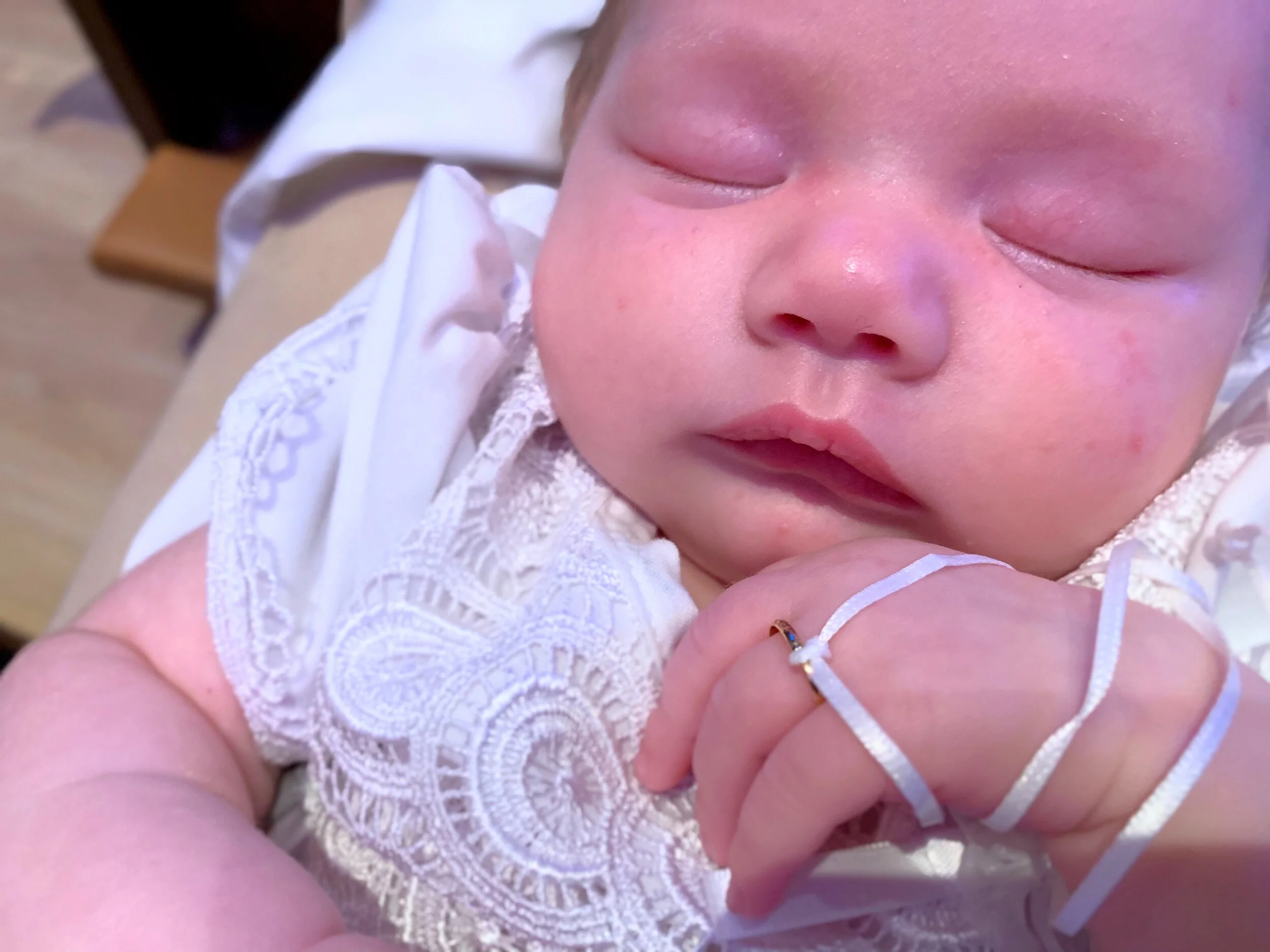
A couple of weeks ago, I attended the baptism for my great-niece. In honor of the infant baptism, the minister prepared a sermon on “unshakable hope.” That’s what I want. Correction, that’s what I need. I need to believe that Audrey will grow up in a world that is empathetic; a world where understanding and acceptance of people with different talents, ideas, and beliefs is fostered. I don’t want to succumb to the cynicism of our current reality.
I’ve discovered that you actually can find hope and “awe” if you just look for them. A few weeks ago while waiting to board my flight from Washington, DC back to Dallas, my iPhone XR froze. I couldn’t access my boarding pass. I hadn’t bothered to read the directions or look at the Apple Tips app since I had gotten the new phone. I was panicked and close to having a meltdown. An African American young man, with tattoos and baggy jeans, came to my rescue. This young man patiently showed me how to turn my phone off and back on again. He told me, “Don’t worry, I will stay with you until your boarding pass comes back up, and you get on the plane.” I was relieved and very grateful.
This week, my sister-in-law sent me an article about Cody Barlow, a 28 year-old heterosexual Oklahoma man, who decorated the tailgate of his pickup truck with strips of duct tape in rainbow colors, along with a message that read, “Not all country boys are bigots. Happy Pride Month.” He posted a photograph of the truck to his Facebook page with the following message:
“This is important to me, not only because I have family and friends that are LGBTQ+, but also because countless people have dealt with hatred and judgment simply for who they are, and/or who they love, for far too long. Obviously doing this isn't going to change the minds of those who are intolerant, but hopefully it can help drown out the hatred with love.
I live in a rural area in Oklahoma, surrounded by small towns in every direction, and I'm sure this is not a very welcome message around here, but this is going to be displayed on my truck for the entire month of June in support of pride month.
I don't think it is necessary to say, but for all intents and purposes I am a straight man that grew up here in Oklahoma. I love taking my truck mudding, going fishing, swimming at the lake, floating the river, and several other "country" activities.
It doesn't matter what negativity I receive for supporting this. I hope that this can help even the slightest bit to encourage and support at least one person that needs it.
I hope everyone finds their inner strength to finally live life loud and proud without regard for the negativity of ignorant people.
Happy pride month!”
Today, when I pulled up to the drive-through counter at Starbucks with my Starbucks app ready, the barista told me the man in the car in front of me had paid for my order. Surprised, but appreciative, I held my phone out to be scanned and said, “Then, I’ll pay for the order for the person in the car behind me.”
Perhaps, my hope for Audrey’s world isn’t that far off, after all.
Gmorning.
Try and face the world with
your best self, even if the world
doesn’t respond in kind.
Don’t do them, do you.
Gnight.
Tomorrow we try again.
Rest up.
Lin-Manuel Miranda
Gmorning, Gnight!
little pep talks for me & you”


I Need a Vacation!

Me: Sometimes, I think God takes control of our lives when we fail to listen and respond accordingly.
My friend Jen: Amen
Something happened this week that was either an epic fail on my part or a direct message to me from the Supreme Being that I need to slow down and take a vacation. I’ve written that I haven’t had a real vacation since 2014. My definition of a “real” vacation is more than 4 days strung together around a holiday or business trip.
Vacations are very important to me. I grew up traveling with my family on out of state vacations. The frequency of these vacations is somewhat in dispute. I remember them happening with more frequency than my mother does. Her version is probably more correct, but my version means they happened enough to make an impression on me and fuel my wanderlust gene.
When my daughter was young, we went snow skiing at least once a year and met up with my friend, JoAnn and her sons in the summer – typically at a beach in California. The summer after my father died, JoAnn rented a 15-passenger van. Staley, my mom and I flew to San Francisco, where we met JoAnn and her sons, plus a friend of my mother’s and her grandchildren. We then set off on a week-long driving trip from San Francisco down the Pacific Coast Highway to Los Angeles. One night of the trip, we stayed at a cool beach house. We liked it so much that we went back the following year and spent several nights.
Although that trip was planned, I was also just as likely to jump at the chance to go somewhere on a moment’s notice. I recall one year when Staley and I had gone snow skiing in January with my sister-in-law and nephews instead of our usual time at Spring Break. Two days before Spring Break was scheduled to begin, my friend, Debi casually inquired if I would be interested in going skiing again during the school break. Forty-eight hours later, we were headed to Colorado.
In the Fall of 2017, I had the idea for my sister and I take to take our mother and daughters on a Stephens’ girls trip to NYC in December, so our mom could see the holiday windows, a bucket list item for her. While we did manage to make the trip, Staley and I only spent 48 hours with them (Saturday and Sunday) because I had to get back to work the following Monday. Both of us were sick all of those 48 hours, possibly due to the work/life stress we were feeling at the time.
A few weeks ago, I got a text from my best friend that said she missed me and that we needed to plan some time together. I read the text and started crying. So, what happened? How did I go from being willing to head to Colorado within 48 hours to making excuses for not doing something that is vitally important to me? Why did a heartfelt text from my BFF suggesting a trip together send me into a fit of sobs?
I don’t know if I have the answer, but it could have to do with a change in circumstances. There have been some changes professionally that have caused me to question my competency. Thanks to executive coaching, I’m working on regaining self-trust, but it’s a work in progress.
So, instead of saying “no” or “not now” to work requests, I say yes. I say “yes” to uncompensated business travel because it allows exposure to the good work our team is doing. If the team is getting good exposure and publicity, I rationalize that it will be harder to eliminate our department if budget cuts are necessary. If I’m asked to speak at conferences, I say “yes” because it promotes our team. I work on weekends, trying to be prepared and anticipate any last minute requests I may get from our leadership, as well as other business partners.
Which brings me to the situation I mentioned in the first sentence. In the past week, I’ve been on five flights traveling to five cities. By the end of this week, it will be six flights and seven cities. On May 22, I flew to Baltimore/Washington DC for a meeting on the 23rd (the Baltimore part of the trip was so that I could spend 17 hours with my best friend before heading to DC for my meeting). Then, I flew back to Dallas on the 23rd and flew to Tulsa on the 24th to spend the Memorial Day weekend (and our 40th anniversary with my husband). I flew back to Dallas on Monday, May 27th. My fifth flight was on Tuesday, May 28th at 6:20 a.m. from Dallas to San Antonio. I flew to San Antonio to speak at a conference that I thought started on Wednesday, May 29th. I knew that my presentation would be on Thursday, and that I would need to leave immediately after my presentation for a meeting in College Station on Friday. With the precision of a surgeon, I had booked all of my flights, secured a ride from San Antonio to College Station on Thursday, as well as a ride back to Dallas on Friday, so that I could fly to Oklahoma City on Saturday for my great niece’s Christening on Sunday, then fly back to Dallas on Sunday evening.
When I arrived in San Antonio on May 28th, I checked into the hotel and participated on several conference calls. Later in the day, I finally managed to check the online agenda for the conference to find out what time it was scheduled to start. No, I hadn’t done that earlier because most days I’m lucky if I can check my calendar the evening before the next day. I quickly skimmed the agenda and saw that registration was scheduled to begin at 11 a.m. At that time, I was feeling exhausted and was relieved that I could sleep a little longer the following morning. However, I woke up around 7 a.m. on the 29th wondering if the plenary session of the conference actually started at 11 a.m. or if that was just when registration opened. So, I logged into the conference website again to discover that Wednesday’s activities were pre-conference sessions, of which we were not registered. Instead of feeling relieved, this time I felt panic. How had I managed to screw up the dates of the conference? If I were my boss, I would be wondering about my attention to detail. How can I be productive if I’m missing something as simple as dates of a conference?
I immediately sent a text to my friend and colleague, Jen, who lives in San Antonio. During my travels last week, I had missed a text from Jen asking me to call her to discuss some Texas Leadership Collaborative updates. I texted Jen, apologized for missing last week’s text, told her what had happened that morning, and that I was expectantly available for a meeting or call. Even though I had screwed up, I was still going to have a productive day. Jen’s response was “Shelli, go for a walk along the river. We can meet later for dinner.”
I sighed. Jen was right. I’ve been getting lots of messages from many people about needing to slow down and build self-care into my life. I’m hearing it from my family and friends. It’s in podcasts that I’m listening to and books that I’m reading. A couple of weeks ago, I spent 5 hours doing nothing but feeding and cuddling with Audrey (my great niece) and talking to Madison (my niece and Audrey’s mother). Later, my sister reported to me that Madi had said it was the most relaxed she had seen me in years. Ouch! Have my actions and non-stop work schedule sent the wrong message to my daughter and nieces?
Just this week, the World Health Organization (WHO) announced that it is updating its definition of burnout in the newest version of the International Classification of Diseases (ICD-11), which will go into effect in January 2022. The new definition calls burnout a syndrome or “occupational phenomenon” and ties it to chronic stress that has not been successfully managed. WHO says it is characterized by “feelings of energy depletion” and “reduced professional efficacy,” among other things. It also says burnout is a factor that influences health status. Yikes. How can I do the important work of preventing injuries and diseases if my physical and mental health is in jeopardy? How can I protect the ones I love if I’m feeling drained, disengaged, and depressed?
A few years ago, my friend, Mary Ann suffered multiple pulmonary embolisms, which is often fatal. Thankfully, Mary Ann recovered, but she said that experience caused her to re-evaluate her life and what is important. Since then, Mary Ann and her partner, Jodie have prioritized vacation time. Each year without fail, they take vacations in May and December. They say those vacations rejuvenate their bodies, minds, and spirits.
Last week, my uncle called to tell me he was “spending his son’s inheritance” by taking the entire family to Hawaii. Honestly, I think that trip and the memories are going to be far more important to my cousin and his family after my aunt and uncle are gone than any inheritance!
After my moment of panic on Wednesday, I took Jen’s advice. I went for a walk along the San Antonio River Walk. I meandered through art galleries. I sat at an outdoor café and drank a margarita. I read a book my best friend had given me. I managed to walk 7 miles. I met Jen for dinner. Although it wasn’t a completely unplugged day (I sent and responded to a few emails), it certainly helped clear my mind for a very productive conversation with Jen.
I know that I need to make some changes. Hopefully, this week’s “wake-up” call will be the impetus to do so.


40 Years

There is a lot that can change in 40 years. Without question, technological advancements, that seem to be happening at the speed of light, change the way we communicate, work, and learn. In the past 40 years, we’ve been introduced to: the Internet, personal computers, mobile phones, e-mail, software, GPS (personal favorite), online shopping, online education, digital music and photography, solar and wind energy, fiber optics, DNA testing and human genome mapping, Magnetic Resonance Imaging (MRI), and non-invasive laser/robotic surgery (laparoscopy). Whew!
Forty years is basically two generations. It is also how long I’ve been married. When I got married in 1979, I didn’t have any grand illusions about the future. If I’m completely honest, I probably wasn’t thinking much beyond our wedding or honeymoon. But, even at the ridiculously young age of 21, I didn’t expect that marriage or life would be a fairy-tale. And, I certainly didn’t go into marriage thinking that I would “change” my husband. I just knew that I loved him, and that I was willing to put in the work to make our marriage last. I didn’t expect or want him to “take care of me.” I wanted a partner – a partner for life.
There were many people who didn’t think we were a good match, including individuals who worked with my husband. He had been a high school athlete and was a high school basketball coach when we met. I was a sophomore in college and had been a cheerleader in high school, not a basketball player. Let’s just say that my athletic abilities are limited. There were people who thought I wouldn’t be a good “coach’s wife” because I hadn’t played the game. Seriously. Ironically, my dad had been a basketball coach, and I loved the game. I still do. It may be one of the few interests that we actually have in common.
My husband knew what his career would be before he reached junior high school. I more or less fell into my career. He probably started planning for retirement around the same time he decided to become a basketball coach. That’s a good thing because, while he was planning for our financial security, I was planning the next vacation. He is conservative in his political views; I’m far left of center. He came out of the womb with “an old soul;” I’m Peter Pan. While we are both of the Baby Boomer generation, he is much more of a traditionalist, and I align more with Millennials, Gen X or Z or whatever. As I write this post, my husband is sitting in his car reading a newspaper, while I’m sitting in a coffee shop drinking chai tea and blogging.
Our marriage doesn’t look like the marriages of our parents or our friends. He was from a family where none of the women worked, yet he always supported my career. I never had any intention of not working. But during the summer of 1988, I looked at my 2 month-old daughter, and thought there was no way I could ever leave her. My husband looked at me and said, “I think you will always regret it if you don’t go back to work.” He was right (he will tell you that is the only time I have given him credit for being right, but that’s not necessarily true). While I love my daughter more than life itself, my husband knew that – just like Reese Witherspoon’s and Nicole Kidman’s characters in Big Little Lies – “I needed more!”
The thing is – everything good that has happened in my adult life and career is associated with my husband. When I said I fell into my career, it was because I followed my husband to Oklahoma City when he accepted a new job. Had we not been together, I’m not sure I would have ended up in Oklahoma City in the job that I landed after we moved. I wouldn’t have Staley or the friends that are so important to me. We never know what may have happened on the path not taken. There would likely have been different choices, different friends, and certainly different children. But, I’m pretty happy with the life I have and can’t imagine my life without the people I love in it.
True to form, my husband has been trying to plan a gift for our 40th anniversary for 2 years. He is prone to big grand gestures on special occasions, while I prefer drama-less episodes throughout the year. His first thought was to surprise me with a trip to South Africa. My best friend is from Cape Town, and he knows how much I want to visit that city. But, I nixed that idea, making it clear to my husband that I only want to visit South Africa if Carolyn and Dave are with us. So, he was on to Plan B. That’s the thing about my husband – he always has another plan waiting in the wings!
Just to contrast our differences, I ordered my husband’s gift last week – a set of traffic cones! He hates the traffic in Dallas (I love its energy), and he jokingly mentioned that he needed to carry traffic cones in his car, so he could park anywhere he wanted! His gift to me was a ruby (traditional 40th anniversary stone, of course) ring he designed. It’s beautiful.
Our marriage hasn’t been perfect. Like all marriages, we’ve had our share of struggles, as well as more than our share of fun, happy moments. With all of the changes happening around us, it is unrealistic to expect that people and circumstances don’t change. Certainly, our bodies change. Hopefully, wisdom and experiences also bring greater understanding.
On May 25, 1979, I stood at the alter in the First United Methodist Church in Ada, Oklahoma with much uncertainty, excitement and hope for a future that I couldn’t fathom. Today, I’m as unclear about the future as I was 40 years ago. But, there is one thing that I am sure about – “I still do” to continuing this journey and figuring things out with the man who always has a plan.
Happy anniversary, Stidham. I love you.


Hope

For several years, I’ve been fearful, worried, exasperated, anxious (insert any synonym for fear and dread here). It’s no wonder. Weekly, if not daily, I am confronted with hate speech. Even though I limit my consumption of cable news and social media and try really hard to focus on “moments of awe,” it’s hard to ignore the constant assaults on protections that I value. When I try to have civil, respectful conversations with people who disagree with my concerns, more often than not, I’m dismissed or told my opinions and values are “wrong.” It’s hard to stay hopeful.
But, I found some hope last week. Four years ago, my friend Debi’s son, Dr. Scott Martin, established Odyssey Leadership Academy in Oklahoma City. I wrote about Odyssey in my March 17, 2019 post.
I come from a long line of educators. I am a product of and have always valued traditional public school education. My husband, parents, aunt and uncle, sister-in-law, and niece-in-law were or are educators. Some of my closest and trusted friends teach or are leaders in higher education. I excelled in that system, as did my daughter. Dr. Martin and his brother are also products of and excelled in the traditional school system. Their father was a long-time educator, and both of those young men were taught and coached by my husband.
But, just because that system worked for us, doesn’t mean it works for all. It often feels like our systems, including the educational system, have been programmed to churn out carbon copies of a version of a small subgroup’s opinion of what is worthy, as opposed to critical thinkers equipped to solve problems.
There were a lot of naysayers when Dr. Martin proposed his idea of Odyssey Leadership Academy, including my husband. But, Scott forged ahead, and Odyssey opened in August 2015. Things are a little different at Odyssey than your typical school. They spend a lot of time outside the four walls of a classroom and in the community to understand societal problems and ponder solutions. While they study traditional subjects, such as math, science, civics and history, they do so in the context of real life. They use their math and science skills to build furniture and houses. They debate ethics in the context of real world issues. They teach appreciation for the arts. They don’t give grades, yet the students are accepted and attend colleges and universities of their choice, including: Lewis and Clark College, Michigan State University, Westminster College, Savannah College of Art and Design, Kansas City Art Institute, University of Oklahoma, Oklahoma State University, University of Arkansas, Academy of Contemporary Music, Southern Nazarene University, Oklahoma Baptist University, Brigham Young University, University of Central Oklahoma, and Hendrix College. Most receive President’s, Dean’s, Regent’s, Trustee’s, and Academic Excellence scholarships from their universities of choice totaling almost $1,000,000 in scholarships.
Debi had invited my husband and me to attend Odyssey’s end of year celebration, so last week, I flew to Oklahoma City. I listened to Odyssey students present their projects with poise and expertise that rivals anything I’ve seen in a long time. It had been a long day for me, but as I listened to the presentations, I noticed that I was feeling an emotion that has been dormant for far too long – hopefulness. I even purchased a painting from a very talented member of the freshman class (well actually, Debi paid for it, which has now resulted in an ongoing battle of how I’m going to repay her)!
It takes vision and courage to challenge the status quo. It takes empathy and compassion to understand that sometimes our educational system fails our students instead of blaming our students for failures. At a time when the college admissions scandal has garnered much attention, I wonder if our country could really go from mediocre to great if we used our energy to improve our systems rather than using that energy to scam and profit the elites? After meeting the students at Odyssey and hearing their presentations and stories, I’m hopeful.
Congratulations to the 2019 graduating class of Odyssey Leadership Academy. Our future is in your hands.
Well done, Dr. Martin.
Cuddle Time

On Saturday, I did something I haven’t done in a very long time. I spent 5 hours in one place.
I am usually in constant motion. If I’m home in the evenings, I’m working or cleaning. The same goes for the weekends when I’m not traveling. I don’t sit and watch television. I loathe naps. I don’t sit in coffee shops savoring a cup of coffee. If I’m in a coffee shop, it’s because I’m using their WiFi to work. My idea of “downtime” is a long walk or meandering through the Dallas Museum of Art.
It’s true that I love vacations and travel, but I haven’t been on a vacation since my husband and I cruised around the Greek Islands in 2014. This isn’t by choice; there are circumstances beyond my control that have hindered my ability for personal travel and vacation. Which brings me to another point – my idea of a vacation involves traveling. Whether it’s in the U.S. or another country, I want to visit a new place.
My family is very fortunate that we have a summer cabin on a river in northeastern Oklahoma. I often hear that “you should just spend a couple of weeks at your cabin.” First, if I had a couple of weeks, I would actually be traveling somewhere else. I love our cabin and spending time there, but that is not a “vacation” for me, and it likely never will be. Second, while well-meaning, that advice is irritating, particularly when it comes from someone who has never held a job, much less had a career or understands the demands of a work environment. It also makes me feel shame. Those who are familiar with Dr. Brene Brown’s work around shame understand that it is hurtful, not helpful. When I hear that I need to “spend more time at the cabin,” I feel like I’m disappointing someone, which translates to “I’m doing something wrong.” I should pay more attention to Dr. Brown’s words because they have given me insight and courage to trust myself and disregard unproductive feedback. She says, “If you are not in the arena getting your ass kicked on occasion, I’m not interested in or open to your feedback. There are a million cheap seats in the world today filled with people who will never be brave with their lives, but who will spend every ounce of energy they have hurling advice and judgment at those who dare greatly. If you’re not also putting yourself on the line, I’m not interested in what you have to say.” I looked with wonder at my tired niece who had (with Ben, of course) created the magical bundle
That said, I understand the importance of rest and relaxation and it’s restorative powers on the mind and body. A few weeks ago, I was in a meeting with my executive coach in which relaxation was the topic. Instead of telling me to take a vacation or shaming me for not, she simply said, “Find ways to build self-care in your activities.”
This past weekend, I flew to Oklahoma City to attend an event on Friday night. My husband had plans to attend a graduation and anniversary party on Saturday, and asked me if I wanted to go with him. I said no. Instead, I called my niece Madison and asked her if I could have some “cuddle time” with my great-niece, Audrey.
So, I spent 5 hours on Saturday looking at Audrey, marveling at her dark eyes, chubby cheeks, sweet lips, dimpled chin, spikey hair, and long toes. I kissed her and talked to her, as Madison periodically dozed in a chair beside us. I looked with wonder at my tired niece who had (with Ben, of course) created the magical bundle that was rooting, grunting and sleeping on my chest.
When I finally left them, I was feeling exhilarated and more determined than ever to continue working to ensure that Audrey and all little girls feel loved, safe and protected with opportunities to live an authentic life.
Thank you, Madi and Audrey, for a near-perfect day.
A Note to My Mother and Daughter

This week, as I contemplated my next blog post, it was really a no brainer as to what the content would be. It’s Mother’s Day – a special one for my family because my niece, Madison, is celebrating her first Mother’s Day as a mother, and it’s no secret that all of my family members have fallen head over heals in love with Audrey Marie Winter. So, I wanted to acknowledge this first for Madi, while also paying tribute to my mother, who is the reason for so much of who I am, and the young woman who made me a mother, my daughter. I’ll get to that soon.
But, as I was preparing to write this blog, I saw a Facebook post that my best friend had shared. It was a column written by John Pavlovitz, a pastor that I’ve also been following for the past couple of years. Pavlovitz acknowledged that while Mother’s Day means “celebration and resting fully in all that is good about loving and being loved,” for many people, it can mean hurt for what is missing or never was for so many others.
I have several friends who did not have loving relationships with the women who gave birth to them. Yet, these women have also used that pain to become strong and caring mothers, ensuring their own children know the depths of their love. I hope they know how much I admire them.
I recently read an interview with Tara Westover, the author of the book Educated, where she said, “I think it is hard to believe you are a good person if your mother does not believe you are a good person.” I was one of the lucky ones. I was the first child born to 21 year-old Yvonna Moore Stephens. My mother was an only child (my maternal grandmother suffered multiple miscarriages), so I was showered with love the instant I took my first breath. I have always felt safe in that love, and there was never a time that I questioned it or felt that it was conditional.
When I’m asked who has had the biggest influence on me, it is without question my mother. While there were times that it was “easier” to be my father’s daughter, it really was my mother that has had the greatest impact on the person I am today. It was my mother who challenged me to be “more than average.” There were times when that felt like a heavy burden, yet, it is the catalyst that propelled me to “try harder.” When I think about the professional success that I’ve enjoyed (and I have enjoyed it), I have to give credit to my mother.
My mother is the person who insisted that my sister and I take dance and piano lessons. She is the person responsible for our out-of-state family vacations, which undoubtedly contributed to my wanderlust gene. Whether she realizes it or not, she inspired my social justice activism.
During the early 1980s, my mother was active in trying to get the Equal Rights Amendment ratified in Oklahoma. The Equal Rights Amendment (ERA) passed the U.S. Senate and then the House of Representatives, and on March 22, 1972, the proposed 27th Amendment to the Constitution was sent to the states for ratification, with a seven-year deadline on the ratification process. For the ERA to become a Constitutional amendment, 38 states had to ratify it. As the 1979 deadline approached, only 34 states had ratified the ERA. Congress granted an extension until June 30, 1982, and there was a huge push to get the four remaining states necessary. There was opposition to the ERA organized by fundamentalist religious groups across the country. My hometown was no exception. As we know, the ERA wasn’t ratified before the deadline, but that didn’t stop my mother from working for ratification.
While sex was a taboo topic in the households of my friends, it wasn’t in mine. When I was in high school, my mother very clearly told me she hoped that I would wait to have sex. But, she also said that if I decided not to wait, she would get me a prescription for birth control. Not surprising, when my daughter was born, my mother gave Staley anatomically correct dolls and told me never to use “silly” words when describing body parts to her. One day when our daughter was 2 years-old, she toddled in to our living room where my husband and I were entertaining a guest, and announced that “I like having a ‘gina better than a penis.” My husband looked at me and said, “I think we can thank your mother for that!”
I’ve spent a lot of my life trying to please my mother, and I’m glad that I was able to make her proud. I don’t regret a single thing about my childhood. My mother was a good mother. But, I have a different relationship with my daughter than my mother had with me. And, that’s fine, too.
My mother grew up in the 1940’s and 1950’s. I came of age in the 1970’s and 1980’s. My daughter graduated from high school and college in the 21st century. My daughter’s young adulthood looks different than mine.
I know there are a lot of people who look longingly to the past, but I’m not one of them. My definition of success is different today than it was in my teens and 20s. What I want for my daughter is not a prestigious title or wealth, I want her to be happy, in whatever form that is. I want her to be curious and to challenge the status quo. I want her to never tire of seeking knowledge. I want her to be able to always find wonder and awe. I want her to treat others with kindness and empathy. While those are my wishes for her, what I really want is for her to feel no judgment from me. I want her to feel safe in making her own decisions, to know that I’m always there when she needs me and when she doesn’t, and to know that she is loved more than I can ever articulate.
Several years ago when my parents were moving out of the house that I had grown up in, my sister and I found that our mother had saved an old Mother’s Day gift we had given her when we were in elementary school. It was a cheap ceramic collie and a plastic blue flower that we had purchased at a “five and dime” store. When we suggested she discard the trinkets, she balked. I understand why now. For 25 years, I have kept a post-it note with the words “I love you” written in Staley’s 6 year-old handwriting that she had left on my desk at work.
This week, I saw an Instagram post from Beth Silvers, one of the co-hosts of the podcast, Pantsuit Politics. It said, “Happy early Mother’s Day to all who mother out there!” I thought that was beautiful, and it reminded me that there are many who fill in and “mother” our children, whether they are related biologically or not. There were times when my daughter was in elementary school that she probably spent as much time at my sister’s house as she did our home. It was “Sonz” who sewed all of Staley’s Halloween costumes. I have no doubt that Audrey will have the same relationship with McKenna.
There are also people in my life that I’ve had the privilege to “mother.” Last weekend, several of us gathered to celebrate at the wedding of my friend Stewart and his new bride, Mary Alice. I’ve known Stewart since 2011 and have witnessed him suffer heartache. Stewart, who is from Pennsylvania, has often referred to me as one of his “Texas moms.” As someone who loves Stewart, I’ve longed for him to be happy for eight years. Last weekend, I got to see that dream realized when he married his love, a young woman that I’ve also come to love. I also got to meet Stewart’s “real” mom and to thank her for “sharing” her son with his “other” moms. I hope that my daughter has “other” mothers in her life, too.
So, whether it is a noun or verb, my wish is that all will feel the love of a mother!
And, to my daughter – these Abba lyrics seem appropriate: “I'll always want you near. Give up on you my dear, I will never.” Happy birthday, Staley. You are my reason for being.


No Easy Button

Recently, I re-watched the movie, Mona Lisa Smile. The 2003 movie depicts the story of Katherine Watson (Julia Roberts), a recent UCLA graduate hired to teach art history at the all-female Wellesley College, in 1953. In the movie, Katherine is determined to confront the outdated mores of society and the institution that embraces them.
There is a scene where Katherine is talking to Joan Brandwyn (Julia Stiles). In the scene, Joan is disputing a “C” grade that Katherine had given her on a paper. In the scene, Katherine explains the reason she gave Joan a “C” was because Joan had just copied the opinion of an art critic in her essay. Joan justified it by saying that she was “referencing an expert.” Katherine replied, “If I had wanted his opinion, I would have bought his book.”
In another scene, Katherine created new assignments with new art to review after she discovered the class had already read all of the assignments in the syllabus. Her students were not pleased. As the scene progresses, Katherine asked, “What is art? What makes it good or bad, and who decides? With no textbook telling you what to think, it’s not so easy is it?”
While some may think the movie is about feminism and privilege, I think it teaches us about critical thinking. For the past couple of years, I’ve wondered if we have lost our ability to be critical thinkers because it’s not easy. It’s hard. There’s no “easy button” to push that will magically provide all the answers and solutions.
For the past two months I’ve been participating in an Action Inquiry Group (AIG) for Systems Approaches to Injury and Violence Prevention. The AIG is a an opportunity to learn more about systems thinking, but it is also a space that allows for reflection and inquiry into individual and collaborative processes that can support systems approaches and help ensure they are impactful.
One of the components of systems thinking is to be able to discern the difference between challenges that are technical and those that are adaptive. Technical challenges are defined as those that are routine, relatively easy to identify and/or diagnose, and have a known solution. In a previous blog post, I mentioned reading the book, How To Make Diseases Disappear, by Dr. Rangan Chatterjee. Dr. Chatterjee provided an example of how physicians are good at treating acute medical problems such as a broken arm (a technical problem with a known solution that can be repaired with existing knowledge or expertise). However, Dr. Chatterjee noted that chronic diseases, which plague most of the population today, have many different causes. Hence, they present adaptive challenges and can be difficult to diagnose and address.
Dr. Chatterjee describes the human body as “one big connected system.” However, physicians often revert to treating one problem at a time. If a patient presents with depression, an antidepressant is prescribed. If the patient has high blood pressure, a different medication is prescribed. Dr. Chatterjee says that a patient may have a symptom (high blood pressure, depression) in one domain, but the cause is likely way upstream in an area that current medical training isn’t addressing.
Medical practice isn’t the only profession wrestling with adaptive problems/issues. There is ample evidence of persons in many disciplines struggling to understand the causes of our social, economic, educational, etc. problems. We are failing to recognize that these problems are adaptive, and we continue to try to apply technical” or traditional solutions that are insufficient, ineffective, and drain our limited resources.
There is a body of research that supports the systems-thinking approaches; however, these approaches require lots of hard work and a desire to reshape our thinking. That’s because adaptive problems require new discoveries and new approaches, which necessitate new learning, new knowledge, and new skills. It requires looking at issues from a different perspective, understanding the limits of our own knowledge, and contending with uncertainty. It involves looking at the entire system with its multifactorial symptoms and considering and anticipating all consequences.
It requires humility on our part – or to quote my best friend, “multisectoral humility.” Carolyn often says, “we need to accept that multiple sectors and stakeholders influence any situation, and that we need to question our assumptions, discover our cognitive and emotional blind spots, ask the right questions of the right people, and listen with humility to what we learn.”
I work within a health care system that serves the most needy and underserved population in our city. Parkland Health & Hospital System and its employees continue to create a world-class institution, where our medical teams develop and utilize innovative techniques to save lives, while contributing to cutting-edge research. But, I watch our health care providers (some of the best in the country, in my very biased opinion) provide care for a very sick population that only seems to be getting sicker. I hear from my colleagues across the country that other health care systems are struggling with the same issues. The technical solution would be to improve efficiency and processes or build new clinics and hospitals. But, as I think about the systems approach, I wonder about the bigger system that has created some of the problems, such as reimbursement policies and processes.
I’m fortunate to work in a health care system that understands that improving health is about more than what happens when you get sick. According to the Bipartisan Policy Center, medical care accounts for only 10% of what makes us safe and healthy, while our environment and our behavior determine 70% of that equation (the remaining 20% is due to genetics). As my colleagues at the Prevention Institute have noted that while medical care is important, it does not address the underlying cause of disease or injuries and violence, and is not the primary determinant of health. That’s why Parkland has applied the same commitment to evidence-based practice and innovation that has made our hospital a leader in trauma care and treatment to keeping our citizens safe and healthy in the community, and out of the hospital.
Twenty-five years ago, Parkland made a commitment to upstream approaches when it established the Injury Prevention Center of Greater Dallas. The reason was that in 1991, Dallas was facing a crisis. Injuries and trauma-related deaths had increased by 38% over previous years. Trauma-related injuries were growing at such a rate at that time that by 1995, the number of trauma patients would eventually exceed the capacity of Dallas area hospitals to treat them.
Something had to be done – but, not the same things that had been done in the past. Our leaders recognized that a new approach was needed. The traditional solutions of just increasing trauma services to patch individuals up only to send them back to be injured again were not solving the problem. In 1992, Parkland convened more than 100 area health, government, and business leaders to examine the issue. The group developed a unique plan to address the problem. Instead of focusing on treating and managing injured patients, the plan outlined the need for a community-based organization focused solely on the prevention of injuries and associated deaths. In an unprecedented move, the Injury Prevention Center of Greater Dallas (IPC) was established in 1994.
As we celebrate the 25th anniversary of the Injury Prevention Center, I do so with reflection, as well as appreciation and gratitude to the previous leaders who were bold and humble enough to consider new approaches to complex problems. I’m also grateful to our current leadership for establishing the Community Health Institute (CHI), which is aimed at upstream prevention of diseases and illnesses.
Adaptive problems are complicated, and solutions must be multifaceted and comprehensive. There are no easy answers. However, as my friend Stewart said in a presentation recently, “A questioning attitude will create the space for discovery.”
I’m excited to be part of Parkland and our efforts. As Walt Disney said, “It’s kind of fun to do the impossible!”
The Girlfriend Code

Last week as I was scrolling through news briefs on my phone while waiting to board my flight from Washington, DC back to Dallas, I saw a quote from the actress Jennifer Garner. In an interview with People magazine, Garner was asked what’s important when it come to the girlfriends in her life. Her response was a “sense of humor,” and “a lack of guilt.” Garner went on to say, “I do not believe friendship should or can come with guilt. Like a friend who says, ‘You haven’t called me,’ or ‘I saw you out with someone else.’ That is not part of the deal. That breaks the girlfriend code.”
I couldn’t agree more. I love my girlfriends. In more cases than not, they have been my salvation. But, I just don’t have the bandwidth or energy anymore to sustain “high maintenance” relationships, and certainly not ones that are toxic.
That doesn’t mean I won’t be there for friends who are having an “acute” traumatic experience. We all experience events in our life such as illness, death of loved ones, or an end to relationships, among other things. Without question, my friends deserve my attention and presence during those difficult times, and I will do everything in my power to support them in those moments.
However, I have finally realized that I can’t be the friend I need to be when I’m emotionally drained. And, the reality is that spending time with some people just zaps my energy. This became an “aha moment” during a recent conversation with my daughter, who unfortunately has inherited my desire to “save the world.” During that conversation, my daughter described a situation where she had tried to help a friend during a high-stress weekend – one that was fraught with multiple incidents beyond her control. My daughter’s voice cracked as she asked me, “Why do I get myself in these situations?” It was evident that she was physically and emotionally exhausted. As her mother, I wanted to reach through the phone line and the miles that separated us and wrap her in my arms. As I listened to her, I wondered what message I had sent her by always trying to be the “strong, helping” friend in too many relationships that required excessive attention.
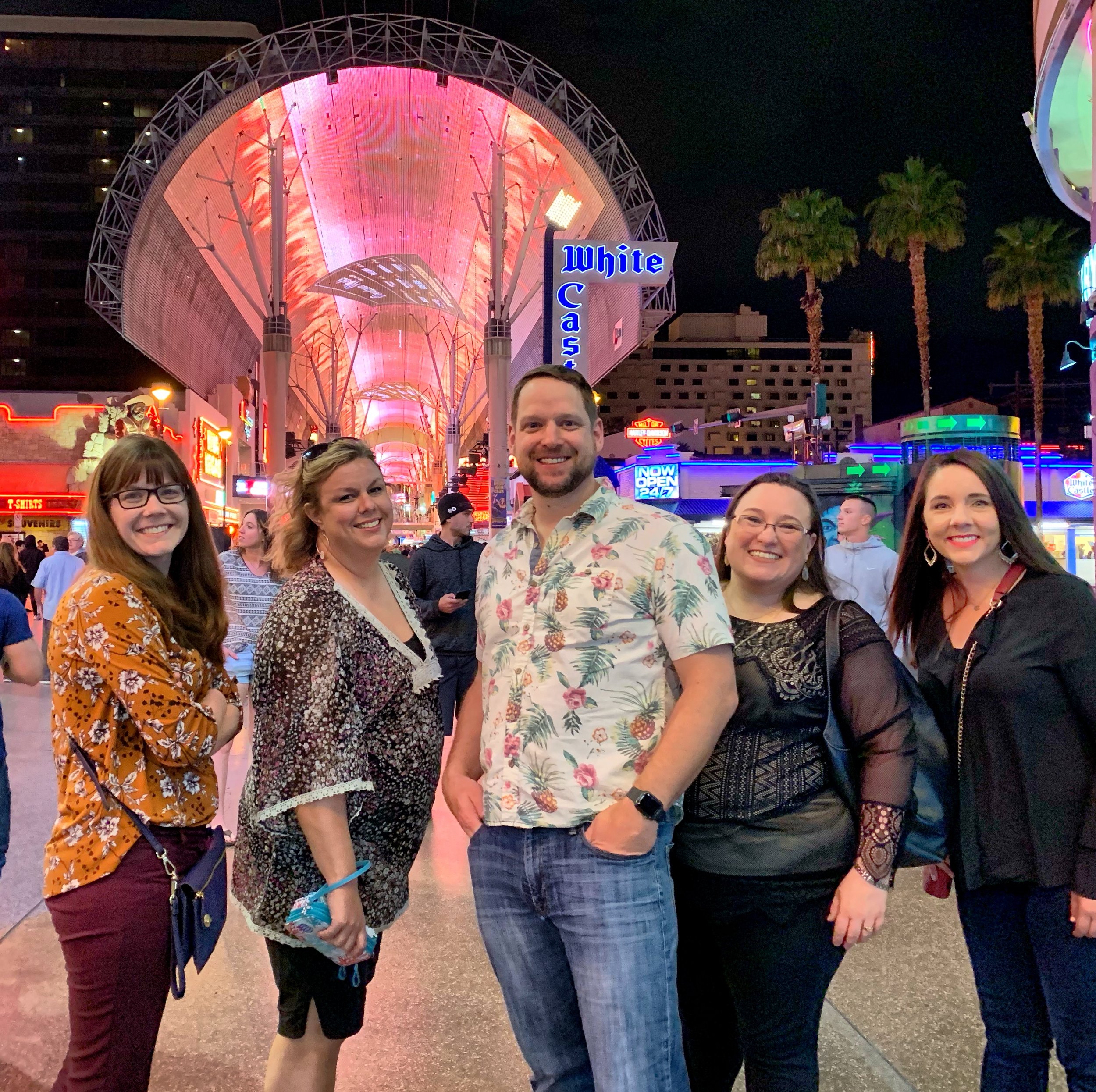
A couple of months ago, I invited my friend, Mendy along on a business trip to Las Vegas. I knew that Mendy would enjoy spending a few days in “Sin City,” and I wanted to spend time with her. My friendship with Mendy is easy. She makes me laugh. She helps me be the best version of myself. I was really looking forward to the trip.
As usual, once we arrived in Las Vegas, I found myself overbooked and over-committed, leaving limited time to spend with Mendy. But, I was quickly reminded why I prioritize our friendship. Mendy is self-sufficient. She didn’t make me feel guilty about the time I had to devote to work. She was able to spend some time with family who live in the area. She found things to do when I was working. Yes, I know we were in Las Vegas, a city with many, many things to occupy your time. But, the beauty of Mendy is that she would have found things to do wherever we were. I hope that she knows how much I value our friendship. Mendy, like many of my close friends, energize me, even when I’m physically and emotionally exhausted.
I heard someone say on a podcast the other day, that “we share with people who have earned the right to hear our story.” That’s a good message. I want to share my time, energy and compassion with those who have earned to right to hear my story. I can still be empathetic with all, but I don’t need to invest my time with everyone.
I sometimes wonder if we have been taught by society not to be “selfish,” and if that has come at the expense of our own physical and emotional health. Kudos to Jennifer Garner for realizing at a much younger age than me that friendship shouldn’t be about guilt, but instead about healthy relationships. I hope that my daughter realizes the same thing sooner rather than later.
Until then Staley, I hope you have a Mendy in your life who makes you smile and gives you grace when you are less than perfect., I hope you have a Jen, Lindsay, and Courtney in your life who inspire your work and your play. And, I hope you have a Stewart, who on the eve of his wedding, chooses to spend a work trip with a bunch of his female friends. If you have those type of friends in your life, you will be happy.




Our Youth are Okay

Last week, I received an email from a young woman that I had met a few weeks prior at the Lifesavers National Conference on Highway Safety Priorities in Louisville. We were in the same conference breakout session, and the young woman had recognized me because I had emceed the opening plenary session at the same conference in 2018. The woman introduced herself and told me that I had impressed her, and she had hoped to meet me last year. Last week, she followed up with an email to me, basically reiterating what she had told me in Louisville, which was how nice it was to finally meet me, how much she enjoyed my “strong and powerful” emcee style, and that she is just happy to be able to finally tell me that.
To say that I was humbled by her words is an understatement. This young woman was a student last year and a recipient of one of the Lifesavers Traffic Safety Scholarships. To be considered for the scholarships, students must submit an essay regarding a traffic safety question. The Traffic Safety Scholars also usually submit abstracts about traffic safety research projects they are conducting. Those of us on the Lifesavers Planning Committee attend a reception for the scholars and have an opportunity to visit with the young scholars. Here’s the thing – every one of the Traffic Safety Scholars I have ever visited with are smarter than me – way smarter. Not only that, they are humble, deferential to the “older” professionals, and appreciative of the time we spend with them.
And, it’s not just the Traffic Safety Scholars I encounter that possess these attributes. The week that we were at the Lifesavers Conference, I had an opportunity to spend some time with the two adult “20 something” children of my colleague and friend, Isabel. For the past 11 years, I have watched Jessica and Jorge graduate from high school and college (and in Jessica’s case – graduate school), and forge their own path and careers in this world. In Louisville, we had thoughtful conversations sans any electronic devices about world issues, as well as their future plans. They asked me questions about my life, and seemed genuinely interested when I spoke. But, I also asked them for their opinions on issues because there is so much that I can learn from them.
Last week, we also said goodbye to our Spring semester intern, Caitlyn, who will graduate from Texas A&M in May. Caitlyn, like so many of the young professionals that I meet, is intelligent, empathetic, and poised beyond her years.
I get that I live in Dallas and have opportunities to interact with some of the brightest youth on our planet, while others of my generation don’t see the same things I do. I recently tried to explain to my husband what our daughter’s occupation is – she’s a website coder. My husband doesn’t own a smartphone, can’t log in to the Internet, and has never used a web application. He can’t type and never took a Computer Science class in college. I love my husband, but trying to explain software programing to him was equivalent to someone trying to explain quantum physics to me.
The reality is that our world and technology are changing exponentially. I hear a lot of complaints from people of my generation who have not had the experiences I have who blame today’s youth for the degradation of moral values and societal ills. I think my parent’s generation did the same, as did their parent’s generation. But, given the chance, I believe we can all learn from each other. I hope I don’t ever lose my curiosity or the desire to learn, or the ability to be “awed” by the young people around me.
From where I sit, the future appears to be in good hands. This is more than good news to me, because on Friday, I spent an hour gazing at the beautiful sleeping face of my great niece. She and her generation deserve the best this world has to offer.


Swipe Right
“I’m just swiping right,” read the text from my friend, Courtney. That’s good advice, I thought. I need to do the same. Hours earlier, I had sat in a meeting in my office – my hands clenched in a ball so tight that my fingernails dug into my skin.
When I read the book, How to Make Disease Disappear, a few weeks ago, I vowed to be better at the four pillars of the author’s plan – relax, eat, move and sleep. In the book, the author Rangan Chatterjee, provides a list of activities in each of the pillars to assist readers in improving in each of the four pillars.
For the most part, I have done better. I’ve committed to a daily practice of stillness and a “screen-free” Sunday. I was already walking 10,000 steps per day, but I’ve added some additional “daily movement snacks.” I’m spending at least 20 minutes outside every day, even when it is rainy and gloomy. I’m trying to eat five different vegetables every day, and I’m limiting my food intake to a 12-hour window. I’ve started “managing my commotion” before going to bed. While I haven’t quite managed to drink eight glasses of water every day, I’ve significantly increased the amount of water I drink each day.
Even technology on my devices has helped, including the notification on my watch that tells me to “breathe” or get up and stand, as well as the Calm app I’ve downloaded to my phone.
But even with the progress I’m making, it doesn’t mean I’m immune to stress – or that I handle it well. When my colleagues and I started the mindfulness leadership training through the Texas Injury Prevention Leadership Collaborative in 2016, the training facilitator warned us that we could become frustrated when we practiced mindfulness and others didn’t. She told us that the more self-aware we became at identifying our triggers, we would get better at managing those triggers. But, the better we got at mindful leadership practices, the more we would notice it when others didn’t have or utilize the same skill set. We can’t control the behavior of others. She was so correct.
We’ve all come to understand that actions speak louder than words. When the words say we need to “hardwire” trust, yet the actions have compromised trust, I’m skeptical. When I sit in endless meetings with no clear agenda, goals or objectives, I’m frustrated. I’m exhausted with meetings that are scheduled for an hour, start 20-30 minutes late, then extend past the allotted time. Often, I have to leave that meeting before it ends to go another meeting, which leaves me feeling stressed.
Earlier in the week, I had talked to our staff about some of the changes our team is experiencing because of another change in our reporting structure. I had reminded them that while we can’t always control the “events” that cause change, we can control how we “respond” to those changes. The events plus our response will determine the outcome. I need to take my own advice.
I know that I have the skills to do this. I understand that emotional intelligence is the ability to be aware of and manage my moods. I just need to do it.
Fortunately, I’m surrounded by a team of exceptional colleagues and friends. They allow me to whine occasionally, but they also feel safe enough in our relationship to pull me out of the “judger” pit, when they see it isn’t productive. They have my heart and my back, and I know they have mine.
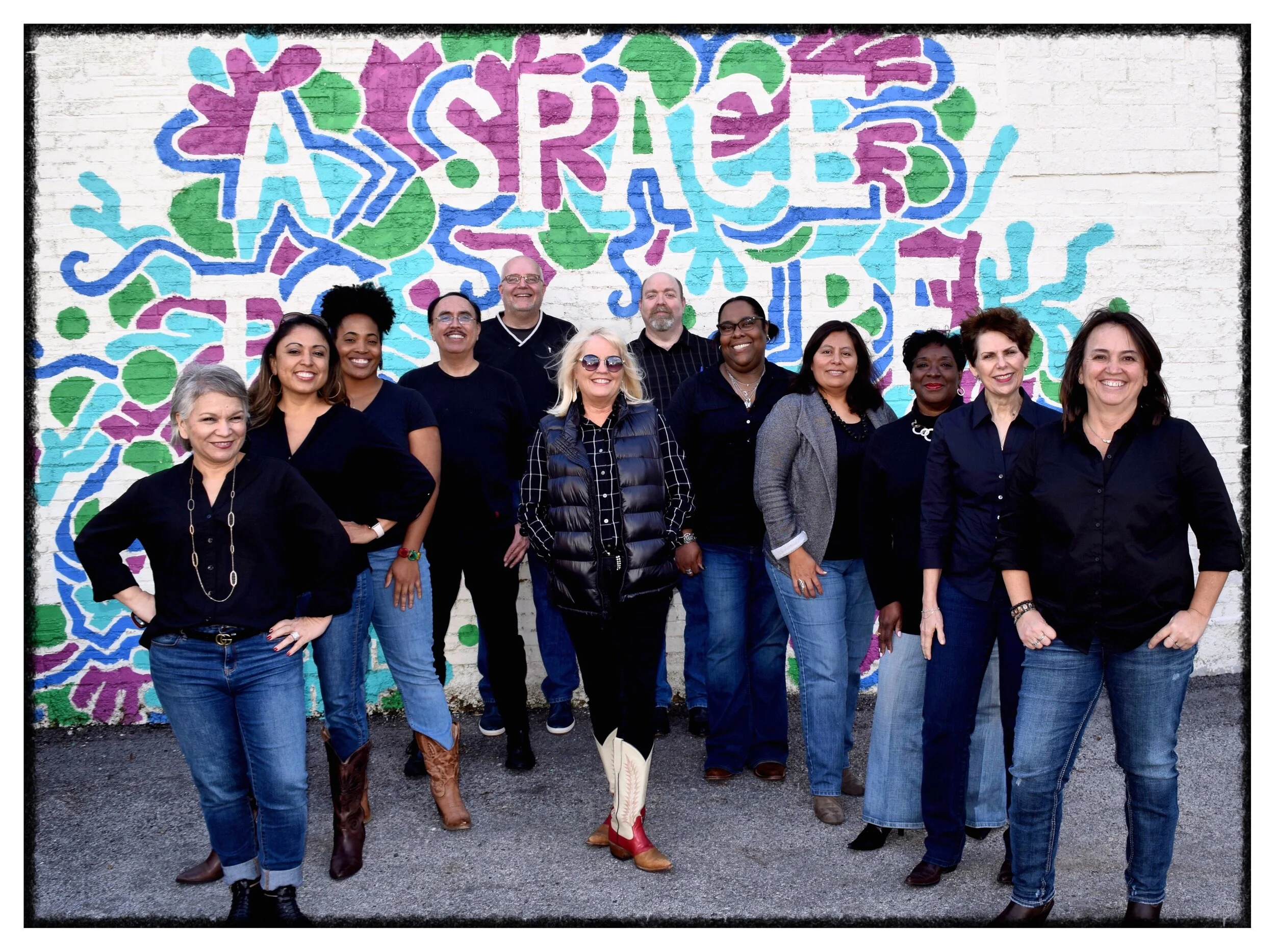
None of this is easy. Even though I’m making progress on being more mindful, there will probably always be times when I don’t get it right. But, I’ll keep working. When days are difficult, I’ll watch this 2018 team video for inspiration. But, there may be days when I just “swipe right.”

Worth the Wait

On Saturday, April 6, 2019, I packed my camera and laptop and headed north to Oklahoma City, where my niece Madison was scheduled to give birth. I was feeling relieved. Madison had a high-risk pregnancy because she has Type I diabetes. She had been hospitalized in February and put on partial bed rest because of concerns about early labor and preeclampsia. Madison’s due date was late April, but her obstetrician wanted her to make it to 34 weeks (mid-March) to allow more time for the baby’s lungs to develop. We considered each week that Madison’s health remained stable and the baby continued to incubate in the womb a small victory.
Last week, we got word that the obstetrician would induce labor on April 6. I was excited because that meant my great niece would share a birthday with her great-great grandfather. I headed to Oklahoma City planning to take lots of photos of the exhausted, but happy little family. I couldn’t imagine a better opportunity to capture “moments of awe” than welcoming the newest member to our family.
When my mother and I walked into Mercy Hospital, I was flooded with memories. Although I’ve been in that hospital many times, the memories that stood out on Saturday were three other joyous times – almost 31 years ago, when my husband and I walked through those same doors to deliver our daughter; 27 ½ years ago, when I stood in the hall outside my sister’s delivery room with my parents and brother-in-law’s mother, Jean, waiting for Madison to arrive; and 3 years later when McKenna was born.
My sister had cautioned us that Madison was likely to have a long labor. She had actually been admitted to the hospital on April 5 so that she could be monitored, then went into labor around midnight. By the time my mother and I arrived at the hospital around 1:45 p.m. on Saturday, Madison had been in labor for more than 12 hours, but was doing well. She was dilated to a 4 and progressing. A couple of hours later, she had dilated to a 6, and they gave her an epidural, which eased the pain of the contractions. So, in spite of my sister’s warnings about a long labor, I was convinced I was going to meet my new niece before the end of the day.
But, the hours began to drag. Madison’s grandmother Jean joined us in the family waiting room, as did her father-in-law, John. We listened as the chimes rang over the speakers each time a new baby was born. We watched as slowly the crowded waiting room of other families dwindled. Occasionally, Madison’s husband Ben would emerge from the room, but McKenna rarely left her sister’s side. Around 9 p.m., I went into Madison’s room. She had been in labor for 20 hours. She was in a lot of pain and exhausted. I felt helpless. I wanted to tell her that it would all be worth it – to just hang in there. Instead, I kissed her forehead and stroked her hair for a few minutes as she softly cried.
I returned to the family waiting room, and we continued to wait. And wait, And wait. With each passing hour, I realized I wouldn’t be taking any photos of the exhausted, but happy family. Those photos, too, would have to wait until a later time.
At midnight, my sister, who had not planned to be in the delivery room couldn’t wait any longer. She walked back to Madison’s room and left me peering through the windows of the closed doors to the maternity rooms. I waited and watched for any nurses going into Madison’s room. I lost track of time, but I think her obstetrician arrived around 1:30 a.m. At 1:50 a.m., my sister sent us a text that said Madison could start pushing at 2:00 a.m. By then, she had been in labor for 26 hours, and we were all concerned that Madison was too weak to sit up, much less push. But, to her unfailing spirit, she pushed and pushed and pushed. At 3:00 a.m., Sonya sent a text that the obstetrician was going to try a vacuum extraction and asked us to pray that it would be successful. Madison’s 82 year-old grandmothers immediately bowed their heads.
At 3:25 a.m., Sonya’s text said that they could only try one more time with the vacuum extraction. At 3:40 a.m., her text simply said, “C section.” Madison had hoped to avoid having a cesarean birth because of the increased risk of infection due to her diabetes. We all wanted her to have a vaginal delivery, but at that moment, I was so worried about her that I just felt relief.
For the next 30 minutes, we watched the flurry of activity as the anesthesiologist and nurses began to prepare for the cesarean delivery. Around 4:10 a.m., they wheeled Madison by us, with Ben trailing the gurney, gowned up, camera in hand, and looking exhausted.
My sister and niece emerged from Madison’s room and collapsed into sobs. “She tried so hard,” Sonya cried. Within seconds, Jean and Scott had McKenna in their arms, while Mother and I held on to Sonya – all of us feeling their anguish.
Only minutes later, there was another blow when Ben came back into the waiting room. Madison was in too much pain and required general anesthesia, which meant Ben couldn’t be in the room to welcome his daughter. He slouched in a chair. But, one of the nurses came out and grabbed his camera and a cell phone.
Finally, at 4:24 a.m., Audrey Marie Winter arrived weighing 6 lbs. 13 ozs. At 4:31 a.m., the nurse brought us the photos we coveted and a video of Audrey’s first cry. That, of course, prompted more tears from all of us. Fifteen minutes later, Dr. Beverly Vavricka and the nurse brought Audrey out to meet us. My sister said Dr. Vavricka was a pillar of strength and compassion with Madison, and for that we will all be forever indebted to her.
I knew that Madison needed to rest, regain her strength, and bond with her family. I thought it was more important for her to spend time with her husband, parents, sister, and grandmothers, so I made the decision to leave the hospital and give her that time. Now that she’s here, I’ll have plenty of time to get acquainted with my great niece.
I love you, Madi, and I love Audrey.
She is worth the wait!


Can we please stop looking at things as if they are black and white?

Last week, I was once again confronted with the reality that things are not binary. As much as we try to make everything black or white, it just isn’t. Even black and white photography, which I love, isn’t just black and white – every photo has many shades of gray imbedded in it.
When things are incongruent, we seem increasingly unable to resolve the conflict in our minds, so we divert to “it has to be one way or the other.”
I was traveling on business last week, so I missed the early news reports about allegations from women who said they felt uncomfortable with physical overtures from former Vice President Joe Biden. To be clear, none of the women (as of this post) have accused Biden of outright sexual harassment or assault. Once I heard the news reports, I did what I typically do – I looked at multiple sources to determine what had happened.
What I found was Biden supporters defending his actions as those of someone who is affectionate to both men and women. They claimed the allegations were politically motivated. Biden critics, on the other hand, claimed that Democrats are hypocritical and making excuses for him. Friends and colleagues of Biden said that his physical touching is evidence of his ability to connect with people. I saw a video clip of Whoopi Goldberg and Meghan McCain (two people on opposite ends of the political spectrum) in which both said Biden’s hugging and physical touch are things both love about Biden. Both questioned Lucy Flores’s motives, a former Nevada assemblywoman who published the essay that ignited the controversy.
This week, Biden released a video in which he said, “Social norms have begun to change. They’ve shifted, and boundaries of protecting personal space have been reset — and I get it.” Immediately, women’s rights advocates questioned his sincerity. Others felt he hadn’t actually “apologized.” Former Georgia gubernatorial nominee Stacey Abrams said Biden’s response was "what we should be looking for" in elected leaders.
Then, speaking at an International Brotherhood of Electrical Workers conference in Washington, Biden appeared to make light of the allegations by joking that he had “permission” to hug Union President Lonnie Stephenson, which prompted the largely male crowd to burst into laughter. That prompted Flores to comment on Twitter, “It’s clear @JoeBiden hasn’t reflected at all on how his inappropriate and unsolicited touching made women feel uncomfortable. To make light of something as serious as consent degrades the conversation women everywhere are courageously trying to have.” Tarana Burke, the founder of the #MeToo movement, tweeted that Biden’s comment was “disrespectful and inexcusable.”
Honestly, it’s enough to make me want to bang my head against the wall. My friend, Mary Ann, has a habit of sending us funny animal memes when things become so absurd, and that is exactly how I feel when I hear the narrative around this controversy. Can we please just take a breath and listen before we rush to judgment on either side?
For the most part, I like Joe Biden. I have respected his political contributions. I loved most of the “Obama/Biden ‘bromance’ memes.” While I think his comments at the International Brotherhood of Electrical Workers conference were “tone death,” I have appreciated his efforts supporting women. I applaud his work around the Violence Against Women Act, yet I was disappointed in his handling of Anita Hill’s testimony during Clarence Thomas’ confirmation hearing to become a Supreme Court justice.
I am not discounting the claims of Flores and the other women that Biden’s physical gestures made them uncomfortable. I believe they did. I have been in situations when I have felt uncomfortable with physical gestures and the personal space infringement from certain people, while not feeling the same way about the same gestures from others. A hug from some people can make me feel warm and protected, while it can feel creepy and like a boundary has been crossed from others. Sometimes I crave physical touch from certain people and abhor it from others.
I’ve heard men complain that they need “a playbook” to determine what is acceptable behavior these days in light of the #MeToo movement. Seriously? Have we lost our critical thinking ability that we can’t assess whether something makes someone uncomfortable? Or, have we gotten so lazy that we don’t want to think?
Again, this isn’t about “political correctness.” It’s about being attuned to the feelings and body language of others. My best friend is better at “reading” the body language of an individual or group of people than anyone I know. While I do believe that she is brilliant, the reality is that this shouldn’t be that hard.
Yes, our cultural acceptance of certain actions has changed. I feel much more empowered and confident to say when something makes me uncomfortable today than I did even 2 years ago, thanks to the #metoo movement and a little maturity. But again, the societal changes have nothing to do with how we should behave, whether it was acceptable 20 years ago.
I’ve heard people compare Biden’s actions to those of Donald Trump, Harvey Weinstein, Bill Cosby, or Brett Kavanaugh. Personally, I don’t think Biden’s actions rise to the level of sexual assault, and it has nothing to do with my political leanings. But, it is not my place to question how Flores felt or her motivation in publishing her essay.
The complex reality is that there are people who unintentionally behave in ways that are questionable and make people uncomfortable. Likewise, there are people, who intentionally behave in ways that are questionable and unethical, yet do some positive things. It’s on each of us to distinguish, which is which.
This is not a condemnation of Joe Biden, or an endorsement. It is an appeal to have a conversation where we actually listen to all sides with the intent to understand, rather than jump to judgment. We need to build bridges of understanding instead of walls of contempt.
Life isn’t black and white.


Girlfriend Time is the Best Medicine

“Sometimes seeing a friend for 20 minutes between a meeting
and a flight is the next best thing to a girls’ weekend.”
Amber Williams
March 31, 2019
Last week, as I was packing for my trip to Washington, DC, I got a text from my friend, Amber that read, “I heard you will be in DC tomorrow. Any chance you can meet me at Union Station around 5:30 for a quick drink?” On the day I was scheduled to arrive, Amber had a meeting that was scheduled to end at 5 p.m. and an 8:00 p.m. flight home to South Carolina.
The last time I saw Amber was more than a year ago on a girlfriend weekend with our friends Susan and Linda. We are all scattered across the country and had traveled to Asheville, North Carolina to spend time together. I had felt guilty about taking that trip (see previous blog post about my inability to create work/life balance). Although the trip to Asheville was brief – 48 hurried hours –the time with my friends had refreshed my mindset.
When I got Amber’s text, I quickly responded, “Absolutely, I’ll make it happen.”
For me, time with my friends is my way of claiming “me time.” This is something that I used to have lots of guilt about (honestly, I still do to some extent). However, there is a considerable amount of research into the physical and mental health benefits of self-care. Studies show that we are less able to handle stress when we’re physically and emotionally exhausted. This impacts our resiliency and can lead to long-term chronic health problems.
There are a variety of ways to focus on self-care, including getting enough sleep, eating healthy meals, ensuring leisure time in our schedules, and making time for friends. I’m batting about 50%. In baseball, that’s excellent, but this isn’t a baseball game. It’s my life. Granted, there are more years behind me than in front of me, but I still want the remaining years to be productive and happy. I know that I need to do better than 50%.
With that in mind, I met Amber for a “quick 20 minute visit and drink.” We caught up on each other’s jobs, lives and families. We made plans to meet again in a few weeks when we are both in DC. We also committed to scheduling another girlfriend trip with Susan and Linda in September.
Following my work meetings the next day, my friends Mary Ann, Mandy and I boarded a train to Baltimore to spend a “quick 24 hours” with my best friend and her daughter. I LOVE being at Carolyn’s house. The minute I walk through the door, I feel like I can breathe. It could have something to do with being surrounded by their little pocket of nature, but I think it has more to do with being in a trusted and caring environment. My friend Mary Ann coined it best when she said “being at Carolyn’s feels like a warm hug.” Yes, it does!
Ironically, Carolyn gave each of us the book, How To Make Diseases Disappear,” by Dr. Rangan Chatterjee. Dr. Chatterjee is a functional medicine physician who believes that chronic diseases such as type 2 diabetes, high blood pressure, depression and dementia are not the inevitable result of aging or genetics. He says that physicians are good at treating acute diseases, but not so good at treating chronic diseases. That’s because chronic diseases have many different causes. He says that physicians often forget that the human body is “one big connected system.” Instead, the physician reverts to treating one problem at a time. If a patient presents with depression, an antidepressant is prescribed. If the patient has high blood pressure, a different medication is prescribed. Dr. Chatterjee says that a patient may have a symptom (high blood pressure, depression) in one domain, but the cause is likely way upstream in an area that current medical training isn’t addressing.
Dr. Chatterjee’s research into having a life free of disease revolves around four pillars: relaxation, food, sleep and movement. He believes that by making small, achievable changes in each of these key areas, we can create and maintain good health – and avoid and reverse illness.
I was happy to have this book when I left Carolyn’s because I experienced multiple flight delays getting from Baltimore to Louisville for my next conference. Reading the book gave me something to do during those delays!
I’m physically tired from the long travel day, but being with my friends, even briefly, revitalized my spirit. My mood is better. I felt happy when I woke up this morning.
I even managed to do one of the recommendations on Dr. Chatterjee’s relaxation pillar – spend at least 15 minutes, every day, doing something just for yourself and don’t feel guilty about it. So, after my last session, I came back to my hotel, grabbed a bottle of water and an apple, and spent 15 minutes in quiet reflection and meditation. I know I’ve got a ways to go, but it’s a small step in improving that 50% number.


The bluebonnets are calling . . .

I stood in my bathroom and gazed at the image in the mirror. It was 6 a.m. on Saturday morning.
I was tired. When I had finally gone to sleep, I had slept fitfully, waking up several times during the night and early morning.
I was also stressed. I had received news during the week that the person I report to had accepted another position. I had been happy working with Dr. Williams during the brief time that I had reported to him. Under his direction, I had finally felt like we were hitting a rhythm at work; setting aligned goals and objectives, and beginning to make some progress. I am happy for Dr. Williams in any career moves and decisions he makes, but this meant the seventh reporting structure change for me in the past seven years, and the third change in the past two years.
I have been trying to carve out time to write this blog on Friday evenings if I’m in Dallas and not traveling on business, but I had spent the past Friday night working instead of blogging.
I knew that my stress level was up when I received a text message last week from my best friend that said she missed me. She said her husband had suggested that we plan a BFF getaway trip. Instead of immediately looking for locations and airline tickets, I started crying. Because I couldn’t fathom that it would be possible.
Vacations are extremely important to me. My family went on at least a one-week (sometimes two-week) out of state vacation to a different location every year that I was in elementary school. When my daughter was in elementary and junior high school, she and I would go snow skiing every year and somewhere else in the summer (usually to a California beach with friends).
I haven’t been on a vacation (a real vacation of more than three days) since 2014. I am not bragging about this. I am embarrassed and disgusted that I have allowed work to get in the way of something that I value. I have tried to justify the reason for not taking a vacation. The bottom line is that I feel guilty asking for vacation time because I travel for business frequently. About half of that business travel is uncompensated – meaning that I’m paying for it. Again, I’ve rationalized in my mind why I should do this. When I’m asked to serve on national committees, I feel guilty asking Parkland to pay the expenses for me to attend meetings in Washington, D.C., even though I’m representing Parkland. So, I pay for those trips out of pocket. You can imagine how unhappy I am about the new tax law that has taken away the exemption for uncompensated business expenses – just one more reason to feel stressed.
I understand that I’m very fortunate to get to travel on business to interesting places with friends and colleagues that I enjoy. But business travel is work. We are in meetings all day and most evenings. On breaks, we are checking and responding to emails or phone calls. I was in Charleston, SC for three days for the Safe States Alliance Annual Meeting, but the only time I was more than three blocks from the hotel was at 6 a.m. on the final day because my friend, Mary Ann and I took a Lyft to Rainbow Row so that I could snap a few photos.
I’m trying to extend business trips by a day either on the front end or back end of the trip to experience the local culture of the cities, but even those days aren’t “unplugged.”
As I stood in my bathroom, tired and stressed, I glanced at two prints hanging on the walls. One is a Vincent Van Gogh print entitled “Wheatfield under thunderclouds.” I purchased the print when my friend Linda and I had traveled to Amsterdam the weekend following the 2010 World Injury Conference, which was held in London. We visited the Van Gogh Museum while we were in Amsterdam, and I was particularly drawn to the series of paintings that Van Gogh had completed of wheatfields around Auvers during the last weeks of his life. By then, Van Gogh’s mental illness was evident. When I looked at the dark, yet bright colors of those paintings, it indicated that a change was forthcoming and needed. I bought the print version of “Wheatfield under thunderclouds” in the gift shop of the museum because it reminded me of how I felt when I made the decision to leave Oklahoma and move to Dallas to accept the job at Parkland.
The other print was a photo that I had taken of a bluebonnet field near Ennis, Texas. I love bluebonnet time in Texas. Although I’ve been privileged to travel and witness many spectacular sights and vistas, the sight of bluebonnets and other wildflowers in bloom along Texas roads and highways is one of my favorites.
When I was working on Friday night, my friends Stewart and Mary Alice sent me texts about bluebonnets blooming near Austin and the Hill Country. As I looked at the prints on my wall and my image in the mirror, I knew that I needed a change of scenery. I looked outside. The sky was dark and clouds and rain were forecasted. But, I grabbed my camera, got in my car and headed south to search for bluebonnets with only an open road in front of me.
Six hundred plus miles later, I drove back to Dallas – mission accomplished! I was still tired, but I felt a sense of peace when I saw the looming skyline in front of me (a sight I will never tire of seeing). This adventure was also too brief, but it gave me a needed respite. And, it reminded me that I didn’t mind coming home when home is a place that I love.
Now, I just need to work on that BFF trip!


If Resilience is Important, What Does the College Admissions Scandal Teach Us?

Recently, I was in a meeting with a group of injury and violence prevention professionals in New Orleans when I heard one of the presenters (a local judge) say something that caught my attention. The presenters were talking about how they are addressing adverse childhood experiences (ACEs) in Louisiana (see previous blog posts about this). Typically, those in my profession think about how ACEs affect children in underserved communities. We try to craft programs and policies to help those without resources and influence. But, this judge, who deals with family court issues, made the comment that many families with resources (i.e., wealth) also make bad or harmful decisions that impact their children. Just hours earlier, I had watched news coverage of the college admissions cheating scandal that has resulted in many wealthy individuals being charged with fraud after paying thousands of dollars to get their children admitted to elite colleges.
I have to admit that I did a lot of sighing and rolling of my eyes when I heard the story about the college admissions scandal, partly because I have some implicit bias. Some of this has to do with my career, which has focused on serving under-served families and those who are typically discriminated against. And, some of my bias comes from my own experiences.
Several years ago, I read the book Early Decision: Based on a True Frenzy. The book was the debut novel by Lacy Crawford, who had spent 15 years traveling as a highly sought-after private college counselor. The novel illuminates the madness of elite families who go to extreme measures to ensure their children are admitted to prestigious universities. About the time that I read the book, I was asked to write a sorority recommendation for a young woman who would be starting college during the Fall semester of that year. As an alumna of a women’s sorority, I’ve been asked to write dozens of these recommendations throughout the years. I’ve written recommendations for girls who have attended public schools, as well as recommendations for girls who attended private schools.
My bias is based on this experience. Let’s be clear, my bias is the result of my experience viewing the high school resumes of 30-40 young women – not of an empirically validated study. Of those 30-40 high school resumes I’ve read, I’ve found that young women from public schools have far greater involvement in community service activities, demonstrated leadership characteristics, and higher academic performance than of those of the young women who attended private schools. That doesn’t mean that I think students who attend private schools aren’t deserving – they are, or that I think private schools don’t offer good educational opportunities – they do.
That said, I also have to acknowledge that my experience, bias, and opinion do not make me an expert in this arena. Far from it.
I have zero experience with wealth or private schools. I only attended public schools because that’s where my parents taught. I attended public universities because that’s where my friends were going. I was able to pledge a sorority, which was a financial burden for my parents, because I was on scholarship, which helped defray the costs of my tuition, books, and lodging. My daughter also attended rural public schools. While she considered applying to out of state schools, she ended up attending the University of Oklahoma for her undergraduate degree. She also received an academic scholarship from the university because of her grades and ACT score. We didn’t purchase any study guides or hire a tutor to help her prepare for the test. Her father and I never even considered it, and he was an educator. She had a perfect Reading Comprehension score on the ACT, so all those books we purchased during her childhood may have been a good investment!
Here’s the other thing – in addition to the scholarship our daughter received from the University of Oklahoma, she also qualified for scholarships given by our local community. But, my husband, who was the high school principal, would not let our daughter accept the local scholarships because there were other members of her senior class that had greater financial needs. So, that’s my frame of reference and bias.
While I am a self-admitted “education snob” and wanted very much for my daughter to graduate with a college degree, where she attended college, as long as she got a quality education, was not significant to her father or me. That’s because we know many successful people who graduated with degrees from East Central University in Ada, Oklahoma, Southern Nazarene University in Bethany, Oklahoma, University of Central Oklahoma in Edmond, Oklahoma, Southwestern Oklahoma State University in Weatherford, Oklahoma, and Northeastern State University in Tahlequah, Oklahoma.
In case you think I don’t value the education at prestigious universities, I do. My friend Nancy’s son and daughter graduated from Brown University and Emory University, respectively. Both Nate and Laine were accepted at those universities on their own merits and excelled at those schools. I have many friends and colleagues across the country that teach, have taught, or graduated from prestigious public and private universities. My best friend has taught at Johns Hopkins University for years. I encouraged my friend and colleague, Merissa to attend Hopkins after she was accepted there. She did and had a great experience. But, Merissa, who is a public school alumna with an undergraduate degree from Notre Dame, applied to both Notre Dame and Hopkins not because of their prestige, but because those universities offered the educational pursuits she sought. Neither of my best friend’s children chose to attend Hopkins, opting instead for universities that better suited their individual needs.
It would be easy for me to get on my pious progressive pedestal and feel superior to those families of wealth and privilege who feel entitled to secure their children’s admission to the elite universities at all costs, including cheating and fraud. But, I’m tired, so tired of playing the “blame game.” It’s not solving any of our many complex societal problems, including the exploitable college admissions system.
Plus, as much as I’d like to feel immune to the entitlement that I equate with people of means and privilege, if I’m honest, I have to admit that I’ve also been guilty of looking unfavorably at people who don’t have financial resources. My first recollection of this goes back to elementary school, when I unfairly “judged” classmates who came to school looking unkempt. Much later when I was in college, my father, who was the elementary school principal, asked me to fill in as a substitute teacher for a couple of weeks during my holiday break because the Kindergarten teacher was on maternity leave. I vividly recall two children in that class. One child was a blond, blue-eyed little boy with an abundance of charisma, who came to school dressed in the latest 5 year-old fashions of that time. The other child was a little girl whose hair was rarely combed and was often dressed in clothes that didn’t fit properly and were clearly handed down from a sibling. Without understanding why, that little girl irritated and frustrated me. Looking back on that time, I clearly favored the little boy.
One day during that substitute teaching stint, my dad popped into the class. When he entered the classroom, that unkempt little girl ran to him and hugged him. And, my dad hugged her back. I watched as he bent down, looked her in the eyes, talked to her, and patted her on the back. That little girl craved attention, and my father showered her with lots of positive attention. As I watched that situation unfold, I felt shame at my own behavior. It was one of many important lessons my father taught me without ever saying a word, and my eyes still well with tears when I remember that scene. Although I have tried to emulate the compassion I saw in my father that day, I have often fallen short.
When the college admissions scandal broke, I was at a meeting learning more about prevention strategies that take a shared risk and protective factor (SRPF) approach from my colleague and Safe States Alliance President, Lindsey Myers. A publication by the Centers for Disease Control and Prevention and Prevention Institute entitled, Connecting the Dots: An Overview of the Links Among Multiple Forms of Violence, explains how “risk factors” such as rigid social beliefs, lack of job opportunities, and family conflict can increase the risk of violence. By the same token, there are “protective factors” such as connections to caring adults, access to jobs with livable wages, and safe places to live and exercise that can build resilience when faced with risk factors. Protective factors give individuals the skills to solve problems non-violently.
Lindsey is the Branch Chief of the Violence and Injury Prevention-Mental Health Promotion Branch of the Colorado Department of Public Health and Environment. Colorado is one of several states looking at the connection between social determinants of health, ACEs and SRPF, while implementing strategies that prevent multiple forms of violence and injury and substance abuse. Hearing Lindsey’s examples of Colorado’s efforts energized me. I can’t wait to start exploring opportunities to implement similar strategies and programs in Dallas.
I’m also encouraged when I listen to my friend Debi talk about Odyssey Leadership Academy (OLA), an “out of the box” school in Oklahoma City founded by her son, Dr. Scott Martin. Against the advice of probably everyone in his family and my husband, Scott set about to “fix” what he considered a “broken” educational system. He established OLA because he was alarmed both at the empirical data related to teenage stress, anxiety, depression, sadness, loneliness, and self-harm that the traditional model of schooling imparts, as well as the anecdotal evidence he witnessed in his classrooms.
In the “Letter from the Founder” on the OLA website, Scott says, “We believe that a vision of education rooted in health begins not with information, but with the in/formation of persons committed to the well-being and flourishing of themselves and their communities. We strive to be a place that shapes the imaginations and affections of our students not to prepare them for the real world, but to help them shape a better world for us all.”
When I listen to the news of the college admissions scandal, as well as other stories of greed and indulgence, I wonder about the resilience of the children of these parents. I wonder about the skills these children are learning.
It’s important for me to be reminded about the compassion and empathy that Scott and OLA faculty are teaching because we also awoke last week to the horrifying news from Christchurch, New Zealand. As many as 50 people have died from mass shootings at two mosques. As of this time, a 28 year-old man has been charged in the attacks. Just before the shootings, a link to an 87-page manifesto, which was filled with anti-immigrant and anti-Muslim sentiments, was posted to an account in the suspect’s name on Twitter and 8chan, an online messaging board that has been used by anonymous accounts to share extremist messages and cheer on mass shooters. When the suspect appeared in court, he made a hand gesture associated with white supremacists.
Last week as I enjoyed the sights, sounds, and tastes of New Orleans, I was reminded about a Gloria Steinem quote I heard recently. “We don’t learn from sameness. We learn from difference.”
Whether we are rich or poor, Muslin or Christian, gay or heterosexual, black, brown, white or red, or educated by academics or life experiences, perhaps, it would behoove us all to spend more time outside of our own small worlds.


Let's End Mom Guilt

March 8 is International Women’s Day. As usual, my social media accounts were flooded with posts and photos celebrating women in history, women changing the narrative about women’s roles, women in families, and women friends. I am a card-carrying supporter of women’s rights, and the social media posts inspire me. I am eternally grateful to the women who challenged stereotypes to make it easier for my daughter and me to have careers. I enjoy reading their stories.
But, it is the women in my family and my female friends that awe me. And, I want to pay it forward. In the next few weeks, my family will welcome a new family member – the daughter of my niece Madison and her husband, Ben. I have lots of advice for my niece, but . . . I am going to try very hard to limit it to this blog post, unless SHE ASKS for my advice.
Madi, the biggest thing I want to say to you is that I hope this “mom guilt” thing ends with you (and McKenna and Staley, if they choose to have children).
Even though there is no definition of mom guilt in the dictionary, believe me it exists. It is the feeling of anxiety and doubt that you are doing something wrong, and that your child will suffer for it. It’s also the feeling that you will fail as a parent if you don’t follow the “sage” advice of others.
You are going to get lots of advice, Madi. Listen to the advice, inform yourself, and then do the best thing for your daughter and family.
When Staley was 5 years of age, Uncle Gary and I made the decision to keep her in nursery school for one more year instead of starting her in Kindergarten. It had nothing to do with your cousin’s intelligence. As you know, her birthday is in May. Uncle Gary was an educator. Nan Nan and Bop were educators. Aunt Emi Lea and Uncle Dean were educators. We had many friends who were educators. We made an informed decision to delay starting Staley in Kindergarten when she was 5 after much discussion with the educators in our family, as well as with our friends. All agreed that it would be in her best interest. All of those educators told us they had never had anyone regret delaying school entry by a year. Yet, people we barely knew felt no qualms about telling us that our decision was a mistake. For months after we had made the decision, people continued to question us and talk about our decision to others. For the record, we made many mistakes (I’m sure Staley has them all cataloged), but that was not one of them. Staley thrived in school, partly because of the extra year of development and maturity.
Madi, you and Ben will make mistakes.
You will forget school assignments. You will forget to pack sunscreen, and she’ll get sunburned. You will enroll her in dance class, and she will hate dance. You will take her to McDonald’s for dinner because you’re too busy and overwhelmed to cook dinner. You will lose your patience and snap at her. As a toddler, she will test you. As a teenager, she will infuriate you.
But here’s the thing . . . children are exceptionally forgiving. Unless you intentionally put your child at risk for harm (and, make no mistake, we will all speak up in that case), the mistakes won’t matter as long as your child feels loved and safe. So forgive yourself for the mistakes you will make.
One more thing – your daughter will be born in 2019, not 1960 or 1991. She will grow up in a different time than you and Ben, your parents, grandparents, or in-laws. It is unrealistic, and in my opinion, harmful to expect her childhood, adolescence, or adulthood to be the same as yours. Don’t use the morality of your generation or your parents’ generation to judge her activities. After all, women who had pierced ears were judged to be “loose” and “immoral” in the 1940s. We have witnessed first hand the pain that judgment has caused in our own family. Don’t let the judgment of others inform your decisions.
One of the things that has helped me overcome “mom guilt” and to be more understanding of Staley’s choices is having a wide range of friends with different backgrounds and experiences. My friends are proud of their children whether the children have chosen financially lucrative careers or ones that makes them happy. My friends have encouraged and supported their children’s choices. And, their children are emotionally healthy.
My greatest wish for Staley when she was a young child was that she be a productive member of society. I understand now how important emotional health is to that equation.
Motherhood is the most challenging and rewarding thing you will ever do, Madi. But, you are not in this alone. There is an entire cadre of women who love you and your daughter. We are all willing to help – when you ask!
#ittakesavillage
#internationalwomensday


Find a Way to Love

I’ve had a crappy week. For the first time in 2 years, it has nothing to do with hate speech coming out of Washington, DC in the form of a petulant presidential tweet. Instead, it has to do with hate rhetoric under the guise of Christianity directed at people I love. It’s weeks like this that I agree with a comment Christian author and pastor Jen Hatmaker wrote in her book, For the Love, “Honestly, I love Jesus, but sometimes his followers give me a migraine.”
It’s not surprising to me that the number of people who identify as Christians is decreasing. Several polls conducted in the past few years substantiate this fact. A Pew Forum study found that in the U.S., the Christian population decreased by 8 percent between 2007 and 2014. An ABC News/Washington Post poll found that 36 percent of Americans in 2017 identified themselves as members of a Protestant faith compared to 50 percent in 2003.
While some of the reasons why individuals don’t affiliate with organized religion may be due to a conservative political agenda, I wonder if there is more to it than that? Could it be that those individuals are disgusted because they see churches disconnected from the Biblical teachings of Jesus on love and serving the poor, and instead preaching judgment?
I know that I have struggled with this, and it kept me from attending church in Dallas for many years. And, I’ve struggled with those same thoughts this week when I heard the hurt and anguish in the voices of those I love. I don’t have the answers, but the words from a sermon I heard a few weeks ago have helped.
The sermon, entitled “Find a Way to Love,” was delivered at a time when a Special Session of the General Conference of the United Methodist Church was occurring in St. Louis. Many churches, such as mine, want to end the ban on same-sex marriage and the ordination of LGBTQ clergy. There was much at stake for inclusive churches like mine. Ultimately, the ban was upheld, and it has caused much pain for many members of my congregation.
On the Sunday that the General Conference opened, the pastor acknowledged that many painful and hurtful things would be said; some out of ignorance and some out of malicious intent. He reminded us that the Bible would be used as a weapon, not as a document to unite.
Luke 6:27-28 says, “But to you who are listening I say: Love your enemies, do good to those who hate you, bless those who curse you, pray for those who abuse you.”
This is hard. I don’t really want to pray for the people hurting my loved ones. The hurt and pain they are intentionally causing makes my blood boil. But, the pastor’s words reminded me that praying for those who abuse us “prevents our hearts from souring.” He also said that we can pray for these people without being around them. In fact, he said that we don’t have to be around people who constantly abuse us. We can pray for them from a distance, which can protect us from their abusive words.
My beliefs and views have changed over the years because of many conversations with clergy that I respect, as well as discussions with numerous friends who are of different faiths or non-religious beliefs. In all honesty, I’m probably more spiritual than religious, although this comment is often met with eye rolling from evangelicals. The fact is that I’m more concerned with respect and civility toward those who think differently than I am with church doctrine established in past centuries.
I’ve spent a lot of time during the past 2 years working on me — trying to be a better leader and person; trying to make a positive contribution to society. I’ve read many books and listened to many podcasts on how to do this. My sister and I are continuing to listen to Mel Robbins’ tips each day. One of the things she has said is, “if it is hard to be around people, you’re with the wrong people.” Although my prayers are more meditations these days, I will pray for those whose vile intentions I have witnessed – if for no other reason than self-preservation.
If someone’s continued actions show me there is hate in their soul instead of love, I will limit my exposure to them. I will try my hardest to protect myself and those I love. And, I’ll continue to surround myself with mindful, caring people who lift me up on a daily basis.
That’s my advice for my loved ones, too.