
Lazy Narrative

During a recent email exchange, the person I was emailing used the term “lazy narrative” (not about something that I had said; it was just a general comment about the topic we were discussing). I was curious about the comment and asked him to explain. He said (and I paraphrase) that often individuals will default to a general label of people who disagree with them rather than listening to and considering those differing viewpoints.
Hmm, he had a point. I immediately began to wonder if I had been “lazy” in some of my narratives.
It didn’t take long for me to answer that question. Days after that exchange, winter storm Uri swept across the US wreaking havoc in Texas, which is unaccustomed to severe winter conditions. With the exception of February 2011 when another winter storm disabled the Dallas-Fort Worth metroplex during the week of the Super Bowl, the average yearly snowfall in Dallas is less than 2 inches. Temperatures haven't dropped below 10 degrees in Dallas since 1990 and haven't gone below zero since 1930.
But for more than a week in February 2021, temperatures were in the single digits, wind chills were below zero, and snow and ice covered every inch of the landscape in Dallas and Fort Worth. Other Texas cities, including Austin, San Antonio, Houston, and Galveston experienced similar weather. The extreme cold weather resulted in numerous deaths and even more hospitalizations due to carbon monoxide poisoning. My friends who are nurses were treating frostbite for the first time in their careers.
Compounding the weather crisis was another crisis – the extreme weather caused a record- breaking demand for power, which strained the Texas energy grid and left millions without power for days. Additionally, busted water pipes and other weather-related problems caused billions of dollars of damage in what may be the state’s most expensive natural disaster in history. Texas, a state that boasts it is the energy capital, had a complete energy fail in February.
Full disclosure – I know very little about energy – mostly because I’ve never been interested in learning about it. But I have been quick to jump on the renewable energy bandwagon because, and here comes the “lazy narrative,” organizations with which I am affiliated and trust, support it.
When my husband and I built our first house, we installed solar panels to heat our hot water tank because we got a tax break. We lived in that house for 14 years in Oklahoma and never had a problem with the solar panels. We always had plenty of hot water, even on cold, winter nights.
I have been sympathetic to my friends who live in California and Colorado when they experienced extreme conditions due to wildfires, but I have never taken the time to really understand climate and energy sources. Until now.
I resisted the urge to default to the easy, lazy response and disregard any narrative from opposing viewpoints. For the past two weeks, I have read news articles from The Washington Post, New York Times, Fox News, Houston Chronicle, Dallas Morning News, Texas government and utility websites, and even an engineering blog I found.
This is what I read. Texas Governor Greg Abbott, Representative Dan Crenshaw, and Representative Ronny Jackson blamed Texas “for following California’s lead” and “over-subsidizing wind and solar power” that “thrust Texas into a situation where it lacked power throughout the state.” In an interview with Fox News host Sean Hannity, Governor Abbott said the “Green New Deal would be a deadly deal for the United States of America.”
After several days of power outages, former Texas governor Rick Perry proclaimed that, “Texans would be without electricity for longer than three days to keep the federal government out of their business.”
And I read about former Colorado City Mayor Tim Boyd’s Facebook post that said, "No one owes you or your family anything; nor is it the local government's responsibility to support you during trying times like this! Sink or swim, it’s your choice! The City and County, along with power providers or any other service owes you NOTHING! I’m sick and tired of people looking for a d--- handout!"
He added that anyone complaining about the cold “must be lazy and products of bad parenting.”
I have to admit that was hard to read because it is in direct contrast to every one of my core values, but I kept searching.
Following his interview with Sean Hannity, Governor Abbott said to the Houston ABC affiliate that "The reason why power is not available for your viewers is because the power generators froze up and their equipment was incapable of generating power. Then on top of that, the natural gas that flows into those power generators, that is frozen up also."
Other information that I found supports Abbott’s comments during the ABC Houston interview.
According to the U.S. Energy Information Administration (EIA), Texas produces and consumes more electricity than any other state. It is the only one of the contiguous 48 states with its own stand-alone electricity grid. The Texas Interconnection grid is managed by the Electric Reliability Council of Texas, or ERCOT.
The reason behind Texas having its own power grid was because during World War II, large amounts of power were required to be available along the Texas Gulf Coast. Prior to the war, President Franklin D. Roosevelt had signed the Federal Power Act, which allowed the federal government to regulate interstate power lines. Following the war, Texas typically wanted no part of any federal standards and regulations. In 1970, Texas created ERCOT.
According to ERCOT, nearly half of Texas’ electricity was generated by natural gas-fired power plants in 2019. Coal-fired plants and wind power each generated about 20% (although several utility officials interviewed during the storm reported that wind accounted for 10%-13% of energy sources). The two nuclear power plants in Texas supplied a total of 11%. Solar, hydroelectric and biomass resources provided most of the remainder.
Wind turbines did freeze during the storm, but energy officials point to the way that natural gas is stored in Texas as the over-riding problem. In Texas, natural gas is stored in underground chambers, and to bring it to the surface, a pump is required. The cold temperatures knocked out the diesel engines that power these pumps. Also, natural gas pipelines used to transfer the gas froze.
Texas also lost its nuclear energy and coal power generating capacity. Coal plants couldn't operate because the coal piles froze and became stuck to the ground. One of the two nuclear reactors had to be shut down when the cooling pumps for its reactor froze.
Most homes and businesses in Texas are heated by either electricity or natural gas. Electrical power generators typically schedule maintenance and upgrades for the winter months, so when Uri arrived, some of them were offline.
Home users were competing with power generators for the limited natural gas supplies. When natural gas supplies are constrained, they go to homes. ERCOT responded with rolling blackouts for 26 million people, out of 30 million Texans, on its grid.
In an interview, Dan Woodfin, senior director of system operations for ERCOT, said there are national standards for prepping power plants for extreme cold to prevent generators from freezing, but they are not mandatory. Consequently, Texas did not follow the national standards.
To say that wind and solar are not effective under extreme cold temperatures is incorrect. In a Newsweek article, “Why Did Wind Turbines Freeze in Texas When They Work in the Artic,” several wind turbine experts said " wind power operates very reliably in even colder temperatures, including the upper Arctic regions of Finland, Norway, and Sweden. They said there are cold weather packages available which can involve a number of precautions such as heating up turbine components and lubricants, but it hasn't been necessary" to install such kits in Texas where the climate is generally warm.”
Woodfin added that in northern states, power generators are typically located in buildings, which help protect them in the winter. Texas, however, keeps generators outside in order to make full use of them in the summer months when energy demand is high with more homes using air conditioning. Having those generators indoors would cause an increase in heat and prevent them from being used at their full capacity during summer months. According to Woodfin, there are best practices to keep generators online during cold weather, but those were not sufficient with the extremely low temperatures.
Investments in infrastructure come with a cost, which is often passed on to the consumer. Ed Hirs, an energy fellow in the Department of Economics at the University of Houston, said the deregulated power system in Texas doesn’t provide power generators with the returns needed to invest in maintaining and improving power plants.
“The ERCOT grid limped along on underinvestment and neglect until it finally broke under predictable circumstances,” he said.
Expanding renewable energy also comes with a cost including constructing massive batteries that can store power on the magnitude that is needed. However, economic energy experts have said the fast development of technologies, such as hydrogen units and flow batteries, could begin to dramatically decrease costs similar to the decrease in costs of installing solar panels. These experts have said that there is “every indication that it will continue to increase in capacity, decrease in cost, and become more commercially viable."
Following the 2011 winter storm, federal officials recommended requiring that power plants winterize. Texas made winterization voluntary.
As I said earlier, I know very little about energy, and I know even less about climate science. But I do understand prevention.
As a result of winter storm Uri, dozens of Texans died, and more were hospitalized. Several of my friends were without power for days. Others I know were still under a boil water order for a week after the temperatures returned to average. Texas agriculture was also severely impacted, killing cattle and crops. It has been reported that citrus groves were hit so hard the effect will still be felt in 2022.
Texas will be exposed to extreme weather again. It may not happen for another 10 years or 5 years or 2 years, but it will happen. The only way to be prepared is if we can stop blaming, start listening to all possibilities, and find solutions that benefit everyone.
Words Matter

“It’s not a lie if you believe it.”
George Costanza, Senfeld
Recently, I saw a post someone had shared on Facebook from Jim Daly, President of Focus on the Family. In the post, Daly complained about “Big Tech” titans and “Cancel Culture” for silencing individuals and organizations that don’t “cave to their political and social point of view.” The post was Daly’s response after he was blocked by Twitter. He was blocked by Twitter because he included a sentence in one of his tweets about Dr. Rachel Levine, President Biden’s selection to serve as Assistant Secretary for Health at the U.S. Health and Human Services. Daly’s tweet said, “Dr. Levine is a transgender woman, that it, a man who believes he is a woman.”
I was offended by the post, and my initial reaction was to fire off a comment “to enlighten” the person who had posted it. But I paused. Yep, as much work that I’m doing on self-growth and discovery, there’s still an indignant, self-righteous person lurking beneath. Clearly, I’m a work in progress. I’ll try to explain why I am offended by the post in the most non-inflammatory way that I can.
Words matter to me. I can’t determine intent behind those words, but I will make assumptions, as will virtually every other person on the planet. I know that no one who believes that Daly’s comment was fine will change their mind after reading this blog post, nor is that my intent. I’m just going to try to point out why words matter and why they have implications.
After reading Daly’s response, I did a quick (not comprehensive) Google search for the scientific definition of transgender. Every definition I found (including the Merriam Dictionary definition) defined transgender as “a person whose gender identity differs from the sex the person had or was identified as having at birth.” Not one of the scientific definitions used the word he or she “believes” he or she is a man or woman. The word “believes” is subjective and an opinion. The definition of “a person whose gender identity differs from the sex the person had or was identified as having at birth” is objective. A change in a few words can change a person’s perspective.
Additionally, Daly referred to Dr. Levine as President Biden’s “controversial” nominee. Dr. Levine may be controversial to people who believe that she is a “man who thinks he is a woman;” however, among public health professionals, she is a respected pediatrician and professor who has garnered praise during her role as Pennsylvania’s top health official for her efforts to address the coronavirus and opioid epidemic, as well numerous other public health issues. I don’t care at all about Dr. Levine’s gender, but I care very much about addressing these public issues and her proven competency to do so.
I don’t personally know anyone who is transgender, so I can’t speak to that with any inside knowledge. However, I have attended church (pre-pandemic) with individuals who are transitioning. And, I have read several articles from individuals who are transgender. Every one of them talked about how agonizing and shameful it is to live in a body that doesn’t match their identity. I can’t imagine how that would feel.
Honestly, I haven’t always felt compassion for transgender individuals, but I have reached a time in my journey where I’m trying to have understanding for people in situations that I can’t identify with or where my knowledge is lacking. Just because I can’t understand it, doesn’t mean it isn’t real.
Recently, someone encouraged me to really listen to other viewpoints and recommended that I listen to Candace Owen. Full disclosure, I had heard of Owens, but had never seen or listened to an interview with her. So, I listened to her January 8, 2021 podcast, the Best of Candace Owens from 2020. It was, I have to admit, hard to listen to without getting angry (but I kept listening). At the beginning, she and the others were making fun of the actress, Michelle Williams, who during her acceptance speech for winning a Golden Globe said she was grateful to have the ability to choose when and with whom to have her child. When I listened to the podcast, Candace and the others said she was “celebrating murdering her child for an inanimate object.” Owens remarks made a difficult decision sound like a simplistic one. I know several women who have made the very difficult decision to terminate a pregnancy. Not one of the people I know made that decision lightly.
During the past few weeks, I have also listened to a podcast where Adam Carolla, a political conservative comedian and podcaster was interviewed, watched YouTube clips of comedian Michelle Wolf hosting the 2018 White House Correspondent’s Dinner, and watched YouTube clips of Joe Scarborough’s commentary on MSNC’s Morning Joe. Obviously, I am more aligned politically with some of the above-mentioned people than I am with others. But my biggest take-way from this endeavor, is that I respond to the words, the tone, and the octave level. If the individuals speaking those words are yelling and condescending, count me out – you’ve lost my attention. If you are making fun of anyone, even if we agree politically, you have lost my respect.
Some of my perspective comes from feeling personally attacked and shamed by people who have professed to care about me.
“Shelli, my friends and I laugh about the fact that we are all challenged with having at least one liberal friend – I guess you are mine.”
“Shelli, you’re naïve and foolish.”
“Shelli, I’m capable of having conversations with socialists, what is your problem?”
It’s probably because of my own experiences that when I hear anyone mock someone who has a disability, repeatedly call people from Mexico seeking citizenship in the US “rapists,” brag about sexually assaulting women, and belittle the parents of a Muslim soldier who had died while serving our country, I’m offended. It even makes me angry when I hear someone in power insinuate that the Vice President (whose policies and beliefs I disagree with on every level) is weak because he won’t overturn the results of (by every credible account) a valid and fair election.
Yes, I still have an overwhelming tendency to be indignant and self-righteous about social injustice, forgetting that it probably wasn’t that long ago that I also bought into some of these beliefs. My best friend often reminds me that it is sometimes difficult to remember where I was before I “evolved.” Her words remind me to be diligent in considering other perspectives. To be careful about the words I choose – “defund the police, white privilege” – that may have negative connotations for others.
In an interview about his latest book, Think Again, author Adam Grant said we have falsely looked at consistency as integrity. If we are truly learners, we should change our beliefs based on new data and new information. It is hard to unlearn assumptions, reconsider ideas that are past their expiration date, reevaluate and reimagine our beliefs, thoughts, and identities. But, if we do, as Brene Brown says, we can build the intellectual and emotional muscle to stay curious and humble. If we focus on learning through questions instead of forming our rebuttals, maybe, just maybe we can find solutions that benefit everyone instead of just those who currently hold power.
I know that some people may have a different opinion, but I was encouraged to see Justin Timberlake’s public apology to Britney Spears and Janet Jackson recently. Timberlake’s apology came after he received messages following the release of Framing Britney Spears, a documentary by the New York Times. While I wish that the apology had come sooner, as a flawed human, I can identify with Timberlake’s “ignorance” and his pledge to do better.
In an Instagram post, Timberlake said,
“I have seen the messages, tags, comments, and concerns, and I want to respond. I am deeply sorry for the times in my life where my actions contributed to the problem, where I spoke out of turn or did not speak up for what was right. I understand that I fell short in these moments and in many others and benefited from a system that condones misogyny and racism.
I specifically want to apologize to Britney Spears and Janet Jackson both individually, because I care for and respect these women and I know I failed.
I also feel compelled to respond, in part, because everyone involved deserves better and more importantly, because this is a larger conversation that I wholeheartedly want to be part of and grow from.
The industry is flawed. It sets men, especially white men, up for success. It's designed this way. As a man in a privileged position, I have to be vocal about this. Because of my ignorance, I didn’t recognize it for all that it was while it was happening in my own life, but I do not want to ever benefit from others being pulled down again.
I have not been perfect in navigating all of this throughout my career. I know this apology is a first step and doesn’t absolve the past. I want to take accountability for my own missteps in all of this as well as be part of a world that uplifts and supports.
I care deeply about the wellbeing of the people I love and have loved. I can do better. and I will do better.”
After watching the documentary, I re-examined my own ideas about Spears and how I contributed or was complicit to the narrative that was being pushed. I was a mother of a teenaged daughter in 2004 when Spears’ single “Oops, I Did It Again” was released. I wanted to “protect” my daughter’s innocence and falsely blamed Spears for sexualization of her “brand” instead of the system behind it. I am ashamed of the thoughts I had following her struggles with emotional health issues instead of questioning why she was having issues or feeling compassion for a young woman who is only a few years older than my daughter.
I, too, have been plagued with ignorance. I, too, want to grow and learn. I applaud people who can rethink and reimagine when they have new data. I applaud them for having the strength and courage to acknowledge past mistakes. I want to be like them.
There was a quote from Jim Daly on the Facebook post that I saw that said, “The left will grasp for power. Our job is to clasp our hands together in prayer as we work to be a loving and attractive—and faithful—witness to the power and love of Jesus Christ.”
As a Christian, I also want to be a witness to the power and love of Jesus. I’ve finally realized that I won’t be that vessel if I’m dehumanizing and shaming those whose viewpoints differ from mine. It also won’t happen if the words I use are meant to harm and divide.
Bear with me, folks, I’m still learning.
Word of Intention for 2021

I’ve had limited success in making and maintaining New Year’s resolutions, but in 2020, I decided to forgo the resolutions and adopt a word of intention for the year. My word for last year was “courage.” I committed to have courage in my decisions and relationships.
Little did I know on January 1, 2020 how much I would be tested by that word. But I held on to the commitment I made at the beginning of the year and left a job with a good salary and benefits during a global pandemic because that job and workplace had become toxic. Actually, it had been toxic for several years, but it wasn’t until 2020 that I rallied the courage to make a change.
During the Summer and Fall when family and friends who had grown weary of the CDC guidelines to isolate and physically distance invited me to gatherings, I summoned the courage not to acquiesce and continued to follow the recommendations of the infectious disease experts.
This word of intention thing worked out well enough during a difficult year, that I’ve decided to try it again.
My word of intention for 2021 is “health.” I wish that I could say that I selected that word after pondering lofty goals or that it came to me during deep reflection, but neither is true. That word happened to be the first one I saw in a word puzzle on social media on January 1. Honestly, after 2020, it seemed like the perfect word of intention.
So for 2021, I’m going to invest in my physical, emotional, and financial health.
I will continue to abide by public health recommendations regarding COVID-19 and any other unforeseen illnesses, diseases, or conditions. I will get the vaccine as soon as it is available to me. To the extent possible, I will also assist others in obtaining the vaccine.
I will do my best to move more and eat better.
I will set calendar reminders to stretch and meditate (yes, I need calendar reminders – don’t judge me).
I will devote time to relationships that are important to me and seek opportunities to be with people virtually until it is safe to be with them physically.
I will prioritize my emotional health with the same fervor that I do my physical health and continue with counseling.
I will welcome opportunities to facilitate a growth mindset by developing my capacity to hold multiple differing perspectives (thanks Shakiyla).
I will lean in to challenging conversations while setting and maintaining boundaries.
I will thoughtfully explore prospects to supplement my financial resources and share those resources with others.
I’ve already taken some steps (literally) to “move more” by joining the Conqueror Virtual Fitness Challenge (discovered while scrolling through Instagram — yes, social media strikes again). I joined three challenges, and I’ve already completed the 40-mile Mount Everest journey during morning runs in my neighborhood. Next up is the 180-mile Alps to Ocean challenge.
While finishing something is always the goal, starting is sometimes the hardest part. I harbor no expectations that any of this will be easy. But I do think it will be worth it.
Hold me accountable, friends.

Unprocessed Grief and Celebration

On April 19, 1995 at around 9:10 a.m., I was in my office on the sixth floor of the Oklahoma State Department of Health, when one of my colleagues came rushing into my office and asked me if I felt the blast. I had not. My colleague explained that something had “exploded” in downtown Oklahoma City, and even as she talked, we rushed to the offices across the hall that had a clear view of downtown. As we entered those offices, several people had already crowded around the windows, but we could see the plume of smoke ascending skyward.
People began to turn on their radios to try to find out what had happened. That office had a small television stashed on a shelf. The television may have had a 13-inch screen, if that large, but I grabbed it off the shelf and turned on the power. Remember, this was 1995, so there were no smart phones and no streaming services. When I turned the television on, the only channel that was even remotely viewable was KWTV. They already had a helicopter with a reporter and camera onboard heading to downtown Oklahoma City. Seconds after I turned on the television, the helicopter flew around the north side of the building. As it did so, the reporter gasped, “Oh my God, the entire front of the building is gone.” The audio from that recording is part of the permanent exhibit at the Oklahoma City National Memorial, and I still get chills every time I hear it when I visit the Memorial.
For whatever the reason, and I’m not sure I understand my reaction to this day, but I announced to my colleagues that I was going to the Oklahoma Blood Institute (OBI) to give blood. A couple of my colleagues decided to go with me. The Blood Institute was less than a mile away from our building, but by the time we got to OBI (which was probably around 9:45 a.m.), there was already a line of people circling the building. One of my colleagues suggested that we drive to the Salvation Army to see if we could volunteer there. The staff at the Salvation Army immediately assessed which of the volunteers had medical training and scurried them off to another location. Those of us without any clinical skills were assigned to phone duty to answer the hundreds of calls. We were given a standard reply – Thank you for calling. We have no information at this time, but please give me your name and phone number, and we will call you back as soon as we have information.”
I spent the remainder of that Wednesday in April 1995 answering phone calls and taking the callers’ information. It wasn’t until I left around 5 p.m. that day to drive the 30 miles to the babysitter’s house in Cashion, Oklahoma to retrieve my 6 ½ -year-old daughter, that I realized the extent of the devastation. Yet, on Thursday, I was back at my office where my colleagues at the Injury Prevention Service were already mobilizing to begin data collection to assess the deaths and injuries associated with the bombing. Friday was no different. I didn’t take the time to process what had happened. The fact that blocks around the perimeter of the Murrah Building looked like a war zone or that national media were swarming didn’t really faze me. Like my colleagues, we just kept working with a focused intensity.
We were all acutely aware of what had happened; it couldn’t be ignored. Even though media from around the country had descended on Oklahoma City, the local television affiliates (ABC, NBC, and CBS) had pre-empted national news. So, during that week in Oklahoma City, coverage of the bombing was 24-hours a day.
But I hadn’t spent much time watching television. My husband was a high school teacher and coach in Cashion, a small community north of Oklahoma City. The end of the school year was near, which meant there was a school activity each evening. I was engrossed with my job during the day, while trying to manage other commitments in the evenings.
While the bombing was the at the forefront of all conversations, and I was justifiably horrified that it had happened in Oklahoma City, it felt surreal. In those first few days, we learned that a member of our community was in the building and had not been located. What I remember about those days was being consumed with the bombing, yet I felt unaffected. I just kept plugging along.
A televised memorial service was scheduled the Sunday following the bombing, and our family skipped church so that I could watch the memorial. At that point, I had shed no tears. My heart was heavy, but I remember thinking that the words of unity spoken at the memorial service were uplifting. They began to read the names of the individuals who were known at the time to have died. Then three names I recognized were mentioned, and suddenly without warning, I began to sob. I didn’t know the three individuals. It was a couple who had business at the Social Security Office, which was housed in the building. They were babysitting their young granddaughter and had taken her with them to the Social Security Office. One of the callers that I had assisted on the 19th was their daughter who had called the Salvation Army seeking information about the whereabouts of her parents and her daughter. She was understandably upset; the emotion and worry visible in her voice. I tried to calm her by telling her that I felt certain that her family was safe. We spoke for only a few minutes while I took her contact information. I had talked to dozens of people that day, but those were the only three names I remembered. When I heard their names spoken during the memorial service, I broke down from the emotions and stress that I didn’t realize I was harboring.
Twenty-six years later with more wisdom and life experiences, I’ve gotten a little better at paying attention to my body and the stress cues. I’ve also finally learned to lean in to the uncomfortable, gut wrenching, “suckiness” that those life experiences may bring, and to let the cleansing tears flow.
Last night, I watched the memorial service at the Lincoln Memorial Reflecting Pool for the 400,000+ U.S. lives lost to COVID-19. And I sobbed. I’ve heard several people talk about “unprocessed grief,” the importance of feeling the pain, and the need to mourn. It has taken me a very long time to learn to process grief. It has taken me years to understand that tears, empathy and compassion are a sign of strength and leadership.
Today, 1,461 long, long, long days since January 20, 2017, I again, unashamedly, let the tears flow. The stunning photos from the memorial last night and during the Inauguration of President Joe Biden and Vice President Kamala Harris today, as well as the music, prayers, speeches, and poem from Amanda Gorman moved me in unexpected ways. I stood alone in my apartment today beginning with Father Leo J. O’Donovan’s invocation until Rev. Silvester Beaman’s benediction, my hand on my heart and singing off-key along with Garth Brooks as tears streamed down my face.
I’m sorry that there are so many people in this country that don’t share my optimism. I have felt that pain for 1,461 days. But, today, there is no room in my heart for anger.
To be honest, President Biden was not my first choice early in the 2020 Presidential Primary season, but now I think he may be the person to lead us through the healing process. As one commentator said, he has a “gaping hole in his heart” because he understands and has experienced unimaginable loss. I want leaders who have the strength to be empathetic.
I’ve been holding my breath for 4 years, worried and mired in toxicity. Today I’m pausing to breathe again. I’m celebrating the shattering of another glass ceiling with all of my female friends of color who graduated from historically black colleges and universities (HBCUs) and are finally seeing themselves represented at the highest level of our government!
Today I am grateful. And hopeful.

Bewildered

Yesterday, January 6, 2021, I posted my first blog post of 2021 and shared some photos on Instagram. I was filled with hope and was feeling exhilarated when I finished my pre-dawn run. Those posts reflected my optimism for the new year. By that evening, I looked at that post feeling embarrassed, bewildered, and just sad.
I responded to a text from my best friend by saying that I had strong feelings about the attack at the Capitol building in Washington, DC, but that I didn’t have the words to articulate those feelings.
I’m not sure that I have the words 24 hours later. But like I have done so often during the past few years, I spent a considerable amount of time in the past 24 hours in reflection. While I still may not have the words, I do know what I saw and heard yesterday, and I know what I didn’t see and hear.
What I saw was a riotous mob of terrorists, many of whom were armed, storm past law enforcement officers who were trying to protect the people inside the building – not just the Congressional delegation who had gathered to certify the results of the November 3, 2020 election, but also the ones who were objecting to the election. Those law enforcement officers were also trying to protect the employees who are not elected and go to work in that building every day; those who like everyone else are just trying to collect a paycheck to support their families.
I didn’t see Black Lives Matter advocates peacefully protesting or kneeling during the national anthem. I didn’t see any “compelling evidence” that members of an anti-fascist group were masquerading as Trump supporters and were responsible for the violence as Florida Representative Matt Gaetz claimed.
I didn’t see “illegal aliens” scaling a border wall to wreak havoc on innocent Americans. I saw violent Americans scaling the walls of the nation’s Capitol building to, what I can only assume, destroy our country’s democracy.
I saw videos and photos that these Americans posted of themselves destroying the Capitol. I saw photos and videos of the destruction. I saw photos and videos of individuals who feared for their lives trying to seek safety and protection; scenes that were reminiscent of similar images I’ve seen from far too many mass shootings.
I saw the same evil in the faces of those terrorists that I did in the faces of Timothy McVeigh and Terry Nichols after they bombed the Alfred P. Murrah building in Oklahoma City, killing 158 individuals of which 19 were young children. I saw the same evil that I did in the faces of the international terrorists that were responsible for the devastation of September 11, 2001.
I watched the video that Trump posted on Twitter (before it was removed because of false information). I heard him say to his supporters that were storming the Capitol, “We have to have peace. So, go home.” I also heard him say “We love you. You're very special." I didn’t listen to the interpretation from pundits on MSNBC, CNN, ABC, CBS, Fox, or OAN of that video. I know what I saw and heard with my own eyes and ears.
I didn’t see patriots. I saw nothing that resembled God’s love or the Christian values I have been taught.
Everything I saw and heard on January 6, 2021 was predictable. EVERYTHING. I’m not going to get into questioning or blaming law enforcement agencies for being unprepared and failing to protect the Capitol. The blame doesn’t lie with one person; many people (past and present) are responsible for the horrific actions in Washington, DC yesterday, either through outright overt actions or complicity.
I saw a clip from today’s (January 7) episode of Today with Hoda and Jenna, where Jenna Bush Hager said, “This is not the America that I know.” I understand her sentiments. However, the America that we thought existed probably only did so in our imaginations because of our own privilege. We believed the theory of American exceptionalism espoused by the white authors of our history textbooks, the white pastors in our churches, and the white politicians we elected to office. We can stand in awe of the majesty of the buildings and monuments in our nation’s capital because our life circumstances protected us from social injustices.
As I watched the progression of the attack on the Capitol, I saw banners that read “Trump 2020: Keep America Great.” From my viewpoint, America didn’t look great. It is a country that is deeply, deeply flawed.
I’m grieving the loss of the America I thought existed, and that’s okay. Grief is a natural response, and it can be healing. However, continued denial and a refusal to learn and grow is dangerous.
We have an opportunity to create the country that we believed existed. Let’s not squander that opportunity with hate and false narratives.
I admit that I haven’t relied on my Christian faith much of late because of the hate and false narratives I have heard in the words of other Christians. But as the sun set on January 6 and I tried to process my feelings about the horror of the day, I turned to a prayer that my best friend shared with me. It was enough to calm the feelings of sadness and confusion. It was enough to soothe my aching spirit. It was enough to remind me that I still believe in good over evil.
From the Book of Common Prayer:
A Prayer from the Lord God Almighty,
in whose Name the founders of this country won liberty
for themselves and for us and lit the torch of freedom for nations then unborn:
Grant that we and all the people of this land
may have grace to maintain our liberties in righteousness and peace;
through Jesus Christ our Lord, who lives and reigns with you and the Holy Spirit,
one God, for ever and ever.
Amen.
Feeling Hopeful

The forecast says it will be a rainy, cloudy day in Dallas. Many of the decorative lights of the holidays have been removed; however, on this the 6th day of 2021, hope shines bright to light our path to the future. Just as they were forced to do in the 1800s, Black women have rescued White women. On the 6th day of 2017, I was depressed, despondent and disgusted. Today, this White woman is grateful. Thank you, Stacey Abrams. Thank you, organizers. Thank you, Georgia voters. Please send your playbook to Texas!! #grateful #georiaonmymind #2021 #diversitymakesusstronger #hopeful

Endings and Beginnings

The end of a calendar year always provides an opportunity to think about endings and beginnings. This year, 2020, will be remembered unlike any other. As someone who works with epidemiologists, I know that rates for all causes of death will be skewed because of COVID-19. Data tables for 2020 will most likely be accompanied by an asterisk. By December of this year, COVID-19 had become the leading cause of death in the U.S., ahead of heart disease and cancer. As of this post, more than 330,000 people in the United States have died from COVID-19. On December 14, NPR reported that the current COVID-19 deaths are equivalent to Sept. 11, 2001 happening nearly 100 times. One person now dies every 36 seconds from COVID-19.
Beyond the data and numbers are real people. My friends and colleagues who work in hospitals have reported they have witnessed more death than ever before in their careers.
A couple of years ago while reading an obituary and learning new things about the person who had died, my sister half-heartedly mentioned to me that I needed to leave a list of my achievements “because no one in the family knows the extent of your accomplishments.” While I appreciated my sister’s sentiment and her desire to honor and publish the events of my life so they can live on in perpetuity in the form of my obituary, I rolled my eyes at that suggestion. Not because I don’t want to make things easier for my family in their time of grief over my demise, but because I’ve read too many pretentious obituaries chronicling high school activities and everything that followed.
I’ve been fortunate to have a successful career, and I’m honored by the awards my colleagues have bestowed on me. But there is no award that one individual earns alone. They are all because of collective effort.
Perhaps it’s because another year is ending. Perhaps it’s because we have all witnessed so much death this year. But I’m going to do my sister a favor and write my own obituary. I’m sure she can easily find my curriculum vitae online or any number of biographical sketches that have been written about me, but those only list my formal education, positions I’ve held, committees I’ve served on, and yes, the awards.
Note: I do not have COVID-19 or any terminal illness or disease. I’m in amazingly good health for someone my age, and I expect to live another 20 or 30 years. I just want my family to capture the important things about my life in my obituary – not the fluff.
So here goes.
Shelli Lynne Stephens Stidham had the privilege of being born white, cisgender, and heterosexual. She became a Christian in a community, state and country controlled by Christians. While her faith was important to her, it, along with her race and sexuality, provided her with opportunities not available to so many others. She took advantage of those opportunities. Even with those opportunities, she had a lot of help along the way to achieving success. Her intentions were always noble, but early in her life she was tone death to the systemic injustices that aided her career and success yet thwarted the efforts of others. Throughout her life, she was vigilant to curiosity and discovery, which led to continued growth as a professional, friend and family member. As a result, she spent the latter part of her life trying to correct the systemic injustices that plague our country. She is survived by a family who loved her and supportive and brilliant friends who gave her the space thrive.
As with each ending, there are also new beginnings. I doubt that there is a person on Earth that isn’t looking forward to the end of 2020. A New Year often brings new hope, new resolutions, and new expectations. There is reason to be hopeful – with the dissemination of the coronavirus vaccines, there is the expectation that the deaths and hospitalizations will decrease and that we can safely resume family gatherings. Additionally, a Pew Research survey published on December 3, reports that the percentage of adults in the U.S. who say they will get the vaccine when it is available has increased to 60% (it was 51% in September).
But the problems of 2020 are not going to magically disappear when we peel off the last page of this calendar year. My friends and I also understand that social systemic injustice will not miraculously end on January 20, 2021. There is still so much work to be done in 2021 and beyond. Therefore, I plan to be around for many years to come – listening, learning and working on “righting the wrongs” of the past and creating a future landscape that holds promise for everyone!
Hang on and stay safe everyone. Help is on the way.

Grateful

Today I just feel the need to express gratitude. Yesterday, the first of the COVID-19 vaccines were administered to frontline healthcare workers across the country. As I watched the YouTube clips of people cheering as the first shipments left the Pfizer Global Supply manufacturing plant in Kalamazoo, Michigan, I just felt pure joy and gratitude.
Gratitude for the scientists and researchers.
Gratitude for all of the people who work in healthcare – the clinicians on the front line AND the people behind the scenes – the strategic planners, community health workers, communications specialists, development officers – all of them.
Gratitude for the public health professionals at the state, local and federal levels who have planned for months to ensure a successful dissemination of the vaccine.
Gratitude for the workers making the vaccines, packing it, and distributing it.
Gratitude for my injury and violence prevention colleagues who have been pulled to assist with COVID-19 efforts while still trying to work on injury and violence prevention.
Gratitude for all of the volunteers, nonprofits and others whose lives have thrown into chaos during the past 11 months.
I’m just grateful that there appears to be light emerging from the darkness.
Thank you all!
Family Dynamics

It’s that time of year. If you are my age, December probably conjures up memories of Currier & Ives holiday cards and holiday movies – all depicting happy families gathering, satiated from a traditional holiday meal, reliving times past, and just contented to be together.
And why should it not? Whether, intentional or subconsciously, I was taught that the holidays were a time to congregate with not only the nuclear family, but with an extended family that includes grandparents, siblings, aunts, uncles, and cousins – all heterosexual, all of the same race/ethnicity, and all of the same religion, of course.
I’ve been lucky. My family was/is by no means perfect, but that scene was pretty much my childhood. Consequently, it also made me oblivious to the fact that not everyone’s experiences are the same as mine.
Recently, my friend Sue asked me to watch Hillbilly Elegy, Ron Howard’s film adaptation of J.D. Vance’s memoir. I hadn’t intended to watch the movie. I read the book in 2016 because someone suggested that it would help me understand why rural America voted for Donald Trump. It didn’t. I’m a public health professional who can find empathy in almost any situation, but the only people I found redeeming in the book were Vance’s sister Lindsay and his girlfriend, now wife, Usha.
By his own account, Vance described his family as “highly dysfunctional.” His grandfather was an abusive and violent alcoholic. His father was absent. His mother suffered from substance abuse problems and exposed her children to a series of boyfriends/stepfathers. Vance credits his screaming, cursing maternal grandmother “Mamaw,” as his savior.
Because Sue asked; “You have to watch it, so we can discuss it,” I watched the film version. That and because some of the work I’m doing now involves understanding Adverse Childhood Experiences (ACEs).
The film has been panned by many film critics, but in my opinion, Ron Howard, as well as brilliant performances by Glenn Close as “Mamaw” and Amy Adams as Vance’s mother Bev, did what Vance didn’t do – made me feel compassion for rural white individuals who have been harmed by systems that have also repeatedly hurt and disenfranchised people of color
It also made me think about how our society/culture has been programmed to turn away from families in abusive situations, or worse, to blame and shame the individuals who are suffering.
I watched an interview with Vance on YouTube where he reminisced fondly about the funeral procession for his grandfather when people pulled their cars off to the side of the road while the procession passed (which is still customary in rural communities). But I wondered, why is he glamorizing this show of respect for a violent person? How many people looked the other way when witnessing this family in crisis because it was “none of their business?” Or how many people normalize this behavior because it is their “normal?” How many times do families gather around a table to recant, glamorize, and laugh at stories of clear dysfunction because it has become family lore?
I admit, it’s not easy to speak up when things seem amiss. In 2011 after a Grand Jury investigation revealed 15 years of child sexual abuse involving former Penn State defensive coordinator Jerry Sandusky, my colleagues at the Injury Prevention Center of Greater Dallas and I had a discussion about what we would do if we suspected abuse. We wanted to believe that we would speak up, but none of us were absolutely sure of what we would do. Part of that is because I have participated in multidisciplinary child fatality and intimate partner violence fatality review teams in Oklahoma and Dallas and have read too many cases where a system, whether it’s a church, law enforcement, or a government agency has protected an abuser even when a report has been made.
Dysfunction doesn’t always manifest as blatantly as it did for J.D. Vance’s family. That makes it even harder to speak up in family situations when your expertise provides insight into potential mental health issues. I know from experience what it feels like to suggest counseling and be told to “stay out of it.” I also know what it feels like to feel guilt for years for not persisting when my worst fears came to fruition.
We’ve also been taught that united is better than divided. I have devoted a lot of time in this blog to espousing that very sentiment. But sometimes unification is not always the answer because some family relationships are just toxic.
Life is hard. Families are hard. I’ve finally realized that judging, blaming and shaming individuals for the adverse experiences that have shaped their lives does nothing to change those experiences. Systems have created the toxicity of familial dysfunction.
People are flawed. Our history is flawed. We need to spend our energy in creating protective factors within systems, so that when an individual makes a mistake, the system doesn’t fail them.
Until then, we need to have more grace and less judgment for families in pain, regardless of race/ethnicity, religion, geographic and economic demographics, etc.
I’ll start with me.
Routines and Moments of Awe

As 2017 was coming to a close, my best friend suggested that I spend the next year searching for moments of awe. That suggestion was actually the impetus for this blog. Because I’m a visual person, my original intent was to look for scenic vistas that took my breath away and try to capture those moments in photographs. But as I reflect on the completion of another calendar year, I’m realizing that moments of awe are not just the picture-perfect instances that capture my attention, but they also include moments that occur in an otherwise typical and sometimes mundane day.
As countless individuals have already lamented, 2020 is a year unlike any in several generations. It’s marked by extreme loss for many – loss of loved ones, health, and economic stability. Much of what would have been considered typical and mundane just 11 months ago has been overtaken by a new reality – one in which uncertainty is the predominant factor.
Research has shown that most humans crave stability and dependability because our brains and our bodies perform better by following a regular schedule. Building a routine can alleviate stress and anxiety.

Like so many others, my “new routine” looks different than it did a few months ago, and in many ways is even better. These days, I usually wake up around 6 a.m. Age has probably robbed me of the days when I could sleep until mid-morning on weekends. Pre-Covid-19, my alarm would ring at 4:00 a.m. after a restless night, and I would get out of bed and spend 2 hours getting ready for work. Instead, I now wake up without an alarm and read The New York Times online. Then I dress and leave my apartment for a pre-dawn run/walk. Disclaimer: I am not a runner, never have been. At 62 ½, the probability that I will ever be a runner is less than 0.00001%!

Yet, I am loving my morning combination of running for a few yards then walking. It’s during these times that I’m not only awed visually by the morning lights, but my other senses have heightened. I love the chill of the crisp Fall air as it hits the only uncovered part of my face as I step out the door. I love the sounds – of traffic carrying essential workers to their job and whistles from the DART trains, mixed with birds chirping in the trees along the Katy Trail. I love the smells trickling from restaurants as staff begin preparing menu items for the day. I love the anticipation of the Strawberry Acai Refresher that is waiting for me at Starbucks at the end of each run/walk. I love the tart taste on my tongue as it slides down my throat. I love the sense of satisfaction I feel as I walk back into my apartment.
Every time I see, hear, smell, or taste a moment of awe, I think about my best friend, who has taught me to lean in and feel all experiences. It’s been 10 months since we’ve been in the same space; 10 months since I’ve felt her hugs. I look forward to the day when we can safely be together again. Until then, you are always in my heart, Carolyn!

We Can Do This

Recently, I spent a couple of hours in a gymnasium watching a high school basketball game for the first time since February 2020, shortly before COVID-19 sent most of us into isolation. Ironically, my most recent venture inside a facility with 50 people or more was at the same gymnasium where I watched that last basketball game in February – Flower Mound High School in Flower Mound, Texas.
In a previous life, I spent a lot of time watching high school basketball games. After all, I was the daughter, niece and wife of basketball coaches. That pretty much changed when my husband retired from coaching; after that my basketball consumption has been concentrated on attending Dallas Mavericks’ home games interspersed with a few Oklahoma Sooners’ games. Only occasionally will I catch a high school game – mostly to watch our friends’ granddaughter who plays for the Binger-Oney Bobcats or the Flower Mound Jaguars who are coached by our friend, Eric Littleton.
I’ve been exceptionally careful since March about limiting exposure to others. I’ve spent almost 40 years in a public health career, so I believe and adhere to evolving public health guidelines, whether it is upstream approaches such as seat belt and child passenger safety laws and tobacco-free ordinances, or policies to mitigate risk such as TSA screening before boarding an airplane. So, I wear my mask religiously when I’m outside my home, even during my morning run. I do occasionally eat at restaurants, but only at ones that have outdoor patios and places where I can be safely distanced from others. As I contemplated whether to go to the recent Flower Mound game, I was apprehensive. The thought of being in a room, even a large gymnasium, with more than 10 people was daunting. However, my husband assured me that everyone would have on masks and that we could easily be at least 6 feet away from others. So, I went.
Now, I’m going to say something that my husband swears rarely passes through my lips. He was correct. Someone please tell him I said that since he doesn’t read my blog.
When we arrived at Flower Mound High School prior to the start of the game, there was only a small crowd in the gym; probably less than 50 people. Every other row in the bleachers had been taped off to keep people from sitting too close to each other. I looked around. Everyone, and I mean EVERYONE, was wearing a mask. All of the fans in the bleachers had on masks – students, parents, grandparents, even toddlers – they all wore masks during the entire game. Flower Mound was hosting a Dallas Independent School District team. All of the players from both teams wore masks during warm-ups. The only time the players didn’t wear masks was if they were playing during the game. All of the players on both benches wore masks. All of the coaches from both teams, scorekeepers, officials, and team managers wore masks.
Every time a player left the game, one of the coaches sprayed the player’s hands with hand sanitizer. During every time out, one of the officials handed the basketball that had been in play to the team manager. The manager gave the official a clean ball, then wiped the ball that had just been in play with sanitizer. After witnessing all of this, I turned to Marci, Eric’s wife, and said, “It just isn’t that hard to follow the guidelines laid out by the Centers for Disease Control and Prevention and infectious disease experts on safely limiting exposure to COVID-19.”
I’m glad that I went to the game. It was fun to spend the day with my husband doing something he enjoys. It was nice to visit with Eric and Marci, two people that I admire. The Jaguars won, which is always a plus. But the best part of the day was when Eric’s and Marci’s daughter, Carolina Grace, who is a sophomore at Flower Mound High School, stepped to the microphone, removed her mask and began to sing the national anthem. The tears welled in my eyes. It wasn’t because I could feel Eric’s and Marci’s pride – although, I could. It wasn’t because Carolina Grace has a beautiful voice – although, she does. But for one brief moment in a high school gymnasium in Texas, I felt like there is more right, than is wrong with our country.
False Assumptions

I’ve spent most of my life living under false assumptions.
From my earliest memory through entering college after high school graduation, I thought all “good” people held my viewpoint. And why would I think any different? Everyone I knew looked like me, had the same family structure that I did, attended the same school and often the same church that I attended. We read the same textbooks and the same Bible. The messages I received were sometimes subtle; more often they were overt.
“Homosexuality is a sin.”
“Sex outside of marriage is a sin.”
“Anyone who is not a Christian is bad and going to Hell.”
“You have an obligation to convert everyone to Christianity, but if you can’t, you need to stay away from those people because they are Satanic and evil.”
“Black and Brown people are lazy.”
“Black and Brown people are stubborn.”
“Black and Brown people are predisposed to violence.”
“Native American culture is voodoo.”
“Asian people are rude.”
And, it goes on and on and on.
Some of the information I was taught made me uncomfortable (slavery, duh). Occasionally, I would question information. Sometimes the response was, “that’s just the way it is.” On the rare occasions I questioned a Sunday School lesson, I was quoted a verse from the Bible and shamed for not having enough “faith.”
Recently, I was watching an episode of Uncomfortable Conversations with a Black Man,” created by Dallas native and former University of Texas and NFL player, Emmanuel Acho. During the episode, Acho said, “Proximity breeds care. Distance breeds fear.” Those words resonated with me (more about Acho later in this post).
Early on, I was conditioned to live in fear and judgement of anyone who looked, thought or believed differently than I did. And it was probably because I didn’t have proximity to them.
Then the distance narrowed.
I had the opportunity to get a college education. That education came as a result of scholarship and grant funds, as well as my parents prioritizing and saving so that my sister and I could obtain a college education. When I got married 2 ½ years into my undergraduate program, my husband refused to use the money that my parents had saved for me to attend college. So, I worked part-time and went to school part-time until I finished. There were a lot of sacrifices, including skipping meals so that I could afford the cost of gasoline to drive from Ada to Norman, Oklahoma to finish my degree at the University of Oklahoma. But it was worth it.
That degree allowed me to get a job that provided health insurance. It also launched my career in public health. For the first time in my life, I was introduced to and became friends with people of different races/ethnicities, sexual orientation, and religious beliefs. I learned that my lived experience was often very different from that of my friends. With each conversation, empathy and understanding grew and judgement crumbled. I was not ridiculed for my questions, curiosity, and “lack of faith,” but was encouraged to ask more and delve deeper. And, I thrived in that environment.
But I also began to distance myself from people who held the beliefs that I had been taught early in my life. I’m basically a “pleaser.” If I was with people who made negative, shaming comments about people who are LBGTQ, Muslims, agnostics, Black, Native American, Hispanic, Jewish, I would silently seethe, but rarely did I challenge them. If I did, I was often shamed back into silence. So, I just stayed away from their negative energy and surrounded myself with people who embraced me and my quest for knowledge.
Even though I was troubled by the hateful discourse that preceded the 2016 Presidential election, my bubble isolated me from any opposing viewpoints. During the summer of 2015 when my friend, Sheryll mentioned seeing several Trump for President bumper stickers in Oklahoma, I looked at her incredulously. It never occurred to me that anyone would actually publicly support someone I thought was so repugnant. I was baffled when he became the Republican nominee. Although I have admired Hillary Clinton for almost 30 years, I knew there were many who didn’t share my admiration. Yet, with every abhorrent comment uttered by Trump – about women, immigrants, Muslims, people with different abilities, military families who had lost loved ones while defending the U.S., etc., I remained steadfast in my belief that if people planned to vote for the “lesser of two evils,” there was no question in my mind who that was.
I made a lot of false assumptions. Those assumptions were that everyone values unity over division. That everyone cares about helping others (isn’t that what Jesus teaches). That everyone values intelligence, education, collaboration, building bridges instead of constructing walls and barriers, etc., etc., etc.
I’ve written extensively about how I felt on November 9, 2016 and for much of the past 4 years, so I won’t go into any more detail now. Because my emotions were so raw and I had been hurt repeatedly by tone deaf comments in the past, I chose not to purposely seek out the opinions of Trump supporters. Therefore, I probably continued down the path of false assumptions. People really do want segregation over integration. People who profess to care about helping others, really don’t. Rural Americans mock intelligence and education. Every video I saw from a Trump rally with individuals chanting obscenities with their faces distorted by hate, just reinforced my beliefs.
As we waited for the 2020 election results, I felt “wobbly,” a term I heard Brene Brown use on her November 4 podcast, Unlocking Us. I really didn’t know how I would feel when the results were announced. When they were, I honestly just felt relief. I felt like I could finally exhale. But I still felt numb – until I watched the President-Elect and Vice President-Elect address the nation from Wilmington, Delaware on November 7. That’s when the tears flowed. Tears of exhaustion. I am an older white woman, and I have lived in a constant state of anxiety; gripped by fear of white people screaming hate and carrying firearms. On November 7, I felt a little safer.
While I’m encouraged by the number of people who voted in the 2020 election , more than 70,000,000 of those votes were cast for the opposing candidate. When I listened to The Daily podcast on November 9, I heard stories from voters who also felt relieved and hopeful. And I heard stories from voters who bought into the conspiracy theories, who believed that the poll workers who spent hour upon hour meticulously counting every vote were actually “stealing the election.” One woman commented that the people celebrating in the streets had a “real lack of critical thinking,” a term I have used so often that is part of my permanent vernacular. Yet, she was accusing me of not being able to think critically.
If it wasn’t clear before, it became crystal clear in that moment – we are a country deeply divided. We are not a country of “we” and “us,” we are a country of “them.” We have some serious work to do, and I hope it’s not too late.
One of the first things we need to do is shorten the distance between difference. Geographically, we may not be able to have proximity to all people, but we can start trying to understand opposing viewpoints. One way to do that is to start listening to each other with respect. I’ve found two resources that I think may be helpful.
The first is Emmanuel Acho’s previously mentioned series of videos and book entitled, Uncomfortable Conversations with a Black Man. After earning his undergraduate degree in sports management in 2012, Emmanuel spent the majority of his NFL career with the Philadelphia Eagles. While in the NFL, he spent off-seasons back at the University of Texas earning his master’s degree in Sports Psychology. He is the co-host for the Fox Sports show “Speak for Yourself.” In 2020, he began recording YouTube videos, which are available here.
The other resource is A Starting Point, a civic engagement website that features videos from more than 150 elected officials from both sides of the political aisle discussing integral issues in short, easily digestible videos. The website was founded by actor/activist Chris Evans (who may be best known as Captain America), actor/filmmaker Mark Kassen, and medical technology entrepreneur Joe Kiani.
I’m willing to do my part – to re-engage in conversations with people who have differing viewpoints, but there will be boundaries. There has to be respectful dialogue, which means no screaming, no shaming, no judgement.
Who is with me?
November 3, 2020

I was feeling anxious about getting through November 3, 2020, but I’m managing.
Went for a run at dawn and listened to today’s episode of the Pantsuit Politics podcast.
Sent text and email messages of care to friends.
Donned my RBG sweatshirt.
Engaged in our weekly staff meeting discussion with my colleagues – today’s topic was trauma-informed care and healing-centered approaches (have I mentioned how much I love my work)!
Listened to a centering Zoom prayer service with my friend, Susan’s church.
Drank water and ate a healthy plant-based lunch, while listening to my playlist for the day, which includes: Get Together by The Youngbloods; You’ve Got a Friend by James Taylor; Reason to Believe by Rod Stewart; Teach Your Children by Crosby, Stills, Nash & Young; I’ll Fight by Jennifer Hudson; I am Woman by Helen Reddy; Sound of Surviving by Nichole Nordeman; Do Something by Matthew West; A Million Dreams by Pink; Bridges by JJ Heller; How They Remember You by Rascal Flats; Do What You Can by Bon Jovi; and American Anthem by Denyce Graves.
Read some articles and watched some videos shared by my colleagues on our “fun” Slack channel.
Read my friend, Stewart’s tips for today (and every day):
Turn off social media and television.
Enroll in school (you will be too busy to notice everything else).
Own a pet that will love you unconditionally.
Drink responsibly . . . but, drink! (I shared this link from The Washington Post with my friends!).
Laugh with friends
Breathe
Exercise
Help someone (a neighbor or stranger).
Lie down in the grass and connect with the Earth, listen to nature, and stare into the blue sky . . . you have life.
Share your love and kindness with no expectations.
Finally, I read the words that my boss shared from the very wise Dan Rather:
“These are turbulent and dangerous times. My gentle counsel is be big on hope. Pray (if that’s your way). Stay steady. Have patience, and don’ forget o breathe. If you can, listen to your favorite music, read a book or poetry, and if the weather is nice, take a walk.”
We’ll get through this, friends. Sending peace.
Four Days

As I write this, I’m sitting at an outdoor patio restaurant in my neighborhood. It’s the first sunny and dry day in Dallas in a week, and the first time I’ve been outside my 700 square foot apartment in five days. Part of that is because of the weather, and part of it is because I spent several 10+ hour days on Zoom participating in the first ever virtual American Public Health Association (APHA) Annual Meeting & Expo. The meeting was originally scheduled to be in San Francisco.
APHA is one of those meetings that can feel overwhelming (it typically draws 10,000+ members to the annual meeting), but it is also one of the conferences each year that I get to connect and spend time with friends, so in some ways it feels intimate.
As with everything else in 2020, the APHA staff made this new virtual reality work. The keynote with Bryan Stevenson, the founder and Executive Director of the Equal Justice Initiative, author of the book, Just Mercy, and subject of the movie of the same name, was amazing and inspiring and thought-provoking and uplifting, and exactly the keynote that I’ve come to expect from APHA.
This week, I spent some time reflecting back to previous APHA meetings, including the last time the meeting was held in San Francisco in 2012. My best friend and I had arrived in the city early, so that we could spend some time on a wine tour of Napa. The Injury Control and Emergency Health Services section of APHA also honored the accomplishments of pioneers in my field with their “20 for 20” awards, which was followed by a dance party. My friend and former boss, Sue Mallonee was honored that year, as well as several other friends and colleagues. The Giants were also in the World Series (and would go on to be crowned champions that year), so everything about that trip and experience was celebratory. Thanks to Facebook algorithms (or not depending on your viewpoint of social media platforms), the photos from that trip kept popping up in my Facebook memories this week.
The other APHA meeting I’ve thought a lot about this week was the 2016 meeting in Denver. Those photos haven’t popped up in my social media feed as much, but I’ve spent some time looking at them this week, too. When I look at those photos, I see a different person than who I was in 2012 and 2016. Sure, I’m older, and the photos reflect that. But gone is the Pollyannaish person my sister used to tease me about being. The past four years have changed me, and I see the world differently
Thanks to lots of therapy, I have learned to find reasons to be hopeful. But I no longer see the future through rose-colored glasses. I have seen evil and that changes a person. At the same time, I’m less likely to shame and blame someone for their ideas and more likely to question the system that contributed to the life experiences that formulated their ideas.
I’ve taken steps to declutter my life – of material things I don’t need and that don’t bring me joy. I feel less obligated to spend time with people who are toxic. I’m less likely to feel “bullied” into fixing a problem and more comfortable leaning into things that feel uncomfortable. I’ve examined and reckoned with my whiteness and the privilege my skin color affords me in ways that I never did before 2016.
Four days prior to November 8, 2016, I felt hopeful and excited. Today, four days until November 3, 2020, I feel anxious and unsure. I don’t know how I will feel on November 4 or however long it takes to know the election results. If the results are different than what I hope, I suspect I will feel more sadness than outrage. That’s because I’ve seen how our systems have perpetuated long-held, discriminatory beliefs, and I’ve come to expect the worst. If the results are what I hope to see, I suspect I will feel more relief than ecstasy, because – well, see above reason. I don’t know if I will ever feel exhilaration again. I hope so, but I don’t know.
I’m encouraged by the enthusiasm of voters and the early voting numbers. Honestly, I don’t know what it means. I’ve reviewed poll numbers, read articles and watched news clips of interviews from individuals from both the Democrat and Republican parties, and it seems that everyone is more engaged in the process this year. At a time when it seems some states and jurisdictions are making it harder to vote during this pandemic, people are defying the odds and standing in line for hours to cast their ballot. I can at least appreciate everyone’s willingness to engage in the political process, regardless of their motives.
My boss gave me a directive today – turn off the news until Tuesday evening. We’ll see how successful I am at doing that.
I don’t know when I will feel like posting a blog again. But today, it felt important to document my feelings during this unprecedented year as we approach the 2020 election.
On this last weekend before the election, I wish for peace and safety for everyone.




Fall, Pumpkin Spice Chai Lattes, and November
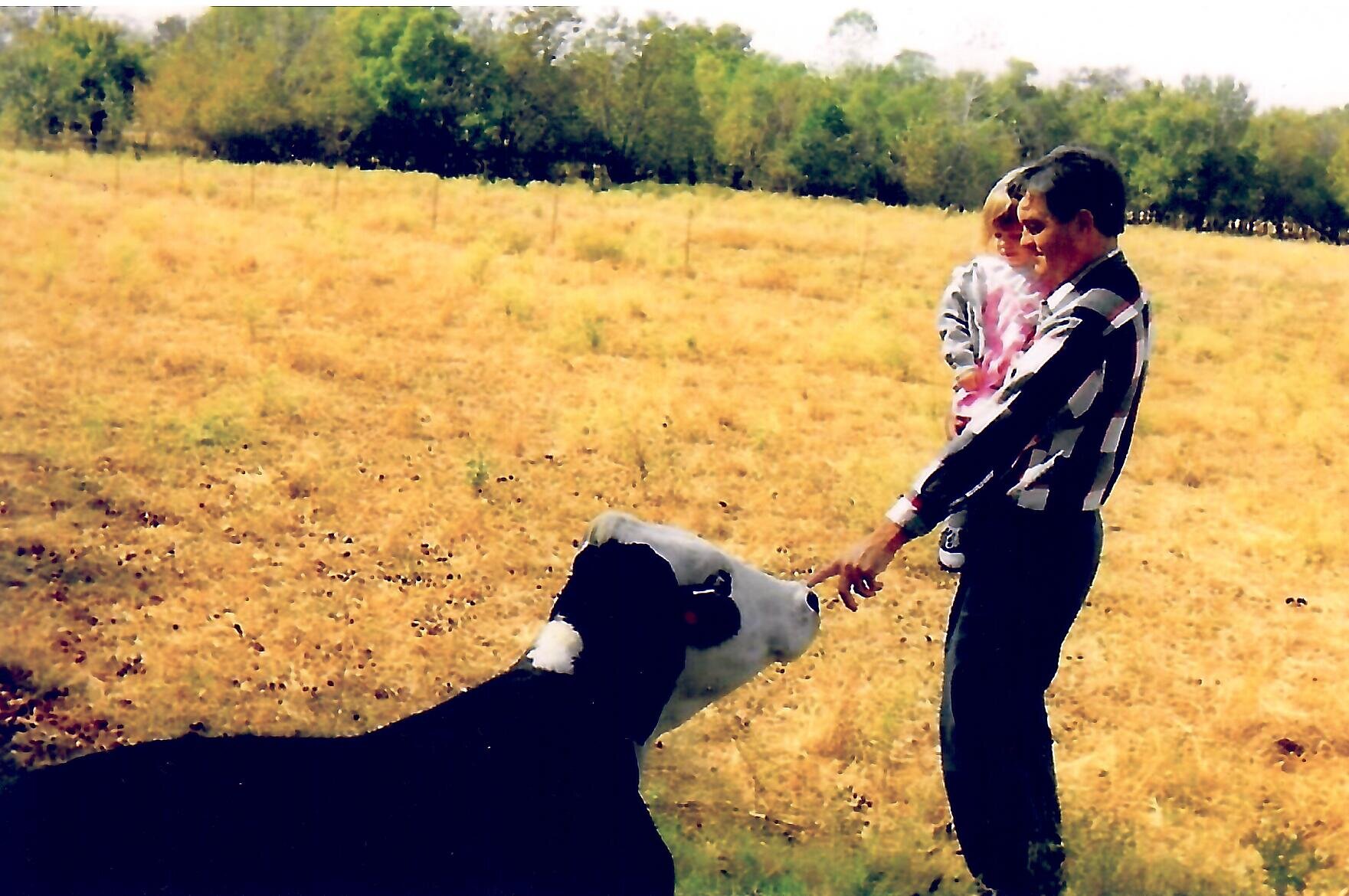
I have a complicated relationship with the Fall season. I love the crisp cooler weather, the pop of color that appears as leaves begin to change, and the Pumpkin Spice Chai lattes that I’ve come to expect. But as the calendar moves closer to November each year, my mood shifts to melancholy. Over several years, I lost two close friends, my grandmother, nephew, and father during the month of November. As my sister-in-law articulately calls it – “November is the sucky month.”
On November 4, it will be 22 years since my father died. While my days are not marked by the raw grief I felt in the months following his death, I still miss him; perhaps more recently because of articles I’ve read about Joe Biden’s unconditional love for his son, Hunter.
The articles were posted after John Cardillo, a conservative Newsmax host, tweeted a black-and-white photograph of Joe Biden kissing his son on the cheek, with the words, “Does this look like an appropriate father/son interaction to you?”
I don’t know who John Cardillo is, and I don’t follow him on Twitter. I became aware of the tweet because I do follow John Pavlovitz, a writer and pastor. Pavlovitz had replied to Cardillo’s tweet with “Father’s should kiss their sons so that their sons grow up to be men who don’t see compassion as a character flaw, who don’t mistake toughness for strength, who aren’t afraid to love people fully.” Pavlovitz’s reply included a link to his blog post, “Fathers Should Kiss Their Sons,” in which he said, “Fathers are supposed to love their sons—unashamedly, completely, and affectionately. They are supposed to be overflowing in their pride and exploding with joy. That’s the whole point of being a father to begin with.” The only thing that I could add to Pavlovitz’s powerful words is that the photo Cardillo shared is exquisite.
Much has been written about Hunter Biden’s struggle with drug addiction. He is certainly not alone in his struggle. According to the Centers for Disease Control and Prevention, overdose deaths involving opioids, including prescription opioids, heroin and synthetic opioids have increased almost six times since 1999.
Any expert in substance use issues will tell you that overcoming addiction is a life-long process. Hunter Biden is fortunate to have a father who loves and supports him unconditionally.
While I never used drugs, sparing my father from that worry, I’m sure that if he were here, he would be the first to admit that I disappointed him at times. There were times that I felt his disappointment, but I never felt that my father was ashamed of me, nor did I feel that I embarrassed him. In the last months of his life, perhaps with a global view that only impending mortality can provide, he modeled understanding and compassion as I struggled with changes in my life.
My father (and mother) provided my sister and me with all the tangible things like housing, food, clothing, a college education, etc. But it was the many intangible things, such as nurturing our self-esteem and self-worth while keeping us grounded, that contributed to our resilience.
As a parent, there have been far too many times that I’ve tried to mold my daughter into a “mini me.” When she was a toddler and young child, I dressed her in the preppy clothes I favored. By the time she was an adolescent, her taste in fashion was as far from mine as humanely imaginable. As an adult, she has chosen a path different from mine. I haven’t always been successful at this, but I try to celebrate the things that make her unique – her emotional intelligence, empathy, curiosity, and courage. She may resemble my physical appearance, but she has most definitely emerged from the shadow of being my daughter into a soulful, competent young woman. I couldn’t be prouder of her.
In a Washington Post article entitled, “Joe Biden, Hunter Biden and the politics of unconditional love,”columnist Monica Hesse, asked “Is the goal of fatherhood to shape your offspring in your own image — the path you feel is worthiest and best — and to require respect and devotion? Or is the goal to love your son [or daughter – my addition] even in his [her] lowest moments, to redefine your expectations, to take on the heavy load of unconditional parenting, even when it’s a lopsided deal?”
Regardless of the gender of the child, all children should feel unconditional love.
I was 40 years-old when my father died, but I never called him by any other name than “Daddy.” I feel certain that if Philip Stephens was here today, he would tell me that the things Hesse outlined in her article are exactly the things that “a Daddy should do.” Because that’s the Daddy that he was.
2020

I had been thinking about revisiting the blog I had posted on January 1 of this year entitled “New Day, New Year, New Decade.” I have had limited success at setting and keeping New Year’s resolutions. But, after several difficult years, I decided that 2020 – the beginning of a new decade – should be the year that I got out of the fog and made some changes in my life. I was earnest in my desire and committed to having the courage to see the process through, regardless of how hard it would get.
Three weeks into 2020, I had scheduled and attended a counseling session. I hadn’t backed away and shut down from some difficult conversations (my usual knee-jerk behavior). I was setting boundaries, eating healthier foods, exercising more, and even making some plans to start checking off some of my bucket list items.
Then, seven weeks into 2020, I was informed that Parkland was terminating the Injury Prevention Center of Greater Dallas, splitting up the staff, and moving all of us into different roles – ones that we hadn’t signed on for, nor did we want. Twelve weeks into 2020, the global pandemic of COVID-19 brought life as we knew it to a screeching halt, closing our schools and workplaces and forcing individuals and families into quarantine and isolation. All of my travel plans grounded to a halt. Weeks later, the brutal murders of several Black men and women at the hands of law enforcement led to more civil unrest.
By the time the second quarter of 2020 began, there was very little left of my earnest good intentions. By April, I felt like the toxicity of the past 3 ½ years that had penetrated every facet of my life had reached a boiling point. I was exhausted, demoralized, angry, worried, sad, and just about every negative adjective out there. I stumbled through the days and spent hours staring out my window during the nights. When someone said that 2020 was the worst year ever, I concurred.
Last week, one of my colleagues shared an article from the Chicago Star Tribune written by Mary Schmich, entitled “Is 2020 truly the worst year ever?” The author provided several compelling historical points to suggest that “in the long rocky history of the world this is probably not the worst year ever.”
That article got me to thinking – is this really the worst year ever for me? Honestly, with the exception of the pandemic, it really doesn’t feel that different than 2017, 2018 or 2019. It just feels like a culmination of 3 years that have caused me a lot of emotional pain. But, I’m a privileged person, so I started thinking about the impact of 2020 on my housing, food, physical health, access to physical and mental health care, and long-term financial security.
When looking at this year through that lens, this how 2020 has impacted me. Although I’m no longer in a job that paid well, that workplace had been toxic for the past 3 ½ years. I am so privileged that in the middle of a global pandemic, I was offered multiple job opportunities; and accepted a position in June that has made me exceptionally happy. According to a U.S. Department of Labor survey that was reported in August, only 42% of the 22 million Americans who had lost employment as a result of the pandemic were back at work.
I did not lose my housing and never struggled to pay housing costs. I quit eating at restaurants and instead, ordered groceries through Instacart or takeout through Door Dash (again, I recognize my privilege). There were a couple of weeks in March when toilet paper was scarce, but I never worried about my next meal or feeding my family. I continued to have health insurance, and once it was safe to have preventive health care appointments, I was able to do that. I have even continued counseling appointments through telehealth. My physical attendance at my church has been interrupted, but I actually attend more often now because I can attend virtually, and my financial giving to the church has increased. Yes, our investment portfolio has taken a hit this year, but the fact that we have an investment portfolio just further enunciates my privilege. I know several people who have been diagnosed with COVID-19, but fortunately, none of my friends have died.
As the author articulated in the Star Tribune article, the only impact of 2020 on me (and so many other privileged people just like me) is that it has divorced us from routines and the delusion that the future is in our control. It has not had the devastating impact on us that it has had on the people who have lost loved ones, still suffer from ongoing effects of the coronavirus, or those whose income has been disrupted. For that reason, I have zero tolerance when I hear complaints about toilet paper or wearing a face covering.
The real impact of 2020 on me is that I care about others, not just myself and my family. Even though I haven’t lost anyone to COVID-19, I care about the destruction the pandemic has caused. I care about the failure of our country to build adequate infrastructure for our public health and social systems. I care about how the COVID-19 response has been mismanaged. I care about the fact that there are continued attempts to sow division rather than unity. I care about all of the Black men and women who have lost their lives because of violence, whether it is at the hands of law enforcement or someone else. I care about people who have lost hope.
As the author of the Star Tribune article noted, the country feels shaken, and that shakiness is one reason 2020 feels hard. But if 2020 has given me any reason to feel hopeful, it is that by late September, more than 860,000 Americans in 25 states had already voted in the 2020 election, compared to less than 10,000 at the same time in 2016. That didn’t include my vote, which I cast on October 13, the first day of early voting in Texas. I am hopeful because in spite of the divisive rhetoric (or because of it), in spite of numerous attempts to suppress the votes of Black and Brown people, I’m seeing people willing to stand in line for hours just to cast a ballot. No one, and I mean no one, should have to spend hours in line to vote. But because there are people who are willing to do that, the least I can do is try to make it easier for them to do so.
It’s now the fourth quarter of 2020. As I look at the words I posted on January 1, I realize that circumstances may have temporarily taken me off track; however, 2020 has not been a wasted year. I’ve actually accomplished many of the personal growth items I listed in that first blog post of the new decade, including spending less money on meaningless “stuff” and donating more to causes that I do find meaningful.
The year isn’t over yet. Every day is a new opportunity to listen, learn, and help. As Congressman John Lewis said, “There’s still work left to be done.” And, there’s no better time than now.
Happy Fall Y’all!

Social Emotional Health

It’s easy to sit in judgement of those with whom we don’t agree, and the current polarized political environment seems to have made it even more acceptable to judge others. I’ve certainly been guilty of doing just that at various times in my life.
But when I heard the news that Brad Parscale, senior digital adviser for the Trump campaign and former campaign manager, was hospitalized after threatening to harm himself, my knee jerk reaction was of empathy for his family. Let me just say that it is not lost on me that when Parscale’s wife called law enforcement for assistance, officers did not discharge their weapons at the 6’8” white man who had been drinking, had 10 firearms in his possession, and chambered a round into a pistol during a heated exchange with his wife. Instead, they wrestled him to the ground and took him to a hospital for a mental health evaluation under Florida’s Baker Act. Not exactly the same treatment that Daniel Prude, a Black man suffering from a mental health episode, received from law enforcement. But I’ll save that discussion for another blog post.
The conversation that we need to be having, and one that is way overdue and seems to get no traction in our “pull yourself up by the bootstraps culture,” is that we need to prioritize and invest resources into prevention, as well as treatment for mental health.
I had the exact same reaction when I read news of Kanye West’s possible manic episode at an event in July in South Carolina. Another disclosure: I don’t listen to the 43-year-old rapper’s songs because it is not my taste in music. I don’t watch “Keeping Up With the Kardashians” because reality television of any variety bores me. However, it is my hope that coverage of high-profile individuals suffering from a mental health crisis can lend credibility to the dire need for ending the stigma around mental health issues and the urgent need for systems changes to support emotional health.
I have to say that I was surprised and encouraged by the statement Fox Sports issued following the “insensitive” comments made by their commentator, Skip Bayless, on Dallas Cowboys quarterback Dak Prescott’s public admission of seeking help for depression following the death of his brother by suicide. Saying that it was his “humble opinion,” Bayless chided Prescott for talking publicly about a “private issue.” Actually, his opinion was uninformed and perpetuates dangerous stereotypes.
Fox Sports released a statement that said, “At Fox Sports, we are proud of Dak Prescott for publicly revealing his struggle with depression and mental health. No matter the cause of the struggle, Fox Sports believes Dak showed tremendous courage which is evident in both his leadership on the Dallas Cowboys and in his character off the field. We do not agree with Skip Bayless’ opinion on Undisputed."
Courage is an appropriate word. It is a word often used to describe persons grappling with physical illnesses and diseases and should be used for those seeking care for mental illness.
There are volumes of research documenting and illustrating the impact of mental illness. According to the National Institute of Mental Health, more than 46 million persons over 18 years of age in the U.S. (nearly 1 in 5) were diagnosed with a mental illness in 2017; 42.6% sought services. Of those who received services, 48% were White, compared to 30.6% of Blacks and 32.6% of Hispanics. Inequality (in this case, lack of access to mental health care and insurance) further compounds the problem. Additionally, more women (47.6%) received mental health services than men (34.8%).
The seminal study on Adverse Childhood Experiences (ACEs) conducted by Kaiser Permanente’s Health Appraisal Clinic, in collaboration with the Centers for Disease Control and Prevention, from 1995 to 1997, showed the extent to which the cumulative influence of psychological, as well as physical trauma negatively shaped future social and physical health outcomes.
Numerous other studies have also shown how ACEs can impact the development of a child’s brain, including impairing the progress of the prefrontal cortex (which controls logical thinking) and hippocampus (memory). ACEs can also cause other areas of the brain to become more active, such as the amygdala, which regulates emotional responses.
There is also a substantial body of evidence that shows investments in preventing ACEs can have a positive influence on lifelong physical and mental health. One approach that has shown success is universal school-based social emotional learning (SEL) programs. Evaluation of SEL shows these approaches reduce aggression, violent behavior, alcohol, tobacco, and drug use, depression and anxiety, suicidal thoughts and attempts, and involvement in crime. Additionally, SEL approaches are also associated with improvements in reading, writing, and math proficiency, which improves income potential.
However, no one program or policy is sufficient to solve the myriad of physical and mental health problems caused by Adverse Childhood Experiences. We need a systems approach to understanding the complex issues and a combination of policies, programs and practices. Sharing “memes” on social media that blame and shame are not the answer; they are disgusting. The same goes for decision makers and others in high-profile positions using their platforms to spout false and uninformed opinions.
If there is anything positive following the news about the emotional health crisis of both Parscale and Kanye, it is that I saw nothing but compassionate posts from my circle of friends who have an abundance of social and emotional intelligence. Isn’t it time we elected officials who possess the same skills?
Shattered

My heart is broken. As if the past 4 years haven’t been devasting enough, and particularly 2020, the news of Justice Ruth Bader Ginsburg’s death on September 18 from metastatic pancreatic cancer was one more sucker punch to my already shattered soul.
Like so many of my friends, and millions of others, I was awed and moved by the iconic Supreme Court Justice, known as RBG (see my June 11, 2018 blog post https://www.shellistephensstidham.com/blog-1/2019/1/13/rbg). I had made plans on at least three trips to Washington, DC during the past 12 months to stand in the gallery of the U.S. Supreme Court during oral arguments just to catch a glimpse of her on the bench. However, each time those plans were thwarted by weather that delayed my flight, a change in the Court’s schedule, and finally the pandemic.
When news of her death reached me with the first of many texts from friends, my knees buckled. Then the tears started. I have cried and cried and cried. Each time I watched or read a tribute to her, I cried.
I cried because everything that I value, and she fought for feels in jeopardy in our country.
I cried because I have lost all faith in the integrity of individuals who control the U.S. Senate.
I cried because I am so fearful of the future and that my civil liberties will no longer be protected.
I cried because I am just so tired. Tired of worrying about the extreme weather impacting my friends across the country. Tired of worrying about my friends who work in healthcare and face daily physical risks because they are caring for individuals with COVID-19, as well emotional trauma from witnessing so many people die. Tired of always having to defend my religious beliefs because of my political affiliation. Tired of being shamed for being a “feminist” and “liberal.” Tired of being accused of letting politics end relationships when the words of the accusers cut me to my core. Tired of trying to have empathy for these same people when I’m not offered the same empathy. Tired of having to constantly explain this to my family.
To paraphrase one of RBG’s brilliant dissents from Ledbetter v Goodyear, I am tired of the “lack of comprehension or indifference to the insidious ways” that white, powerful, men have constructed a system that discriminates against everyone else.
At a time when so much of what I believe and value is at stake in our country, I want to honor the legacy of RBG by continuing her fight for equality and justice. But in a conversation with my best friend this weekend, we both admitted that we are struggling to find the strength.
As is so often the case, hope and inspiration comes when you most need it. Today, it was in the form of an email from my friend, Susan, who forwarded me the September 19 meditation from Father Richard Rohr, a globally recognized ecumenical teacher and founder of the Center for Action and Contemplation (CAC). The subject line read: Some simple but urgent guidance to get us through these next months.
It was just what I needed from a friend who understands that I crave substance instead of empty platitudes. The meditation acknowledged that I am not alone; others are also feeling the despair of the “words and deeds meant to incite hatred, sow discord, and amplify the daily chaos.” It included passages from:
Etty Hillesum, a Dutch Jewish woman who was deported from Amsterdam and killed in the Auschwitz concentration camp;
Psalm 62:5-9: In God alone is my soul at rest. God is the source of my hope. In God I find shelter, my rock, and my safety. Men are but a puff of wind. Men who think themselves important are a delusion. Put them on a scale, they are gone is a puff of wind.
W.B. Yeats, the Irish Poet, who wrote his “Second Coming” during the World War I and the Spanish Flu pandemic.
After reading the meditation, I immediately subscribed to the CAC newsletter. Then, I turned up the volume on my speakers and listened to Jennifer Hudson sing “I’ll Fight,” the Oscar-nominated song from the 2018 film, RBG. Emilia Clarke, the Game of Thrones actress who introduced the song at the 2019 Oscars, described it as a “rallying cry, anthem and personal promise” that embodies the “seemingly endless strength and commitment of its subject.”
If it wasn’t already, it has certainly become my anthem. I will do my best to regain the strength to continue the fight.
As so many others have posted, Thank you, RBG. Rest in Power.
When you feel you're taking all that you can take
And you're sure you're never gonna catch a break
And the tears are rivers running down your face, yeah
When your faith is low and you've got no strength left
When you think you've gone as far as you can get
And you're too undone to take another step
Oh, I will take up the struggle Oh I know it's a fight
So, I'll fight, fight that war for you
I'll fight, stand and defend you
Take your side, that's what I'm here to do
I'll be there to be strong
Oh I'll keep on, keep on the fight
When it's dangerous, takes another piece of you
Everybody takes all they can get from you
Till you're left with almost nothing left of you
When each night is like a battle you can't win
And the pain is like a weight you're carrying I will be the one to help you carry it
Oh, I will take all your troubles
Oh I know it's a fight
So, I'll fight, fight that war for you I'll fight, stand and defend you
Take your side, that's what I'm here to do I'll be there to be strong
Oh I'll keep on, keep on the fight
I'll help your back when your backs to the wall
I'll catch the tears when your tears fall I will give it all I won't give up the fight
So, I'll fight, fight that war for you I'll fight, stand and defend you
Take your side, that's what I'm here to do I'll be there to be strong
Oh I'll keep on, keep on the fight
I'll fight, fight that war for you
I'll fight, stand and defend you
Take your side, take your side, take your side
That's what I'm here to do I'll be there to be strong (I'll be there, I'll be strong)
Oh I'll keep on, keep on the fight
I'll fight, I'll fight


Safe and Sacred Spaces

For most of my life, I’ve basically been a chameleon, adapting to almost any environment and situation. At one time, I probably considered that to be a good characteristic. But, I’m not so sure anymore. When I look back on my life and see myself in those situations, I feel a tightening in my chest and an overwhelming sense of sadness for wasted time being unauthentic.
I have always lived in middle America, where rural areas outnumber metropolitan ones. There are many positive aspects of living in areas where the pace of life is slower. My intent is not to be disparaging to those who love living in that space; but to be honest, I don’t think I’ve ever fit into that lifestyle. And, my political beliefs have never aligned with conservative politics, which has resulted in a lot of people shaming me and using my political leanings to “question my Christianity.”
There have been many times that I became the version of myself that others expected me to be so that I could fit in with the landscape. But the truth is that I didn’t “fit.” There’s a line in the book, The Help, where Skeeter, recently returned to her hometown of Jackson, Mississippi after graduating from Ole Miss, thinks, “I feel like I’ve been dropped into a place where I don’t fit; and maybe I never did.” Those words describe me better than any others.
Too fearful to challenge the status quo, I spent a chunk of time holding my breath in uncomfortable and stifling situations, just waiting until the situation ended until I could escape to a safe space. My daughter calls that foreign energy. Foreign energy puts your body in conflict spiritually and physically. That makes sense to me now because I’ve had enough mindfulness training to recognize the physical effects of not feeling emotionally safe. But I haven’t always understood that.
I’ve also been fortunate that during those times, I have always had safe spaces – mostly through my work relationships. During the time I lived in Oklahoma, my work friends provided the respite I needed to be the “real” me. They gave me permission to be curious, challenge assumptions, and breathe. When I moved to Dallas, my relationships with my friends across the country intensified. Plus, I met a new group of Texas friends and colleagues, who have become my “peeps.”
But even today, I still feel like I have to navigate two different worlds, and it can be dizzying. I’m horrified by the continued racial violence and double standards that permeate our society and allow people who look like me to walk away from their transgressions while people of color are incarcerated and killed at alarming rates. Each time another story of a Black person dying in police custody or in their own home because of “mistaken identity,” I pray that the long overdue racial reckoning of centuries long structural racism will finally be realized. One minute I’m watching a clip of an emotional Kirk Herbstreit, a white ESPN white sportscaster as he asks, “How do you listen to these stories and not feel pain and not want to help?” And, I think, “yes, we are getting better.” The next minute, I’m face to face with someone telling me that “Black Lives Matter is a Marxist organization.” For the record, I have reviewed the Black Lives Matter website, had multiple conversations with members, and donated to the cause. There is NOTHING that indicates it is a “Marxist” organization. I try to say this, but I’m cut off, as I am so often in similar circumstances. The message is clear. My opinion, regardless of how informed it is, is not worthy of consideration. And, I feel the familiar tightness in my chest and the bile in my stomach. Traversing the two worlds is exhausting.
Last weekend was the Labor Day holiday. As I have done for many years, I went to our cabin in northeastern Oklahoma. But it was the days after the holiday that provided me with the relief I desperately needed.
From September 9-11, the Safe States Alliance launched our first virtual conference. To say that we were all a little apprehensive about how it would work is an understatement. Shifting from an in-person annual conference to a virtual one in only a few months meant it was long days and evenings for the staff. I have wasted more hours than I like to think about the past 3 years doing meaningless overtime work that went nowhere. That wasn’t the case during the past 3 months. I have felt more energized than I have in a very long time. For the past 3 months, and particularly the past 3 weeks, I watched with pride as my colleagues worked tirelessly to build the virtual platform, plan for engaging plenary sessions, live Learning Labs, and virtual networking sessions, as well as record and edit videos of presentations.
When the virtual conference launched on September 9, we had 400 registered – the most attendees EVER. The accolades were almost immediate as I watched in real time the comments scrolling on my screen about the phenomenal plenary speakers and praise for our willingness to have conversations and name racial injustice. Throughout the 3 days of the conference, I watched a collective understanding among colleagues of color when they heard the words that “racism has been baked into the fibers of America” and were provided example after example of how this has been built through our educational, judicial, banking, medical, law enforcement, and social systems from local to the highest level of government. I watched the “humble reckoning instead of defiance” among white colleagues.
The conference started with a video that my team members had asked me to create, and that included quotes from the late Congressman John Lewis.
“We come to be renewed.”
“We come to be inspired.”
“We come to be reminded that we must do the work that justice and equality call us to do.”
“We will march with the spirit of love and with the spirit of dignity.”
“You have to have hope. You have to be optimistic in order to continue to move forward.”
“There’s still work left to be done.”
It ended with words from Reggie Moore, Director of the Office of Violence Prevention, City of Milwaukee Health Department.
“The world you were born in is not the world you have to die in.”
As I heard those words on the last day of the conference and watched the final comments scroll across my screen, I was overcome with emotion and gratitude that I, too, had landed in this safe and sacred space.


Weekend Thoughts

There are a lot of thoughts circulating in my head, many of which I’ve been trying to make sense of for a long time. These include (in no particular order) the two recently held very divergent political conventions; the death of yet another black man shot in the back seven times by a white police officer while the man’s children watched; a 17-year-old white youth who was driven by his mother armed with assault weapons to the community where the black man was shot and who ultimately shot and killed two people and wounded another; and the death of actor Chadwick Boseman.
I’ve had a pretty quiet weekend, one where I didn’t work, but spent much of the time in solitude, hiking and thinking. Some memories that have long been buried resurfaced. It’s all resulted in a few realizations. Here they are:
On the Democratic and Republican National Conventions: Full disclosure – I watched all four nights of the Democratic Convention in real time, while I only watched clips from the Republican Convention. I was inspired by the Democratic Convention, which I thought was filled with hope and promise. I thought the Republican Convention portrayed the opposite. I’m sure that many Republicans saw it completely different.
For the past four years, I have struggled to understand how Christians can defend someone who seems to me to be the antithesis of Jesus Christ. Ironically, some of the answers to my questions may have come from comments made on my friends’ social media pages by people shaming them for their beliefs. Another note of disclosure here: I’ve pretty much completed a digital cleanse from my social media accounts of the people who used to post shaming and hateful comments to me, but my friends haven’t taken the same drastic measures. But those shaming comments directed at my friends provided some insight that I had failed to acknowledge in the past. While I consider character and integrity, as well as the candidate’s platform, it seems many people are single-issue voters and will vote party above all else. While I believe in unity, others believe in division.
On the shooting of Jacob Blake by a white police officer in Kenosha, Wisconsin: I have no words other than I am once again sickened that this keeps happening. I listened to the emotional comments of Los Angeles Clippers coach Doc Rivers, “It's amazing to me why we keep loving this country and this country does not love us back." When I heard his comments, I was reminded of the words of my colleague, Cassandra when we recorded a Texas Injury Prevention Leadership Collaborative Conversation on race in June. Cassandra said that her father told her at a very young age “that you need to understand the world doesn’t love you.” These weren’t comments meant to hurt his daughter, but the words of a black man trying to help his black daughter learn to be strong. I’ve heard similar stories from my black friends, and it just breaks my heart.
On the 17-year-old and his mother who drove to Kenosha for some misguided entitlement or other reason that I can’t begin to fathom: I am outraged that people are glorifying his actions, including Fox News host Tucker Carlson and conservative commentator Ann Coulter who tweeted “I want him as my president.”
We had a discussion about “coded words” a few weeks ago on a conference call. I was reminded about this discussion and a tweet from my friend and colleague Ina Robinson when I heard the words being used to describe the 17-year-old. When a black person protests against decades of systemic racism and law enforcement killings, they are called thugs. When a white person armed with assault weapons, shoots and kills protesters (even white protesters), and brags about it, he is called a vigilante. Let’s not mince words. The 17-year-old and his mother are criminals.
I am very supportive of law enforcement. I have worked closely with some of the finest police and public safety officers who put their life on the line every day, but I am so tired of hearing people (and it’s not the officers) reject the need for law enforcement retraining and blame the problems of today on belligerent, entitled youth consumed with their phones and social media. Forty-five years ago, I was a belligerent, entitled 17-year-old consumed with different distractions, but consumed with them just the same. The difference is that my parents would never have driven me or even my male cousins to another community to shoot and kill someone.
And finally, on the death of Chadwick Boseman: I have seen only one of the actor’s movies – Black Panther, although I will now watch 42 and Marshall. I’m not a fan of action movies, but I saw Black Panther on its opening weekend and loved every minute of the film in which Boseman portrays King T’Challa of the technologically advanced African nation of Wakanda. I left the theatre with a “crush” on Boseman and energized and wishing the fictional Wakanda actually existed.
I woke on August 29 to the news of Boseman’s death at 43 of advanced colon cancer, and I felt heartsick. Boseman’s death brought back memories of the death of my friend, Lt. J.C. Burris, Jr., an 18-year veteran of the Oklahoma Highway Patrol, who also died way too soon from colon cancer. I was honored to be asked to speak at J.C.’s memorial service in 2006. It’s been 14 years since he and I engaged in one of our “spirited” conversations. I wish I could talk to him now. I wonder what he would think about the turmoil in our nation.
There is a lot of pain right now. More than 183,000 people have died from COVID-19 in the U.S., as of this blog post. Systemic racism still inhabits our country and our politics. There’s very little that I can do, and yet a lot that I can do. There’s a decal with a motivational quote behind my desk in my apartment to remind of this. It says, “It is what it is, but it will become what you make it.”
I’m feeling sad, yet recharged. I will channel my anger into positive action. I will spend time (even if it’s just on Zoom) with people who lift me up and are traveling on the same path. I’ll keep learning. And, I’ll try really hard to stop paying attention to those who choose shame.
